Do Romance ao Galope Nordestino
Quinteto Armorial
1974

Rankings
Why This Album Matters
Do Romance ao Galope Nordestino is the debut album by Quinteto Armorial, a fundamental landmark in Brazilian instrumental music and in the sonic materialisation of the Armorial Movement. Released in 1974, the record presents an audacious proposal: the creation of erudite chamber music rooted in the deepest popular traditions of the Brazilian Northeast and medieval Galician-Portuguese influences. The album stands out for its unique sound, which blends instruments typical of Northeastern popular culture, such as the rabeca, pífano and viola caipira, with the violin, flute and acoustic guitar, resulting in a musical tapestry described as intense and virtuosic "chamber folk". This inaugural work not only defines the group's innovative style but is also considered one of the most important in the creation of Brazilian chamber music with popular roots, solidifying Ariano Suassuna's vision for national art.
Context
The album emerges directly from the Armorial Movement, an artistic initiative launched in Pernambuco, in 1970, by the writer and dramatist Ariano Suassuna. The movement sought to forge an authentically Brazilian erudite art from the popular cultural roots of the Northeast, especially the *sertão*, rejecting the rigid separation between the popular and the erudite and valuing mixed-race culture. Ariano Suassuna was the catalyst for the formation of Quinteto Armorial in 1970, inviting Antônio José Madureira to lead the group. This formation came after a previous Armorial Orchestra had been perceived as excessively European in its sound. The record label Discos Marcus Pereira, which released the album, was founded in 1973 with the mission of rescuing and documenting Brazilian regional music, offering a space for artists who eschewed the commercial logic of major labels and found an ideal home there for their artistic proposal.
Recording
Do Romance ao Galope Nordestino was released in 1974 by the Discos Marcus Pereira label, an independent record company dedicated to valuing Brazilian regional and folk music, contrasting with the hegemony of foreign styles in the phonographic market of the time. The production of the record reflects artisanal care, aligned with the Armorial Movement's proposal, which prioritised cultural essence over commercial trends. The LP cover is illustrated by the woodcut "Alexandrino e o pássaro de fogo", created by Gilvan Samico in 1962. This visual choice is emblematic, as woodcut is an art form deeply linked to *literatura de cordel* and the visual traditions of the Northeast, establishing a direct connection with the aesthetic principles of the Armorial Movement.
Songs
The album's repertoire is an exquisite demonstration of the fusion between erudite and popular elements, utilising instrumentation that is the Quinteto Armorial's signature. Antônio José Madureira plays the viola caipira, Egildo Vieira do Nascimento contributes the pífano and flute, Antônio Nóbrega the rabeca and violin, Edison Eulálio Cabral the acoustic guitar, and Fernando Torres Barbosa the percussion, including the Northeastern marimbau. The compositions present on the record, many of them recreations of ancestral themes, seek a profound dialogue between medieval folk songbooks and the practices of Northeastern *cantadores*. The album includes tracks such as "Revoada", the adaptation of the 16th-century Iberian romance "Romance da Bela Infanta", the Northeastern funeral chant "Excelência", and the 19th-century romance "Romance de Minervina", all signed or adapted by Antônio José Madureira. The presence of works by composers such as Guerra Peixe and Capiba also reinforces the connection with important figures in Brazilian music aligned with the Armorial aesthetic.
Legacy
Do Romance ao Galope Nordestino was immediately recognised for its originality and excellence, earning Quinteto Armorial the APCA Award for "Best Instrumental Group of the Year". Ariano Suassuna, the ideologue of the Armorial Movement, considered the Quinteto's work the movement's most significant musical contribution, attesting to its cultural importance. The album not only established Quinteto Armorial as a seminal group but also paved the way for three other successful records: Aralume (1976), Quinteto Armorial (1978), and Sete Flechas (1980). The legacy of the Quinteto and, in particular, of this album, reverberated in the solo careers of former members such as Antônio Nóbrega, who continued to explore the Armorial aesthetic. The group's influence is perceptible in later musical formations, such as the group Rosa Armorial, which draws direct inspiration from its aesthetic, confirming the lasting impact of Do Romance ao Galope Nordestino on Brazilian music. The album is revered as an essential document for understanding Brazil's musical roots, a true jewel of national popular and folk music.
Tracks
Credits
Aluizio Falcão
Fernando Torres Barbosa
Edison Eulálio Cabral
Egildo Vieira
Antonio Jose Madureira
Antônio Nóbrega
Ernesto Cerri
Gilvan Samico
Antonio Maioral
Books
Quinteto da Paraíba
Xisto Medeiros de Sousa · 2025
Quinteto da Paraíba offers an intimate and in-depth account of the activities of a musical quintet with strong ties to Paraíba. The author Xisto Medeiros de Sousa details how the group's trajectory intertwines with his own life, suggesting a detailed and personal analysis. Considering the deep roots of Quinteto Armorial in the Northeast and its members' connections to Paraíba, it is highly probable that this book directly addresses the history and music of Quinteto Armorial or a group of similar aesthetic directly relevant to the album "Do Romance ao Galope Nordestino".
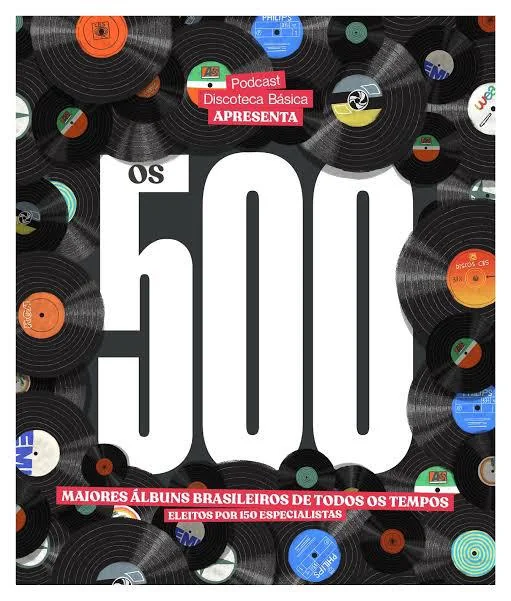
Os 500 Maiores Álbuns Brasileiros de Todos os Tempos
Ricardo Alexandre · 2022
The largest Brazilian music election ever conducted: 162 specialists, spanning journalists, critics, musicians, producers and podcasters, each nominated 50 essential albums, supported by a masterlist of more than 2,000 works. Led by Ricardo Alexandre with tabulation by Sérgio Jomori, it was published in December 2022 as a 200-page hardcover book with graphic design by Fernando Pires.

300 Discos Importantes da Música Brasileira
Charles Gavin, Tárik de Souza, Carlos Calado, Arthur Dapieve · 2008
Conceived by Titãs drummer and musical researcher Charles Gavin, the 434-page book brings together covers and reviews of albums released between 1929 and 2007. The texts were written by journalists Tárik de Souza, Arthur Dapieve and Carlos Calado.
Analyses
Do Romance ao Galope Nordestino – Wikipedia
Wikipedia, the free encyclopaedia
Quinteto Armorial: Do Romance ao Galope Nordestino (1974), Aralume (76 ...
pqpbach.ars.blog.br
Some time ago I realised, with a start, that we didn't have on the blog an album I consider among the "top most" of all Brazilian musical production: the first by Quinteto Armorial, "Do Romance ao Galope Nordestino", from 1974.

Quinteto Armorial - "Do Romance ao Galope Nordestino" (1974)
cly-blog.blogspot.com
What is impossible to criticise, however, is the quality of the works produced, among them one that completed 50 years in 2024: Quinteto Armorial's debut album, "Do Romance ao Galope Nordestino".
Discos Escondidos #109: Quinteto Armorial - Do Romance ao Galope ...
ojardimeletrico.com
Recreating an Iberian romance or reinterpreting a Northeastern funeral chant theme, Do Romance ao Galope Nordestino masterfully fulfils its proposal.
Quinteto Armorial e o lugar de Pernambuco na música nacional
farofafa.com.br
The first of three planned volumes specifically focuses on Do Romance ao Galope Nordestino (1974), Quinteto Armorial's first album, which gave musical form to the cultural and ideological movement led by the Paraíba playwright, philosopher, and multi-artist Ariano Suassuna (1927-2014).