Lavô Tá Novo
Raimundos
1995
Rankings
Why This Album Matters
Released in 1995, Lavô Tá Novo is the second and emblematic studio album by Brasília band Raimundos, a watershed moment that consolidated their innovative and irreverent sound in the Brazilian music scene. The record is an explosive fusion of hardcore punk, punk rock, alternative metal, and rap metal, all seasoned with the unmistakable sound of forró and other Northeastern rhythms, coining the style that would become known as 'forrócore'. Essentially visceral, heavy, and aggressive, the album also stands out for its peculiar humour and direct lyrics, which make it accessible and captivating. Lavô Tá Novo not only reaffirmed Raimundos' musical identity but also served as a powerful statement from the band about their artistic substance, proving they went far beyond mere 'fifth-grade jokes'. The work stands out as one of the most important and heaviest in the history of Brazilian rock, full of tracks that became anthems for a generation, capturing the energy and boldness that defined the band at the peak of their career.
Context
The release of Lavô Tá Novo followed the phenomenal success of their self-titled debut album, released in 1994 by the Banguela Records label. The first record, with its raw sound and explicit lyrics, sold over 100,000 copies, earning a Gold Record and elevating Raimundos to a level of popularity that put them on the radio, something then uncommon for bands of the genre. However, the Banguela label, a subsidiary of Warner Music and conceived by journalist Carlos Eduardo Miranda alongside Titãs, faced financial difficulties after investments in other bands. Given this situation, and with Raimundos seeking a more robust budget for their next work, the band was 'promoted' and signed directly with the multinational record label Warner Music for the recording of their second album.
Recording
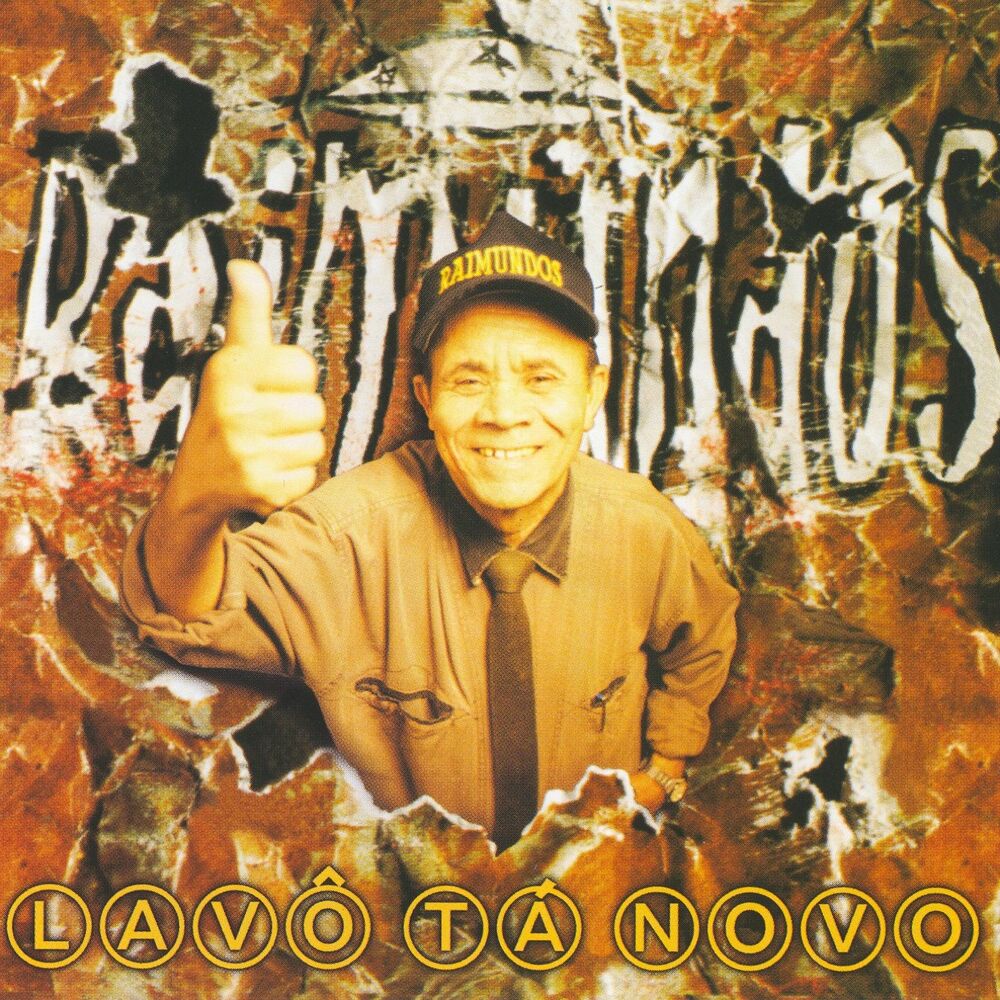
The recording of Lavô Tá Novo took place in 1995, between June and September, at Estúdios Mosh in São Paulo. For production, Raimundos enlisted the renowned American producer Mark Dearnley, known for his work with rock giants such as Def Leppard, Black Sabbath, and AC/DC. Dearnley's experience was crucial in bringing greater sonic clarity and additional weight to Digão's guitar riffs, without, however, distorting the band's musical roots. The visual concept for the cover was a collaborative effort between the band, Patrick Grosner, and Antônio Deliperi. In a gesture of camaraderie with the record label, the band invited Seu Josias, the studio's security guard, to be the face of the album cover, paying him 500 reais for the single photo taken. The album was subsequently mastered at Precision Mastering, in Los Angeles, United States.
Songs
Comprising 12 tracks and a duration of 35 minutes, Lavô Tá Novo is a showcase of Raimundos' versatility and acidic humour. The opening with "Tora Tora" is an impactful calling card, featuring a striking riff from Digão, whilst "Eu Quero Ver o Oco" became a true anthem, demonstrating the power of Rodolfo's vocals. "Esporrei na Manivela" is considered one of the songs that best encapsulates the band's sound, masterfully blending hardcore with Northeastern music, highlighting the participation of accordionist Zenilton. Another major highlight is "I Saw You Saying (That You Say That You Saw)", a track with a more pop and commercial feel that became one of the biggest hits of the band's career, with a memorable music video. The album also features gems such as "O Pão da Minha Prima", "Opa! Peraí, Caceta", "Pitando no Kombão", and "Tá Querendo Desquitar (Ela Tá Dando)", which also features Zenilton. The lyrics, largely composed by the band, are full of irreverence, double entendre, and address everyday themes in a foul-mouthed and humorous way, characteristics that became Raimundos' trademark, although some of their expressions could be seen as controversial in a current context.
Legacy
Lavô Tá Novo solidified Raimundos as one of Brazil's biggest rock bands in the 90s. The album was a resounding success, selling approximately 400,000 copies and achieving Platinum certification, with some sources indicating that sales surpassed the 500,000-unit mark, exceeding the commercial performance of their debut album. Critical reception was largely positive, with the aggregator Allmusic awarding it a 4.5 out of 5-star rating. The record is frequently cited as Raimundos' definitive work and one of the most important heavy rock albums ever produced in Brazil. Its singles, such as "Eu Quero Ver o Oco", "Esporrei na Manivela", and "I Saw You Saying (That You Say That You Saw)", received heavy rotation on radio stations and MTV Brasil, becoming classics and marking the cultural memory of the era. The album represented a turning point for the band, consolidating their unique blend of hardcore with Northeastern elements and reaffirming their relevance in a musical scene that flirted with pop, whilst the band deepened its roots in heavy metal and hardcore.
Tracks
Credits
Paulo Junqueiro
Guilherme Bonolo
Mark Dearnley
Canisso, Digão, Rodolfo
Canisso, Digão, Rodolfo
Digão, Guilherme Bonolo, Rodolfo
Stephen Marcussen
Brian Young
Enrico Romano, Silas de Godoy
Fernando Consentino
Roberto Da Paixão
Antonio Deliperi, Patrick Grosner, Raimundos
Cristina Dória
Silvia Panella
Antonio Deliperi
José Muniz Neto, Mercury Concerts
Patrick Grosner
Podcasts
Pod Discos · Jorge Andrade
No episódio 75° do Pod Discos, Jorge Andrade faz uma resenha do álbum Lavô Tá Novo do Raimundos!Lavô Tá Novo é o segundo álbum de estúdio da banda, foi lançado em 3 de Novembro de 1995 pela gravadora Warner Music. Na época, o disco vendeu em torno de 400 mil cópias. Contém os grandes clássicos da banda: "Eu Quero Ver o Oco", "Esporrei na Manivela" e "I Saw You Saying (That You Say That You Saw)".

Analisando Discos! · Canal RIFF
🖤 SEJA MEMBRO DO RIFF E CONCORRA A PRÊMIOS: http://bit.ly/SejaMembrodoRIFF O Analisando Discos desta segunda-feira é sobre o clássico 'Lavo Tá Novo', dos Raimundos, com a participação do baixista @CANISSO OFICIAL ! ⚠️ MATRICULE-SE NA MUSICDOT (10% de DESCONTO) https://www.musicdot.com.br/promocao/canalriff

Tomar Uma Para Falar Sobre... · Rafael Araujo e Iúri Moreira
O Raimundos surgiu com um som inovador apelidado de "forró-core", quando lançou seu primeiro álbum. Mas foi com o segundo, "Lavô Tá Novo", lançado dia 2 de novembro de 1995, que a banda se tornou um fenômeno e ganhou o Brasil com sucessos como "Eu Quero Ver o Oco", "Esporrei na Manivela" e, talvez o maior hit da carreira da banda, "I Saw You Saying (That You Say That You Saw)". Para celebrar o ani
Videos
O QUE ACHO DO DISCO "LAVÔ TÁ NOVO" - RAIMUNDOS (1995) - Ep. #09 - Gilson Naspolini
Gilson Naspolini
RAIMUNDOS: ANÁLISE FAIXA A FAIXA DO "LAVÔ TÁ NOVO" | TUPFS Resenha #37
Tomar Uma
TIREM AS CRIANÇAS DA SALA! - LAVÔ TÁ NOVO (RAIMUNDOS) | COM FLÁVIO BANDEIRA
Pod Discos
Raimundos - Lavo Tá Novo (Participação Especial: Canisso) | Analisando Discos #15
Canal RIFF
RAIMUNDOS: "LAVÔ TÁ NOVO" FAIXA A FAIXA (part. Flávio Bandeira) | REPOST
Tomar Uma
Films

Books
Os 500 Maiores Álbuns Brasileiros de Todos os Tempos
Ricardo Alexandre · 2022
The largest Brazilian music election ever conducted: 162 specialists, spanning journalists, critics, musicians, producers and podcasters, each nominated 50 essential albums, supported by a masterlist of more than 2,000 works. Led by Ricardo Alexandre with tabulation by Sérgio Jomori, it was published in December 2022 as a 200-page hardcover book with graphic design by Fernando Pires.

Raimundos - O show que nunca terminou
Sergio Vieira
This is the biography of the Brazilian rock band Raimundos, detailing its trajectory from its formation to the significant moments of its career. It covers the highly successful phase in the 90s, a period when the album 'Lavô Tá Novo' was released and became a landmark for the band.
Analyses
Lavô Tá Novo – Wikipedia
Wikipedia, the free encyclopaedia

Lavô Tá Novo (Warner, 1995), Raimundos
discosessenciais.blogspot.com
The album transitions between explosive tracks and others that bring more elaborate rhythmic and dynamic nuances, but are always packed with energy and audacity. From the first chords of Lavô Tá Novo, it's clear that Raimundos had reached a new stage of musical maturity.
Resenha: Raimundos - Lavô Tá Novo - Roadie Metal
roadie-metal.com
Here at Resenhando, you can keep up with reviews of various albums released in the world of Rock. For the series' debut, we're featuring national rock with the Raimundos crew, who released their second work, Lavô Tá Novo, in November 1995.

MUSICA&SOM: Lavô Tá Novo (Warner, 1995), Raimundos
tabernanovostempos.blogspot.com
In 1995, Raimundos returned to the spotlight with Lavô Tá Novo, an album that not only consolidated the band's unique sound but also propelled them to an even higher level in Brazilian rock.
Como o Raimundos quis provar sua seriedade em "Lavô Tá Novo"
igormiranda.com.br
'Lavô Tá Novo' was released on 4th November 1995. Despite initial fears that its less outlandish tone would result in low sales, the album eventually sold over 400,000 copies. It surpassed their debut in all metrics. But the circumstances of this success deserve to be analysed.