Sociedade da Grã-Ordem Kavernista Apresenta Sessão das 10
Raul Seixas, Sérgio Sampaio, Miriam Batucada, Edy Star
1971

Rankings
Why This Album Matters
Sociedade da Grã-Ordem Kavernista Apresenta Sessão das 10 is a landmark in Brazilian music, representing Raul Seixas's second attempt to solidify a successful artistic career and the recording debut for Sérgio Sampaio, Edy Star and Miriam Batucada. Conceived as an anarchic and iconoclastic work, the album aimed to subvert the musical and social conventions of the time, seeking to shock and unsettle the listener with a sound that blended national and foreign influences. Every aspect of the album was designed to challenge the prevailing standards of 'good taste', making it a provocative and singular work in the Brazilian music scene of 1971. Despite its short initial circulation, the album is a manifestation of Brazilian counterculture, bringing together talents who, in distinct ways, sought to break with conformism. Raul Seixas's vision of a conceptual album, coupled with Sérgio Sampaio's desire for a work that would 'stink' and 'cause revulsion', resulted in an audacious piece that stands out for its originality and the chemistry between the four artists, each contributing their irreverence and peculiar style.
Context
Before the release of Sociedade da Grã-Ordem Kavernista Apresenta Sessão das 10, Raul Seixas was facing a transition in his career. Following the failure of the group Raulzito e os Panteras, he was working as a music producer at Discos CBS, composing and producing romantic ballads for Jovem Guarda artists, a type of music that did not satisfy him. His efforts to launch a more authorial project, such as the album for Leno, were thwarted by censorship and the record label, which vetoed much of the material for being considered "inductive to LSD use" or containing "hidden messages". In this scenario of searching for a new artistic direction, Raul Seixas found in Sérgio Sampaio, Edy Star and Miriam Batucada the ideal partners to realise an audacious project. Sérgio Sampaio, newly hired by CBS, and Edy Star, a long-standing friend with whom Raul shared musical tastes and a sense of mockery, joined Miriam Batucada, an experienced 'show-woman' who sought to consolidate her musical career in Rio. Together, they formed the group with the aim of creating a record that would shake up the conformism of Brazilian music.
Recording
The album's conception was driven by the central visions of Sérgio Sampaio and Raul Seixas, who aimed for an anarchic and iconoclastic work that would break with all musical and social conventions. They desired a conceptual Brazilian album, blending national and foreign influences, with every detail planned to challenge the standards of good taste. Initially, the repertoire would be selected with each artist singing two solo songs and some together, and the group's name, "Kavernista", arose from the idea of a return to roots after a nuclear war. However, production faced challenges with the Public Entertainment Censorship Service (SCDP), which vetoed songs due to words that alluded to fantasy or were considered difficult, or because they were credited to Edy Star. This led Raul and Sérgio to rescue older compositions and to hastily include "Soul Tabarôa". Recordings took place in less than 15 days, between late June and the first week of July 1971, at CBS Studios, which already featured an 8-channel mixing console. The more elaborate arrangements were by Ian Guest, with the participation of musicians from Renato e Seus Blue Caps and Lafayette e seu Conjunto, in addition to Raul playing guitar and bass, and Sérgio his acoustic guitar, with a regional choro ensemble on "Sessão das Dez". The album cover features the four Kavernistas in costume in front of Cinema Império, in Rio. Raul is dressed as a "ripimpé", Miriam as a "super-mulher", Sérgio as a "homem do povo" and Edy as a "cantor de sucesso" in a lamé jacket borrowed from Leno. The design of the album's name, authored by Edy, was done in a shade of red that Raul insisted should resemble dripping blood, which required several proofs at the printing company.
Songs
The album opens in a circus-like manner, with Edy announcing "the greatest show on Earth", followed by the song "Êta Vida", which employs innocent optimism to satirise the alienation of the Carioca citizen, poking fun at "São Sebastião do Rio" and its "brilliant life" with "Maracanã domingo" and "pagamento a prestação". Following this, "Sessão das Dez" is a serenade that satirises the old-fashioned singers with powerful voices who were successful before bossa nova, with Edy imitating Orlando Silva and Nelson Gonçalves. Raul and Sérgio share vocals on "Eu Vou Botar pra Ferver", a vibrant "baião-rock", and Sérgio Sampaio presents his self-penned "Eu Acho Graça". Miriam Batucada's first appearance is on "Chorinho Inconsequente", a song that addresses Sérgio's feeling of non-belonging to the Carioca music scene, mentioning the "patota da Tijuca", a neighbourhood where Erasmo Carlos and Roberto Carlos spent their adolescence, and portraying a society of appearances.
Legacy
Sociedade da Grã-Ordem Kavernista Apresenta Sessão das 10, withdrawn approximately two months after its release, did not have the opportunity to achieve significant sales or receive widespread criticism from the specialised media at the time. However, the album was well received by the Brazilian counterculture audience of the era and by critics aligned with this movement, such as the poet Torquato Neto and the philosopher Luiz Carlos Maciel. Over time, the album consolidated its position as a cult object of interest. Its relevance was amplified by the participation of Raul Seixas and Sérgio Sampaio, in addition to the fact that it remained out of catalogue for over 20 years, which contributed to its aura of rarity and historical importance in the discographies of these artists and in Brazilian music in general.
Tracks
Credits
Mauro Motta, Raul Seixas
Films

Books
Vivendo a Sociedade Alternativa
Luiz Lima · 2026
This book is inspired by the author's Doctoral Thesis on Raul Seixas, defended and approved at the Department of History of the Faculty of Philosophy, Languages and Human Sciences at USP. Being an in-depth academic study of Raul Seixas's work and thought, it is certain to address the fundamental album 'Sociedade da Grã-Ordem Kavernista Apresenta Sessão das 10', which marked the beginning of his career.
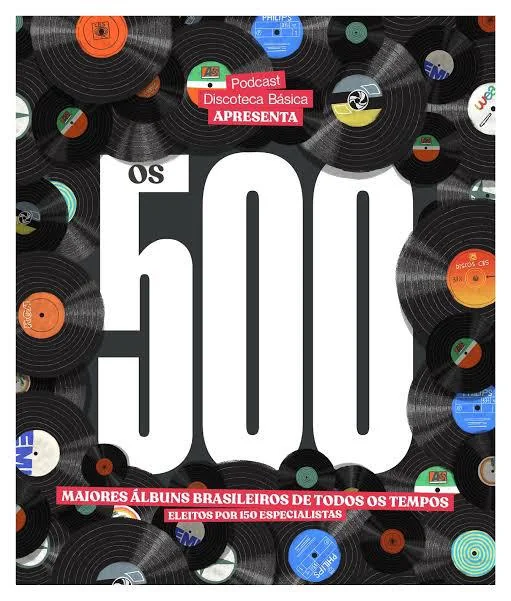
Os 500 Maiores Álbuns Brasileiros de Todos os Tempos
Ricardo Alexandre · 2022
The largest Brazilian music election ever conducted: 162 specialists, spanning journalists, critics, musicians, producers and podcasters, each nominated 50 essential albums, supported by a masterlist of more than 2,000 works. Led by Ricardo Alexandre with tabulation by Sérgio Jomori, it was published in December 2022 as a 200-page hardcover book with graphic design by Fernando Pires.
Raul Seixas: Por trás das canções
Raul Seixas: Por trás das canções
Carlos Minuano
This book explores in depth the lyrics, melodies, and context of Raul Seixas's compositions, offering a detailed analysis of his work and how it fits into Brazilian music. Given the relevance of the album 'Sociedade da Grã-Ordem Kavernista Apresenta Sessão das 10' in his initial and collaborative phase, it is highly probable that this work will dedicate significant attention to it.
Analyses
Sociedade da Grã-Ordem Kavernista Apresenta Sessão das 10 – Wikipedia
Wikipedia, the free encyclopaedia
Crítica | "Sociedade da Grã Ordem Kavernista apresenta Sessão das 10 ...
planocritico.com
The opening vignette sets a circus-like tone: Edy respectfully announces that the Sociedade da Grã-Ordem Kavernista will present the greatest show on Earth, before Êta Vida explodes into a fast rhythm, with Raul and Sérgio singing about the wonders of Rio.
O disco 'kavernista' de nossa música - Revista Continente
revistacontinente.com.br
Amidst an erratic trajectory, at times obscure, at others enveloped by a cult aura, the album Sociedade da Grã-Ordem Kavernista apresenta: sessão das 10 reaches its 50th anniversary still without answering the question, confounding more conservative tastes.
Sociedade da Grã-Ordem Kavernista - Sessão das 10 (1971) - Altamont
altamont.pt
In 1971, a quartet of practically unknown musicians recorded a gem, packed with humour and creativity. Sessão das 10, released in the midst of the Brazilian dictatorship, is a portrait of those times, with enough irony to escape censorship.
"Eu não quero mesmo nada, eu não tenho nada a ver com isso": Um estudo ...
repositorio.unifesp.br
The aim of this study is to analyse the album "Sociedade da Grã-Ordem Kavernista Apresenta: Sessão das 10", authored by Edy Star, Miriam Batucada, Sérgio Sampaio and Raul Seixas (CBS Discos, 1971), as a product of Brazilian popular-commercial song. In light of Marcadet's (2007) methodological proposals, it seeks to...