Atrás do Porto Tem uma Cidade
Rita Lee e Tutti Frutti
1974

Rankings
Why This Album Matters
Atrás do Porto Tem uma Cidade, released in June 1974, marks a crucial point in Rita Lee's discography, being her third studio album and the first in partnership with the band Tutti Frutti. This work represents a significant break from the psychedelic sound of her phase with Os Mutantes, paving the way for a more direct Brazilian rock, although still far from the mainstream of the time. The album is a vigorous demonstration of Rita Lee's talent in her new phase, blending Rolling Stones rock influences with elements of glam rock, blues rock, and a hint of funk, all wrapped in her characteristic humour and gravitas. Specialised critics, such as AllMusic, recognised its quality, awarding it a 4 out of 5-star rating. It is a fundamental album for understanding Rita Lee's evolution as the 'first lady of national rock', or 'auntie of the rockers', consolidating her post-Mutantes artistic identity.
Context
The release of Atrás do Porto Tem uma Cidade occurred at a time of transition and redefinition for Rita Lee. Following her departure from Os Mutantes in 1972/1973, a period she described as a great disappointment, the artist sought new musical horizons. Her previous solo works, *Build Up* (1970) and *Hoje É o Primeiro Dia do Resto da Sua Vida* (1972), already signalled her individuality, but it was with the formation of Tutti Frutti that Rita found a new home for her rock expression. Initially, Rita Lee formed Cilibrinas do Éden with guitarist Lúcia Turnbull. Later, with the addition of Lee Marcucci on bass, Luis Carlini on guitar, and Mamão (Emílio Colantonio) on drums, Tutti Frutti was consolidated. This period was essential for Rita Lee to transition into a more independent, rock-oriented phase, distancing herself from the creative constraints she felt at her previous record label, Philips, which generated a tense relationship and the eventual move to Som Livre for the subsequent album, *Fruto Proibido*.
Recording
Atrás do Porto Tem uma Cidade was recorded in 1974 and featured Marco Mazzola as producer. The album's technical sheet reveals the robust line-up of Tutti Frutti, with Rita Lee taking on vocals, clavinet, Minimoog, Mellotron, piano, organ, tambourine, and handclaps. Lúcia Turnbull complemented with backing vocals, guitar, 12-string acoustic guitar, and handclaps. The instrumental base was completed by Luis Sérgio Carlini on guitars (including Hawaiian guitar), Lee Marcucci on bass, and Mamão and Paulinho Braga alternating on drums. The album also featured special guest appearances, such as Juarez on tenor saxophone and Luis Cláudio on jazz guitar. Notably, Ely Arco Verde was responsible for the orchestral arrangements on the tracks "Menino Bonito" and "Ando Jururu", adding a layer of sophistication to the production. Despite divergences in artistic conceptions between Rita Lee and producer Mazzola, the final result demonstrated the project's strength and originality. The original LP included a band poster, reflecting the rock and attitude vibe of the era.
Songs
With ten tracks and a total duration of 29:46, Atrás do Porto Tem uma Cidade features a repertoire in which Rita Lee is the main composer, signing most of the songs alone, and co-signing "Yo No Creo Pero...", "Tratos à Bola", and "Círculo Vicioso" with Lee Marcucci and Luis Sérgio Carlini. The album is packed with songs that became significant in her career. Highlights include the ballad "Menino Bonito", a gentle song with piano and string arrangements, and "Eclipse do Cometa", which explores a space theme. Other notable tracks are the captivating "Ando Jururu", whose lyrics express Rita's anguish and search for new paths after her departure from Os Mutantes, and the vibrant "Círculo Vicioso", with a funky groove. "De Pés no Chão", with a 'killer' saxophone, "Mamãe Natureza" (which became a radio hit) and "Pé de Meia", with clear Rolling Stones influences, are also examples of the album's versatility and energy.
Legacy
Atrás do Porto Tem uma Cidade, despite selling around 9,000 copies upon its release, has over time solidified its position as an album of great importance in Rita Lee's career and in the history of Brazilian rock. Its repercussions have extended for decades, with various tributes and reinterpretations. In 1985, the song "Menino Bonito" was re-recorded by Wanderléa as a tribute to her deceased son and, in the same year, became the theme song for the Rede Globo soap opera *Um Sonho a Mais*. Rita Lee herself revisited the album, re-recording "Ando Jururu" with the band Raimundos for her 1997 album *Santa Rita de Sampa*. More recently, in 2024, the track "Menino Bonito" was once again highlighted when a white-lipped viper rescued in Bahia was named in its honour by the Butantan Institute. Considered a transitional landmark for Rita's pop-rock sound, this album is positively reviewed by critics, receiving 4 out of 5 stars from AllMusic, and is frequently cited as a classic, even though its initial commercial success did not reach the levels of her subsequent albums, such as *Fruto Proibido*.
Tracks
Credits
Tutti Frutti
Lucia Turnbull, Rita Lee
Lee Marcucci
Mamão, Paulinho
Lucia Turnbull
Lucia Turnbull, Luis Sérgio Carlini
Joaquim Figueira
Films


Rita Lee - Biograffiti: Cor de Rosa Choque
2007
Rita Lee became the leading figure in Brazilian rock-pop. She composed iconic songs exploring the female universe, the theme of "Cor de Rosa Choque" (Shocking Pink), the third part of the documentary series "Biograffiti". Topics such as the mystique of women, the muses who inspired her, the wonders of ageing, and the unrevealed mysteries of the female soul are treated in this documentary in a humorous and moving way. "Todas as Mulheres do Mundo" (All the Women in the World), "Pagu" and "Erva Venenosa" (Poison Ivy) are some of the many songs shown, taken from the concert recorded in November 2006 at Morro da Urca, in Rio de Janeiro. There are also precious historical archives, such as the encounters between Rita and Elis in 1978, singing "Doce de Pimenta" (Pepper Candy), and Rita and Cássia Eller, in 1998, singing "Luz del Fuego". "Cor de Rosa Choque" also features the recording of the song "Tão", an unreleased rock track.

Rita Lee - Biograffiti: Baila Comigo
2007
Life on the road is the theme of ‘Baila Comigo’ (Dance With Me), the second part of the documentary trilogy "Biograffiti" about Rita Lee's life and work. The singer talks about the pleasure of composing, her affinity with the audience, and reveals the origin of some of her songs. She also discusses cinema, drugs, and Rio de Janeiro. The documentary shows Rita and João Gilberto meeting and singing Joujoux et Balangandans, captures Rita and Roberto de Carvalho finishing a new song called ‘Dinheiro’ (Money), and features songs from the singer's concert in January 2007 on Copacabana Beach. There, Rita sang hits like ‘Mania de Você’ (Obsessed with You), ‘Lança Perfume’ (Perfume Sprayer), ‘Agora só falta Você’ (Now Only You're Missing), and ‘Flagra’ (Caught in the Act), among others. And to honour the Marvellous City, she sang ‘Valsa de Uma Cidade’ (Waltz of a City) together with the 180,000 people present on the beach.

Rita Lee - Biograffiti: Ovelha Negra
2007
Brazilian singer Rita Lee narrates moments about her life, from her childhood to the meeting with Roberto de Carvalho. The documentary is permeated with excerpts from the singer's concerts, with songs sung entirely.

Rita Lee: Mania de Você
2025
Just before her departure, Rita Lee writes a farewell letter to her three children and her husband and musical partner, Roberto de Carvalho, in which she reflects on her life and joyfully celebrates her family. Her final moments also mark the time to look back and review a career full of unforgettable successes, which led her to sell more than 55 million records. But it is also a time to reveal her downfalls, her vulnerable side, and her excesses as the queen of rock. With completely unseen personal archives and exclusive testimonies from her own family, as well as producers, journalists, musicians, and celebrities such as Gilberto Gil and Ney Matogrosso, "Rita Lee: Mania de Você" presents her definitive legacy.
Books
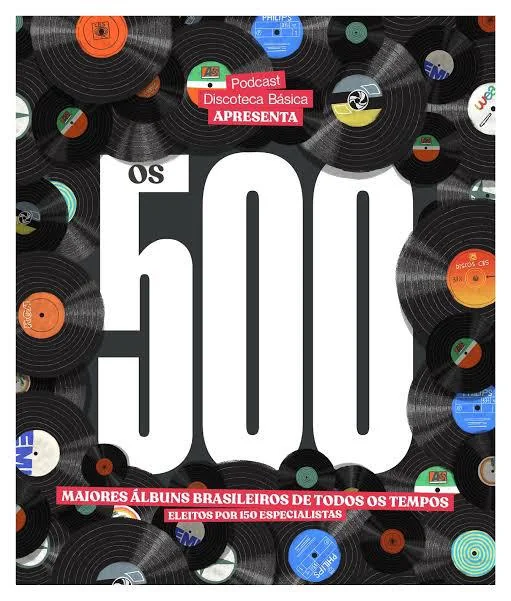
Os 500 Maiores Álbuns Brasileiros de Todos os Tempos
Ricardo Alexandre · 2022
The largest Brazilian music election ever conducted: 162 specialists, spanning journalists, critics, musicians, producers and podcasters, each nominated 50 essential albums, supported by a masterlist of more than 2,000 works. Led by Ricardo Alexandre with tabulation by Sérgio Jomori, it was published in December 2022 as a 200-page hardcover book with graphic design by Fernando Pires.
Rita Lee mora ao lado
Henrique Bartsch · 2006
Os Mutantes, Roberto Carlos, Wanderléa, Erasmo Carlos, Elis Regina, Raul Seixas, Gilberto Gil and Caetano Veloso are some of the characters who helped write this unhinged (and uncensored) biography of Rita Lee, the queen of Brazilian rock. To tell this story, Henrique Bartsch drew on extensive research.
Analyses
Atrás do Porto Tem uma Cidade – Wikipedia
Wikipedia, the free encyclopaedia
Atrás Do Porto Tem Uma Cidade (1974) Rita Lee & Tutti Frutti
meusdozemais.substack.com
Backed by Tutti Frutti, a seminal rock band from São Paulo, this is the phase of Rita Lee that fascinates me the most. There was a perfect combination there between the dirty, blues-infused sound of The Rolling Stones and the glam and futuristic aesthetic of David Bowie.

Rita Lee & Tutti Frutti - Atrás Do Porto Tem Uma Cidade 1974
madshoesmusicology.blogspot.com
Atrás do Porto Tem uma Cidade is an excellent album, although it isn't quite as consistent or spectacular as the rock classics Fruto Proibido and Babilonia, which Rita Lee and Tutti-Frutti would record later.
Rita Lee & Tutti Frutti - Atrás Do Porto Tem Uma Cidade (1974)
pequenosclassicosperdidos.com.br
Well, while Os Mutantes were melting their brains with LSD and becoming increasingly progressive and boring, Rita Lee went further, making rock like no one else in Brazil (as always, ahead of her time), daring, challenging the prevailing testosterone, in silver boots and spiky vibes.
Encarte: Rita Lee & Tutti Frutti - Atrás do Porto Tem Uma Cidade ...
encartespop.com.br
The third studio album released by Rita Lee is also her first work in collaboration with the band Tutti Frutti. The singles "Mamãe Natureza", "Menino Bonito" and "Ando Jururu" were taken from the album Atrás do Porto Tem Uma Cidade (1974).
