A Máquina Voadora
Ronnie Von
1970

Rankings
Why This Album Matters
Released in 1970, A Máquina Voadora is a milestone in Ronnie Von's discography and in Brazilian psychedelic music, consolidating the artist's experimental phase, which sought to break away from his image as the "Prince" of Jovem Guarda. The album stands out for its innovative sound for its time, blending elements of psychedelic rock, MPB, and influences that harked back to The Beatles in their more lysergic phase. This singular work is permeated by an almost allegorical concept, exploring themes such as aviation and literary references, in particular to the books of Antoine de Saint-Exupéry, such as O Pequeno Príncipe. Its wandering and introspective atmosphere made it a cult classic, appreciated for its boldness and depth in an effervescent musical scene.
Context
Before A Máquina Voadora, Ronnie Von was known as a Jovem Guarda idol, the "Little Prince" of that 1960s pop generation. He had achieved success with romantic songs and covers of Beatles tracks, even rivalling Roberto Carlos in popularity. However, around 1968, Ronnie Von expressed a desire to distance himself from this image and explore riskier artistic paths, embarking on a "psychedelic journey" that resulted in a trilogy of albums, of which A Máquina Voadora is the conclusion. With a background in economics and piloting, Ronnie Von wanted to dedicate himself to music and seek more significant content, going beyond his heart-throb appeal.
Recording
The production of the album A Máquina Voadora was handled by Arnaldo Saccomani. The arrangements, in turn, were created by Chiquinho de Moraes, a renowned pianist and arranger who worked with many great names in Brazilian music. A notable aspect in the recording of the title track, "A Máquina Voadora", is the orchestrated arrangement by Chiquinho de Moraes, who sought to simulate the roar of an engine and the sensation of an aeroplane taking off and soaring, using guitars by Cacho Valdez and Tony Osanah to create this sound. Ronnie Von composed the song in about 40 minutes, inspired by his passion for piloting single-engine planes.
Songs
The twelve tracks on A Máquina Voadora display a rich sonic and lyrical tapestry. The title track, "A Máquina Voadora", is a composition by Ronnie Von and San Martin, characterised by its striking harpsichord, fragmented drums, and an impactful instrumental, despite its brevity. "Baby de Tal", by Arnaldo Saccomani, is another song that maintained the artist's romantic side, but with a psychedelic guise, becoming one of the radio singles at the time. Other highlights include "O Verão nos Chama", one of Ronnie Von's best compositions, with a poetic lyric ("No paraíso os anjos dançam, e anda de motocicleta") and a horn section that harks back to Tim Maia's style. The song "Continentes e Civilizações" is considered "extreme" and "brilliant" due to its reflective lyric, melancholic melody, and Ronnie's declamatory style, being compared to Pink Floyd's Dark Side of the Moon album for the need to listen to it in its entirety to comprehend it. Meanwhile, "Viva o Chopp Escuro" is an anthem of psychedelic rock and bohemianism, with a striking chorus, its lyric inspired by a tragic incident witnessed by Ronnie and record company director Andre Midani.
Legacy
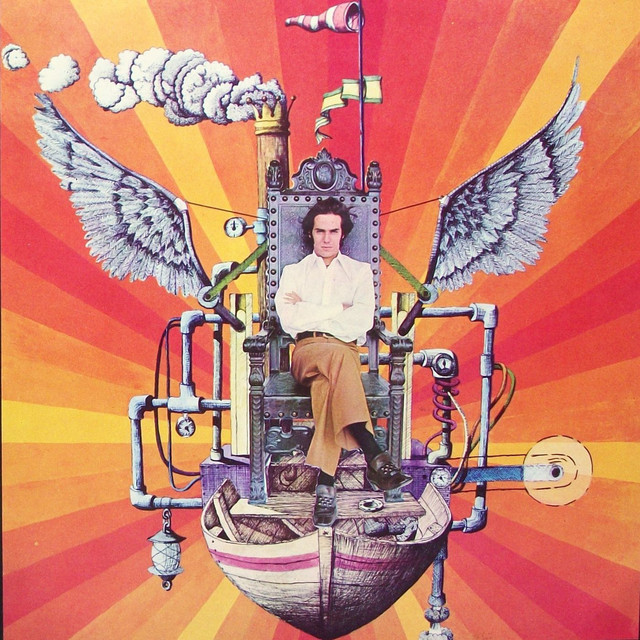
A Máquina Voadora is recognised as one of the most revered albums by fans of Brazilian music, marking a high point in Ronnie Von's psychedelic phase. Released in 1970 by Philips' Polydor label, the record was re-released on CD in 2007 and in its original LP format in 2013 by Polysom. Although Ronnie Von stepped away from mainstream music, becoming a TV presenter, A Máquina Voadora and his other psychedelic records, such as the 1969 album, are highly sought-after vinyl rarities and were essential for re-evaluating his discography, revealing an artist who dared to escape his initial image. The original LP cover, which differed from the artistic concept desired by Ronnie Von (who preferred a drawing by Pepe), is another detail that highlights the clash between the record company's commercial vision and the artist's experimental proposal.
Tracks
Credits
Julito Cavalcante
Rob Grant
Hugo Falcão
Diego Xavier
Podcasts
PodCália · Gigola
Você tem um minuto para ouvir a palavra de Ronnie Von?? Aquele mesmo, da mesma praça, do mesmo banco, das mesmas flores, do mesmo jardim? Só que imagine: ao invés de um banco, uma canoa steam punk alada; ao invés de uma praça, a representação cósmica da consciência humana; as flores e o jardim, substitua por prismas coloridos propagados no espaço! Imaginou? Parabéns, você entrou na máquina voadora
Films

Books

Analyses
RONNIE VON A Maquina Voadora - recordheaven.net
recordheaven.net
The last and probably the best album from Von's incredible psychedelic trilogy from the years 1969-1970, titled A Maquina Voadora (The Flying Machine). We said some time ago that of the three key albums from this long-time Brazilian pop-star that the first was the best, but hearing this again suggests that it's time to revise that opinion. It's true that all three albums make it clear that the ...

Jazz Chill : Three Classic Ronnie Von Albums Reissued - Ronnie Von, a ...
jazzchill.blogspot.com
Some groovy psychedelic rock from Brazil - the self-titled effort from Ronnie Von - a Brazilian television personality and musician who stayed incredibly busy from late 60s through the 70s - but recorded few albums as sublime as this album from 1968! The set's really a near-perfect batch of sunshine rock - sung in Portuguese and featuring some of the similar freeform sounds of his ...
Ronnie Von - A Máquina Voadora (1970) | cenaindie
cenaindie.com
Ronnie Von's album 'A Máquina Voadora', released in 1970, is a remarkable work of Brazilian music. Although not the reviewer's favourite, it is considered one of the best of Ronnie's 'psychedelic trio', rivalling the quality of his eponymous 1967 album.

#16 - Ronnie Von - Minha Máquina Voadora (1970) - Ranking dos (meus ...
tudooqueeutenhoadizersobremusica.blogspot.com
The imposing near-title track, Máquina voadora (by Martin and Von), is a sign that the artist is at his peak here: a voluminous sound mass, emotional intensity, and dreams of freedom materialised in a brief and eternal song.
Ronnie Von - Máquina Voadora 1970 - Jardim Eletrico
ojardimeletrico.com
With a spectacular cover, the album opens with the song that names it. With a killer harpsichord and impactful instrumental, Ronnie shows a beautiful vocal power. A somewhat short but incredible song. It's worth highlighting, besides the harpsichord, the complex drum patterns. The opening couldn't be better.