Secos & Molhados
Secos & Molhados
1973
Rankings
Why This Album Matters
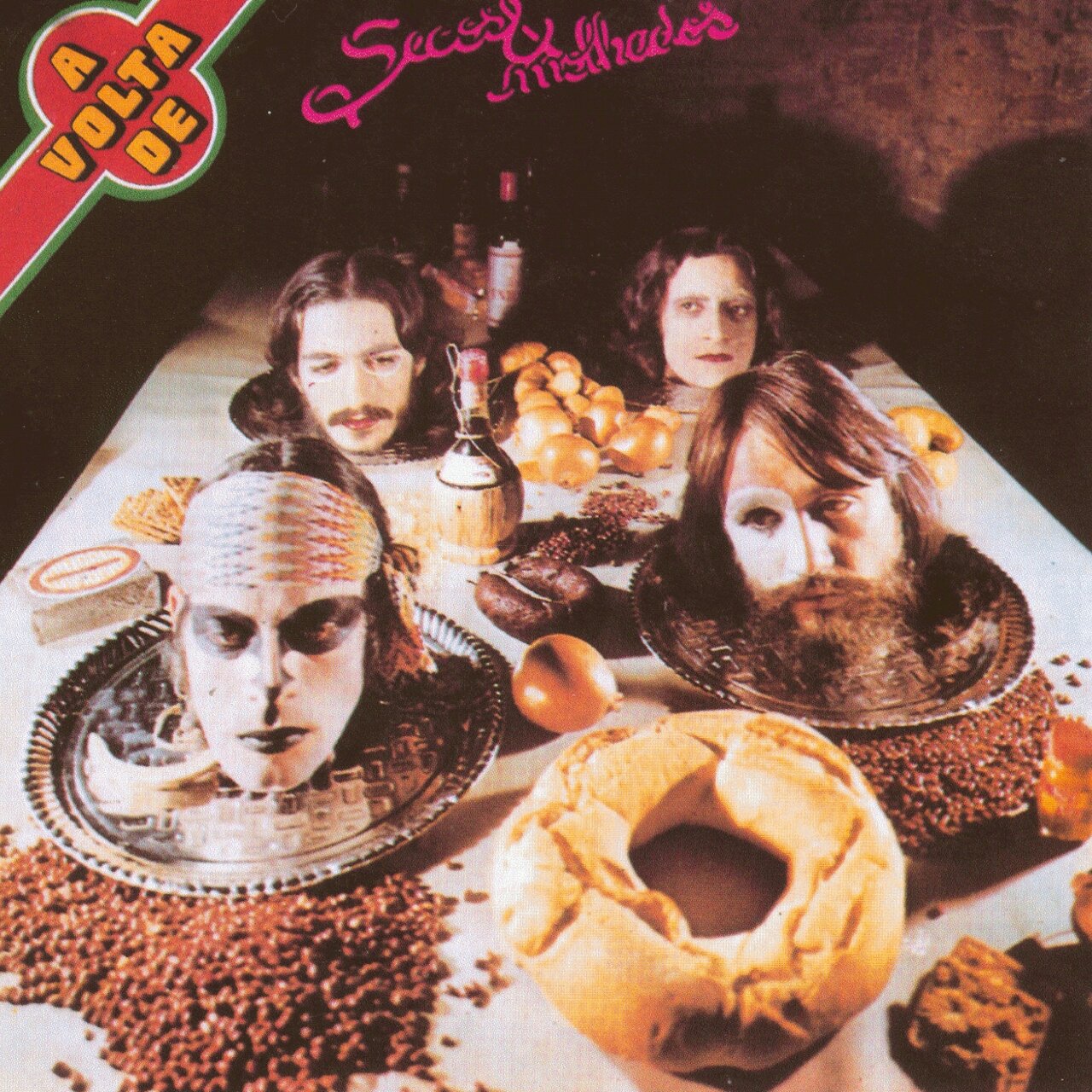
The debut album by the group Secos & Molhados, released in August 1973, is a seminal work in Brazilian music, standing out for its audacious fusion of different artistic and musical expressions. The record notably unites the poetic depth of authors such as Vinicius de Moraes, Manuel Bandeira, and João Apolinário with elements of Portuguese folklore and rich Brazilian traditions, featuring iconic songs like "Sangue Latino", "O Vira", "Assim Assado", and "Rosa de Hiroshima". Innovative for Brazilian Popular Music of its time, the album introduced a heavier sound and a striking visual aesthetic, with strong makeup on the cover, reminiscent of glam rock. This pioneering approach expanded the horizons of MPB, developing genres such as psychedelic pop and folk. Its eclectic sound also incorporates touches of rock and roll, baião, jazz, and progressive rock, creating a mixture that transcends classifications. In the songs, one can identify characteristics of glam rock, Brazilian and Portuguese poetry, social engagement, rhythmic and instrumental elements of Latin American music, and rock in the guitar and synthesizer arrangements. The group's performance was marked by exuberance and explicit references to androgyny and sexuality, in a transgressive yet accessible and admired manner by the public.

S&M founded 70s 'rock', with hypnotic touches of progressive rock, but incorporating the acronym MPB more than denying it.
Pedro Alexandre Sanches · Rolling Stone Brasil
Context
Secos & Molhados emerged from a project by João Ricardo, who, after several performances with various instrumentalists, found in Ney Matogrosso the ideal voice for his already composed repertoire. Ney, who at the time dedicated himself to theatre, painting, and handicrafts, was introduced by a mutual friend, Luhli. João Ricardo named the group inspired by a warehouse sign, seeking a term that would be open to all genres. The trio began performing with great success at Casa da Badalação e Tédio, at Teatro Ruth Escobar, attracting the attention of businessman Moracy do Val, who introduced them to the Continental record label, one of the main national phonographic companies competing with multinational corporations. The album was released in 1973, a period of intense repression and censorship imposed by the Military Regime in Brazil, whose peak of arbitrariness was reached with Institutional Act No. 5. The emergence of Secos & Molhados occurred as a market phenomenon amidst this oppressive reality, with the album addressing themes such as freedom of expression, racism, and wars. Coinciding with a period of expansion in the phonographic industry and increased vinyl consumption in the country, the Continental record label, seeking to diversify its catalogue and prestige, invested in the group, which was already gaining notoriety through live performances at Teatro Ruth Escobar.
Recording
The recording of the album Secos & Molhados was made possible by the tireless strategy of producer Moracy do Val, who scheduled performances and sent demo tapes to various record labels. Only Continental, thanks to Moracy's influence and his important contacts within the company, decided to invest in the group. Although the label was more focused on regional and sertaneja music, it granted the opportunity, albeit with a limited budget due to uncertainty about the band's future. The recording sessions took place between May and June 1973, at Estúdio Prova in São Paulo, with the trio recording the 13 songs of the LP in just fifteen days, working six hours daily. The recordings were made on only four channels, a technique considered "precarious" for the time. João Ricardo took on the musical direction, while Moracy do Val acted as producer. The arrangements were mostly credited to the band itself, with the exception of the track "Fala", which featured the participation of Zé Rodrix, whose moog keyboard solo, fifteen minutes longer, could only be fully appreciated on the album's CD re-releases. Drummer Marcelo Frias participated in the recordings and appeared on the album cover, although he decided not to officially join the group as a permanent member. His participation was as a contracted musician, a decision he made after the cover photograph was taken, and he was not involved in the recordings for the band's second album the following year.
Songs
The lyrics of Secos & Molhados are one of the album's pillars, originating from celebrated or unreleased poems which, due to their lyrical quality, are considered equivalent to the original literary texts. Poems by Vinicius de Moraes, Manuel Bandeira, and Cassiano Ricardo, as well as works by the journalist and poet João Apolinário, João Ricardo's father, were set to music by the group's leader. Among the seven songs derived from poems, the most widely discussed was "Rosa de Hiroshima", by Vinicius, a melancholic ballad with guitar and flute, which addresses the impacts of the atomic bomb in the Second World War, being Gérson Conrad's sole compositional contribution, alongside "El Rey". However, not all tracks on the album are based on poems. The album's opening is marked by the memorable bassline of "Sangue Latino", a composition by João Ricardo and Paulinho Mendonça. Constructed with an economical chord sequence and a pop arrangement, the lyrics of this song explore the "Latin American condition", the "misguided paths", and the resilience of the continent's peoples, seeking to harmonise the aesthetic engagement of the 1960s with the appeal of international hits. The album demonstrates a notable diversity in its repertoire, designed to appeal to different audiences and musical tastes. While "Primavera nos Dentes" and "Mulher Barriguda" resonated with the politically engaged, "Rosa de Hiroshima" became a pacifist anthem, and "Prece Cósmica" captivated hippies and mystics. "Rondó do Capitão" enchanted children, and "O Vira", a rock song with references to the eponymous Portuguese dance, conquered the masses on the radio. The album also features experiments in softer genres, such as folk, with tracks like "O Patrão Nosso de Cada Dia", which, with Ney Matogrosso's voice accompanied by guitar or flute, is compared to the works of Crosby, Stills, Nash & Young.

Three hundred thousand copies sold of an album is an extraordinary achievement at any time. In Brazil in 1973, leaving aside the annual million-selling record set by Roberto Carlos, such a figure was almost supernatural.
Arthur Dapieve · 300 Discos Importantes
Legacy
Secos & Molhados was a sales phenomenon for its time, catapulting the group onto the national stage and becoming the band's most famous LP, with over 1 million copies sold nationwide, and more than 1500 in the first week of release alone. This immediate commercial success solidified the album's position as a landmark in Brazilian music. Its relevance has been reiterated over the years, with the album receiving platinum certification in 1997 by ABPD, due to its CD re-release. Critical recognition manifested itself in important lists, such as fifth place in Rolling Stone Brasil's prestigious "Lista dos 100 maiores discos da música brasileira" in 2007, and 97th position in Al Borde's "Los 250: Essential Albums of All Time Latin Alternative - Rock Iberoamericano" in 2008, proving its lasting popularity and critical admiration. The album's iconic cover also holds a significant legacy, having been part of an exhibition in June 2008 at the Cultural Centre of Spain in Miami, which gathered the 519 best Latin American pop and rock covers. The album's visual and sonic influence can be seen in later artists, such as the band Titãs, who in 1995 produced the music video for "Eu Não Aguento" with the bass introduction from "Sangue Latino" and a recreation of the members' image with their heads on the table. In 2001, the newspaper Folha de S.Paulo elected it as the best long-play cover in the entire history of Brazilian popular music.
Tracks
Credits
Julio Nagib
Secos & Molhados
Moracy Do Val
Ney Matogrosso
João Ricardo
Gerson Conrad
Willy Verdaguer
Marcelo Frias
Sérgio Rosadas
John Flavin
Emílio Carrera
Zé Rodrix
Aluizio De Paula Salles Jr., Luiz Roberto Marcondes
Sidney Morais
Décio Duarte Ambrósio
Antonio Carlos Rodrigues
Podcasts
Discoteca Básica Podcast · Parasol Storytelling
O MAIOR FENÔMENO POP DA DÉCADA DE 1970 NO BRASIL. Eleito o quarto maior álbum brasileiro de todos os tempos na eleição promovida pelo Podcast Discoteca Básica, o auto-intitulado disco de estreia do Secos & Molhados é a inclassificável obra-prima do mais meteórico sucesso da música do Brasil. Convidado do episódio: Charles Gavin Assinante do Clube Discoteca Básica tem conteúdo complementar. Nesta
Roda de conversa sobre os melhores discos que completam 50 anos em agosto de 2023. Participação de Frederick Martins, José Fernando Cardoso e Lúcio Brancato. Produção e apresentação de Eduardo Osorio. CONTATOS E-mail: canalmusicatessen@gmail.com Instagram: @musicatessen 10 MELHORES DISCOS DE AGOSTO DE 1973 1º) |82 pts| Secos & Molhados (Secos & Molhados) 2º) |71 pts| Innervisions (Stevie Won
MUSICOFILIA · Juliano Dupont
Secos & Molhados: Ney Matogrosso – vocal João Ricardo – violões de 6 e 12 cordas, harmônica de boca e vocal Gérson Conrad – violões de 6 e 12 cordas e vocal Músicos convidados Marcelo Frias – bateria e percussão Sérgio Rosadas – flauta transversal e flauta de bambu John Flavin – guitarra elétrica e violão de 12 cordas Zé Rodrix – piano, ocarina, acordeão e sintetizador Willy Verdaguer – contra
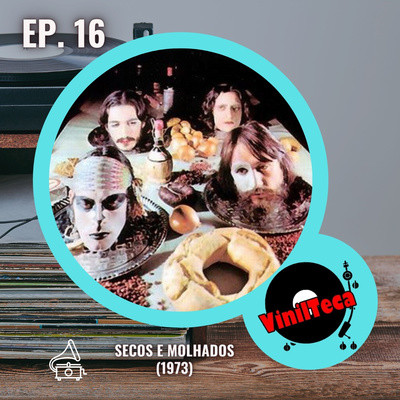
Vinilteca · José Ono Junior e Guilherme Colpani
Formado por Ney Matogrosso, João Ricardo e Gerson Conrad, a banda Secos e Molhados abalou as estruturas da música brasileira com seu primeiro disco, que trazia músicas que misturavam poesia, rock, sons latinos e protesto. Relembramos o início meteórico do Secos e Molhados em 1973. A Vinilteca é um projeto que nasceu no YouTube em 2016 e migrou para o rádio e para o podcast, com apresentação dos a

Acorde - Música e Psicanálise · Rafael Garbuio e Ricardo Pezati
Vigésimo quarto episódio do podcast Acorde - Música e Psicanalise, vamos analisar a obra Fala, de autoria de João Ricardo e Luhli, publicada no álbum de 1973 da Banda Secos e Molhados e magistralmente interpretada na voz de Ney MatoGrosso.Para analisar esta obra contamos com a presença de nossa convidada Paula Sucena, que é psicanalista e docente no Instituto Deep - Diálogos e Estudos em Psicanál
Videos
Secos & Molhados - Secos & Molhados (1973) | ALBUM REVIEW
Som de Peso
[SHOW] Secos e Molhados 1973 O Grande Sucesso do Grupo
Discomaníacos
3000 Best Albums [2967] Secos & Molhados - Secos & Molhados (1973) Dan's Mini Album Review
Dan's Mini Album Reviews
Secos & Molhados 1973 - A Revolução do Som e da Imagem
Rotação 33
Secos & Molhados 1973 | Review | Gérson Conrad
Pitadas do Sal
Análise de SECOS E MOLHADOS lançado em 1973 #secosemolhados #neymatogrosso
Motim Underground
Films


Primavera nos Dentes – A História do Secos & Molhados
2025
The series follows Secos & Molhados, the rock band that shaped music and concepts in Brazil. In exactly twelve months, the group broke all records — selling over 1 million records of their debut album and playing to 25,000 people at Maracanãzinho Stadium. With painted faces and sinuous dance moves, they brought gender issues, androgyny, and the poetry of authors like Manuel Bandeira and Vinicius de Moraes into the country's homes.
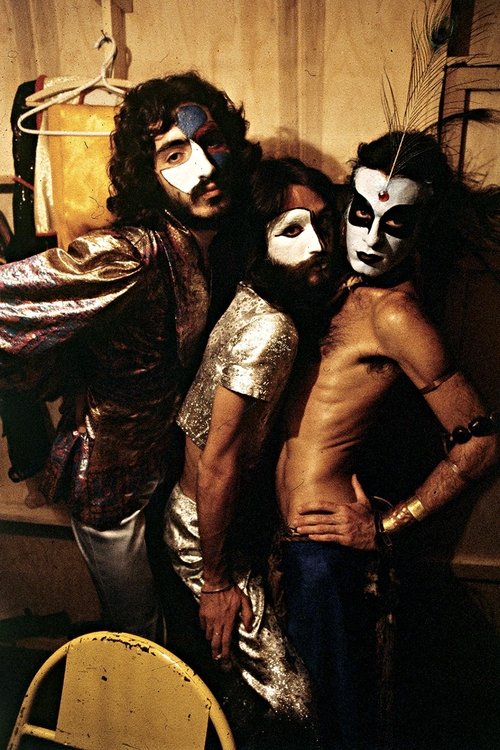
Secos & Molhados
2021
The founder of Secos & Molhados, João Ricardo, gives his version of the story of one of the main bands of the 1970s.
Ney - À Flor da Pele
2020
The impact of Ney Matogrosso's performances on his audience and the reverberation of that impact on Brazilian culture, from the second half of the 20th century to the present. An audiovisual anthology, all composed of archival images. The best way to get to know Ney is to be with him on stage.
Books
Os 500 Maiores Álbuns Brasileiros de Todos os Tempos
Ricardo Alexandre · 2022
The largest Brazilian music election ever conducted: 162 specialists, spanning journalists, critics, musicians, producers and podcasters, each nominated 50 essential albums, supported by a masterlist of more than 2,000 works. Led by Ricardo Alexandre with tabulation by Sérgio Jomori, it was published in December 2022 as a 200-page hardcover book with graphic design by Fernando Pires.
Secos & Molhados
Ney Matogrosso, Gerson Conrad, Paulo Mendonça, Luhli, Moracy do Val, Charles Gavin · 2017
This book is about the group Secos & Molhados, focusing on their formation and the impact of the release of their first LP in 1973, the album in question. It explores how the trio, composed of Ney Matogrosso, João Ricardo and Gerson Conrad, stood out in the Brazilian rock scene of the time, shining on radio and TV with hits like 'Sangue Latino' and 'O Vira', and their artistic performance.
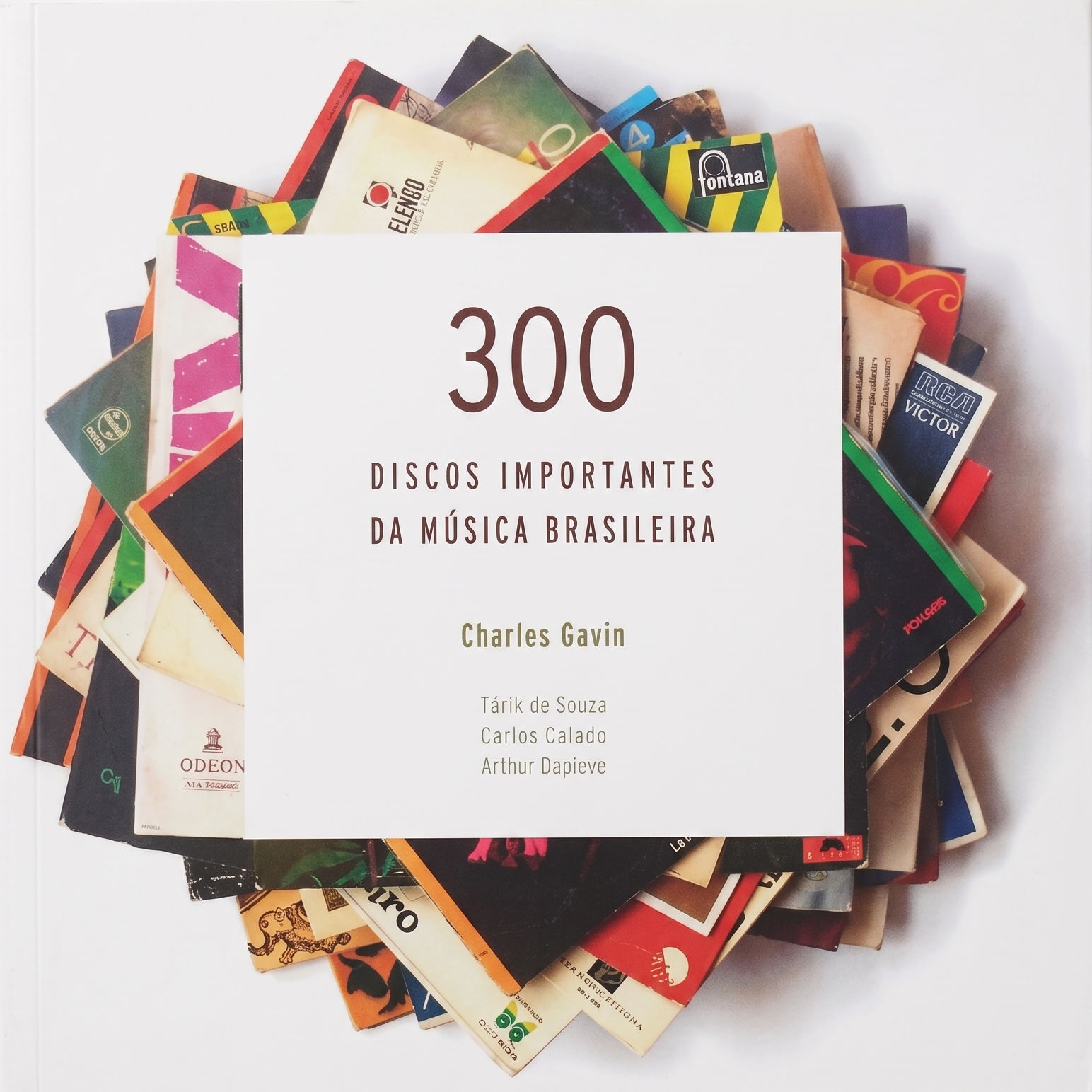
300 Discos Importantes da Música Brasileira
Charles Gavin, Tárik de Souza, Carlos Calado, Arthur Dapieve · 2008
Conceived by Titãs drummer and musical researcher Charles Gavin, the 434-page book brings together covers and reviews of albums released between 1929 and 2007. The texts were written by journalists Tárik de Souza, Arthur Dapieve and Carlos Calado.
Analyses
Secos & Molhados – Wikipedia
Wikipedia, the free encyclopaedia
Secos & Molhados – The 100 Greatest Albums of Brazilian Music
Pedro Alexandre Sanches · Rolling Stone Brasil
S&M founded 70s 'rock', with hypnotic touches of progressive rock, but incorporating the acronym MPB more than denying it.
Secos & Molhados - Secos & Molhados (1973) ~ Rock: Álbuns Clássicos
rockalbunsclassicos.com.br
The band's debut album, simply titled Secos & Molhados, was recorded in just 15 days at Estúdio Prova, in the Paulistana capital, between 23 May and 8 June 1973.
Secos & Molhados é o disco que ensinou o Brasil a cantar sem pedir ...
cantinhododisco.com.br
When Secos & Molhados was released in 1973, Brazil was still living under the heavy shadow of the dictatorship. What no one expected was that such a strange, free and forthright record would become an absolute success.
Secos & Molhados: O Fenômeno que deu voz a Ney Matogrosso e marcou a ...
portalcomenta.com.br
With lyrics ranging from concrete poetry to social criticism and arrangements that blended rock, MPB and folk, the album was an absolute success, selling over a million copies, an impressive feat for the time.