Eu Quero É Botar meu Bloco na Rua
Sérgio Sampaio
1973

Rankings
Why This Album Matters
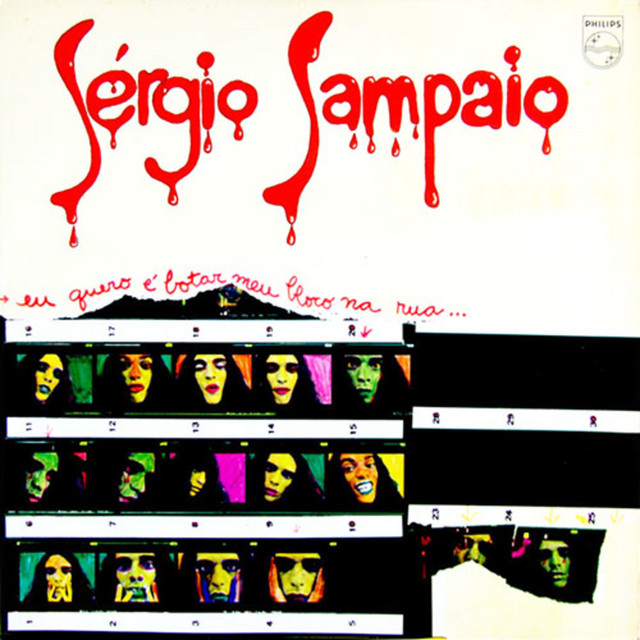
The album Eu Quero É Botar meu Bloco na Rua, eponymous with its biggest hit song, marks the eagerly awaited solo debut of the talented Espírito Santo singer and songwriter Sérgio Sampaio in 1973. This work established itself as a fundamental piece in MPB from that period, capturing the essence of an artist whose voice and lyricism stood out for their anti-heroism and a deeply nonconformist discourse. The title track, a marcha-rancho with universal appeal, quickly became a symbol of Sampaio's compositions, imbued with a subtle, yet incisive, critique of the prevailing repression. The album, as a whole, reflects Sampaio's mastery in translating the spirit of an era into songs, establishing him as a singular and essential figure in the Brazilian musical landscape.
Context
The release of Eu Quero É Botar meu Bloco na Rua follows the project "Sociedade da Grã-Ordem Kavernista Apresenta Sessão das 10", an endeavour which, during one of the most severe periods of the Brazilian military dictatorship, faced numerous cuts and political persecution due to censorship. The title track was originally presented at the VII Festival Internacional da Canção (FIC) in 1972, with Sampaio on stage alongside guitarist Renato Piau. Despite not being the winner, the song achieved great recognition and was included in the compilation "As Melhores do VII FIC", demonstrating its immediate impact with the public.
Recording
The song "Eu Quero É Botar meu Bloco na Rua" was produced by Raul Seixas. Subsequently, the track was recorded in the studio to be part of Sérgio Sampaio's solo career debut album, which would receive the same title.
Songs
The album's eponymous song, "Eu Quero É Botar meu Bloco na Rua", is frequently categorised as a marcha-rancho and drew attention for the anti-heroism that would become a hallmark of Sampaio's compositions. Its discourse is nonconformist and critical of the military's repression, who are metaphorically represented in the song by the character Durango Kid.
Legacy
The single "Eu Quero É Botar meu Bloco na Rua" achieved immediate, resounding success, selling over 500,000 copies and being acclaimed as the biggest hit of the 1973 Carnival. The impact of the song earned Sérgio Sampaio the Troféu Imprensa for revelation of the year in the 1973 edition, consolidating his recognition. The importance of the track is underlined by Rolling Stone Brasil magazine, which cited it in thirty-eighth place on its list of the 100 greatest Brazilian songs. Furthermore, the song has been re-recorded countless times by artists from various genres, demonstrating its continuous relevance in Brazilian music. However, despite the overwhelming success of "Eu Quero É Botar meu Bloco na Rua", Sérgio Sampaio did not achieve a commensurate commercial breakthrough in his career.
Tracks
Credits
Raul Seixas
Raul Seixas
Piau
Sérgio Sampaio
Alex Malheiros
Ivan Conti, Wilson das Neves
Conjunto "Creme Cracker"
José Roberto Bertrami
Joaquim Figueira
Paulo Sergio
Ary Carvalhaes, Luigi Hoffer
Aldo Luiz
Luiz Garrido
Podcasts
O Maniçoba Podcast retorna, após um longo período sem gravações, para explorar juntamente com o convidado Beto Pacheco do podcast Escuta Aí Curitiba o primeiro disco do Sérgio Sampaio, Eu Quero É Botar Meu Bloco na Rua (Philips, 1973). Músico de Cachoeiro do Itapimirim, cidade de Roberto Carlos, Sérgio foi descoberto por Raul Seixas enquanto ele trabalhava na rádio CBS. Sua música brasileira, base
Videos
50 ANOS DE "EU QUERO É BOTAR MEU BLOCO NA RUA", DE SÉRGIO SAMPAIO | ALBUM REVIEW
Som de Peso
Books
Álbum 2 - 1972 a 1978
Pedro Alexandre Sanches · 2022
This volume is part of a series that retells the history of Brazilian music through its most iconic albums. The book 'Álbum 2' focuses on the period from 1972 to 1978, which means that Sérgio Sampaio's album 'Eu Quero É Botar meu Bloco na Rua' (1973) will be analysed in depth as one of the key works of that period.
Os 500 Maiores Álbuns Brasileiros de Todos os Tempos
Ricardo Alexandre · 2022
The largest Brazilian music election ever conducted: 162 specialists, spanning journalists, critics, musicians, producers and podcasters, each nominated 50 essential albums, supported by a masterlist of more than 2,000 works. Led by Ricardo Alexandre with tabulation by Sérgio Jomori, it was published in December 2022 as a 200-page hardcover book with graphic design by Fernando Pires.
300 Discos Importantes da Música Brasileira
Charles Gavin, Tárik de Souza, Carlos Calado, Arthur Dapieve · 2008
Conceived by Titãs drummer and musical researcher Charles Gavin, the 434-page book brings together covers and reviews of albums released between 1929 and 2007. The texts were written by journalists Tárik de Souza, Arthur Dapieve and Carlos Calado.
Eu quero é botar meu bloco na rua
Rodrigo Moreira · 2000
This book is a biography of Sérgio Sampaio, the artist behind the album 'Eu Quero É Botar Meu Bloco na Rua'. Published in 2000, its title is a direct tribute to the song and the record, exploring the life and work of the singer and songwriter.
Analyses
Eu Quero É Botar meu Bloco na Rua – Wikipedia
Wikipedia, the free encyclopaedia
Repositório Institucional da UFPB: Sérgio Sampaio e a paródia ...
repositorio.ufpb.br
Our research aims to reach another point: we start from Tropicalismo (exclusively its musical production) towards the first album by singer and songwriter Sérgio Sampaio, Eu quero é botar meu bloco na rua, from 1973.

Sérgio Sampaio - Eu Quero é Botar Meu Bloco na Rua (1973)
tabernanovostempos.blogspot.com
Bloco na Rua: Sérgio Sampaio's Explosive Solo Debut! In 1973, Sérgio Sampaio burst onto the Brazilian music scene with Eu Quero é Botar Meu Bloco na Rua, an album that pulsates with energy and versatility.
Sérgio Sampaio - Eu Quero É Botar Meu Bloco na Rua (1973)
musicasdonordeste.net
Included among the so-called "damned" of MPB, for his musical and poetic boldness, Sergio Sampaio quickly gained notoriety with the song "Eu Quero É Botar Meu Bloco na Rua", released in the midst of the dictatorship, which became one of the biggest hits of the time.

Sérgio Sampaio - Eu Quero é Botar Meu Bloco Na Rua 1973
madshoesmusicology.blogspot.com
In December, Sampaio caught tuberculosis, but started to record his first LP Eu Quero é Botar Meu Bloco na Rua. Released in March 1973, the album was a commercial failure, selling only 5,000 copies in spite of the hit.