Primitive
Soulfly
2000

Rankings
Why This Album Matters
Released on 26 September 2000, Primitive is the second studio album by heavy metal band Soulfly and represents a crucial milestone in Max Cavalera's career after his departure from Sepultura. This work stands out as Cavalera's most collaborative and multifaceted artistic statement to date, expanding the boundaries of nu metal with a bold fusion of heaviness, Brazilian tribal rhythms, grunge elements and touches of hip-hop. The album not only solidified Soulfly's sonic identity, but also deepened the exploration of spiritual, prophetic and aggressive themes, uniquely incorporating world music into its heavy sound. Primitive demonstrated a deliberate evolution from the rawer, more direct sound of the band's debut album, aiming for a more polished and textured production, without losing the leader's characteristic intensity.
Context
Soulfly was formed in 1997 by Max Cavalera in Phoenix, Arizona, following his tumultuous departure from Sepultura. Cavalera's decision to leave the Brazilian band occurred amidst disagreements over his wife remaining as manager, leading him to seek a new platform for his musical and spiritual ideas. The creation of Soulfly was born with the proposal to combine sounds and spiritual beliefs, a concept deeply influenced by the pain of dealing with the death of his stepson and best friend, Dana Wells. After the release of the self-titled debut album in 1998, which established the foundations of the band's tribal and aggressive sound, Soulfly entered the studio to record Primitive. The line-up for this album featured Max Cavalera on vocals, four-string guitar and berimbau, Mikey Doling on lead guitar, Marcello D. Rapp on bass and the addition of new drummer Joe Nuñez, who replaced Roy Mayorga.
Recording
The conception and recording of Primitive took place between 1999 and 2000 at The Saltmine Studio Oasis studio, located in Mesa, Arizona. For this work, the band enlisted the production of Toby Wright, known for his work with bands such as Alice in Chains and Korn, who sought a more spacious and refined sound compared to the raw approach of the debut album, produced by Ross Robinson. Wright's touches are noticeable throughout the record, with the inclusion of synthesizers, keyboards and additional drum programming, elements that contributed to the album's hybrid and multifaceted sound. Mixing was handled by Andy Wallace and mastering by George Marino. In addition to the main production, Max Cavalera is credited as co-producer on several tracks, while Sean Lennon also contributed as co-producer on the song "Son Song". Hand percussion, a pillar of Soulfly's sonic identity, was deepened with the participation of Larry McDonald and Meia Noite.
Songs
Primitive is a melting pot of influences and collaborations, with several tracks that stand out for their originality. The album opens with "Back to the Primitive", which immediately introduces the tribal element with the sound of the berimbau. "Jumpdafuckup" is one of the highlights, featuring the striking vocals of Corey Taylor from Slipknot and sludgy riffs, and is even recognised as a nu-metal 'classic'. "Mulambo" made an appearance in the film The Forsaken and featured backing vocals from the Mulambo Tribe, while "Terrorist" is notable for incorporating lyrics from Sepultura's "Inner Self" and Slayer's "Criminally Insane", in addition to vocal participation from Tom Araya of Slayer. The emotional "Son Song" is a tribute to the deceased fathers of Max Cavalera and Sean Lennon (the iconic John Lennon), with Sean Lennon co-writing, singing and playing on the track, which features grunge-sounding riffs à la Alice in Chains and vocals similar to Layne Staley's. The song "In Memory of..." innovates for Soulfly by incorporating rap elements, with contributions from Babatunde Rabouin, Deonte Perry and Justus Olbert. The instrumental "Soulfly II" is a sequel to the first album's title track, exploring a vast array of instruments such as congas, piano, sitar, twang and various wind instruments. Asha Rabouin makes her first appearance with the band on "Flyhigh", while "Pain" features collaborations from Chino Moreno of Deftones and Grady Avenell of Will Haven.
Legacy
Primitive achieved notable commercial success, selling over 226,569 copies by 2002. The album reached position 32 on the Billboard 200 and 11th position on the US independent charts, becoming the band's most successful album in the country. Critical reception was predominantly positive and diverse, with Rolling Stone praising the depth of the sound and Max Cavalera's 'lived growl', while Q Magazine highlighted the impact of the percussive and ethnic grooves. Melody Maker even classified Primitive as 'the metal album of the year so far', praising its 'incendiary mix of nu metal, reggae and Brazilian rhythms'. NME referred to Max Cavalera as the 'Bob Marley of heavy metal', noting the artist's political anger. Alternative Press described the album as a work of great scope, uniting 'pre-millennium' speed metal with hip-hop and ambient instrumentals. More recently, in 2019, the song "Jumpdafuckup" was included by Joe Smith-Engelhardt of Alternative Press in his list of the '10 essential nu-metal tracks that still hold up today', solidifying the album's place as a pillar of the genre.
Tracks
Credits
Monte Conner
Max Cavalera
Toby Wright
Max Cavalera
Max Cavalera
Neville Garrick
Marcello Dias
Gavin Hitt, Variety Artists International
ITB, Rod MacSween, Scott Thomas
Toby Wright
Joe Munez
Mikey Doling
Toby Wright
Meia Noite
Larry McDonald
Lance Dean
Steve Sisco
George Marino
Andy Wallace
Zyon Cavalera
Nesta Garrick
Leo Zulueta
Christina Newport, Gloria Cavalera, Oasis Management
Glen La Ferman
Gloria Cavalera, Kevin Estrada
Podcasts
Life Is Peachy Podcast · David Owen Blackley
The Life Is Peachy Podcast is an immersive, cinematic audio-documentary interview experience; unlike any other podcast, always with a guest and to the soundtrack of your favourite album 🍑Ex Soulfly bassisit / founding member Cello Dias (Marcello D. Rapp) joins #EP40 of the Life Is Peachy Podcast to look back over the 25th Anniversary of Soulfly's sophmore "Primitive" (2025), along with starting S
Thunderdome Metal Reviews: The Church of Heavy Metal · Benjamin Linzy
Metal Heads, we are back with Dr. David Pizzo, to look at the second album by Soulfly, Primitive . We discuss how Max's sound has evolved and discussed ideas for our next bonus episode. Tune in!!
Life Is Peachy · Life Is Peachy Podcast
#EP40 Patreon Early Release 🍑LIPS 🍑That's right, you are seeing things correctly ... it's finally time to go "Back to the Primitive!"The rollercoaster ride bringing Episode 40 has being one for the books. From very early on while working with Sepultura I discovered that you could essentially work with one or the other - meaning you choose sides; Sepultura or Max. With Her Name Is Murder Produc
excised/anatomised · Not Economically Viable Productions
Episode 5 of the MAXSTRAVAGANZA!!!! Stop looking at me like that. ANYWHO! We have arrived at Soulfly and here's were things get interesting. Marc is mostly negative, Edd is most positive and Corey is the voice of reason. This is also where Soulfly start to shed the nu metal and embrace the deaththrash. Email the show at excisedanatomised@gmail.com excised/anaotmised on Facebook excised/anato
Analyses
Primitive – Wikipedia
Wikipedia, the free encyclopaedia
In Defense Of: Soulfly's Primitive - does the album still hold up 25 ...
yorkshirepost.co.uk
As a new album drops, has Soulfly's 2000 album, Primitive, stood the test of time?
Cliquemusic : Disco : PRIMITIVE
cliquemusic.com.br
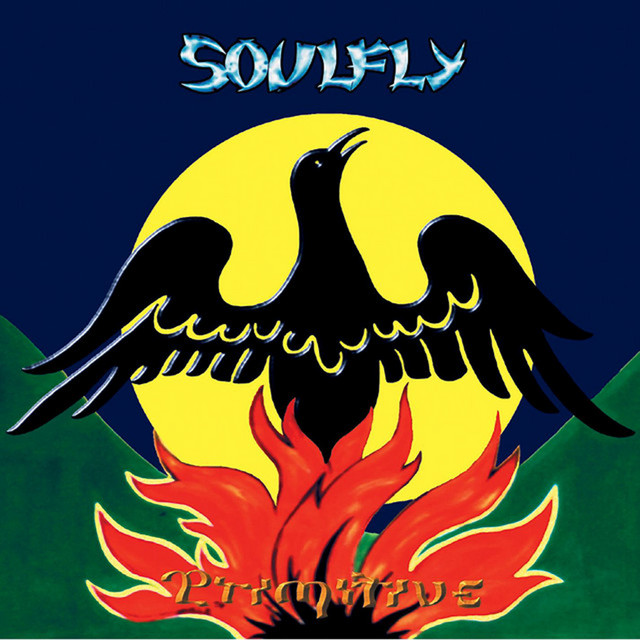
The bird on the cover, half-Phoenix, rising from the ashes, in a way does justice to what is heard on Primitive. More cohesive than the dispersed debut album, Soulfly, the new CD features Max Cavalera's metal machine much better oiled, resuming the path begun by Sepultura on Roots.
Roadie Metal Cronologia: Soulfly - Primitive (2000)
roadie-metal.com
Well, let's see how this story unfolds. Almost two years after the self-titled debut, the former Sepultura member brought his Soulfly back to the public, releasing in September 2000, via RoadRunner Records, a partnership that would last until the 2012 album 'Enslaved', the second album 'Primitive'.

Combustão Sonora: SOULFLY - Primitive (2000) [7.5/10]
combustaosonora.blogspot.com
Soulfly's second album, "Primitive", is packed with tropical atmospheres created by the excellent percussion, Max Cavalera's characteristic simple riffs, and simply structured tracks drawing more from mid-tempo groove and Nu Metal.