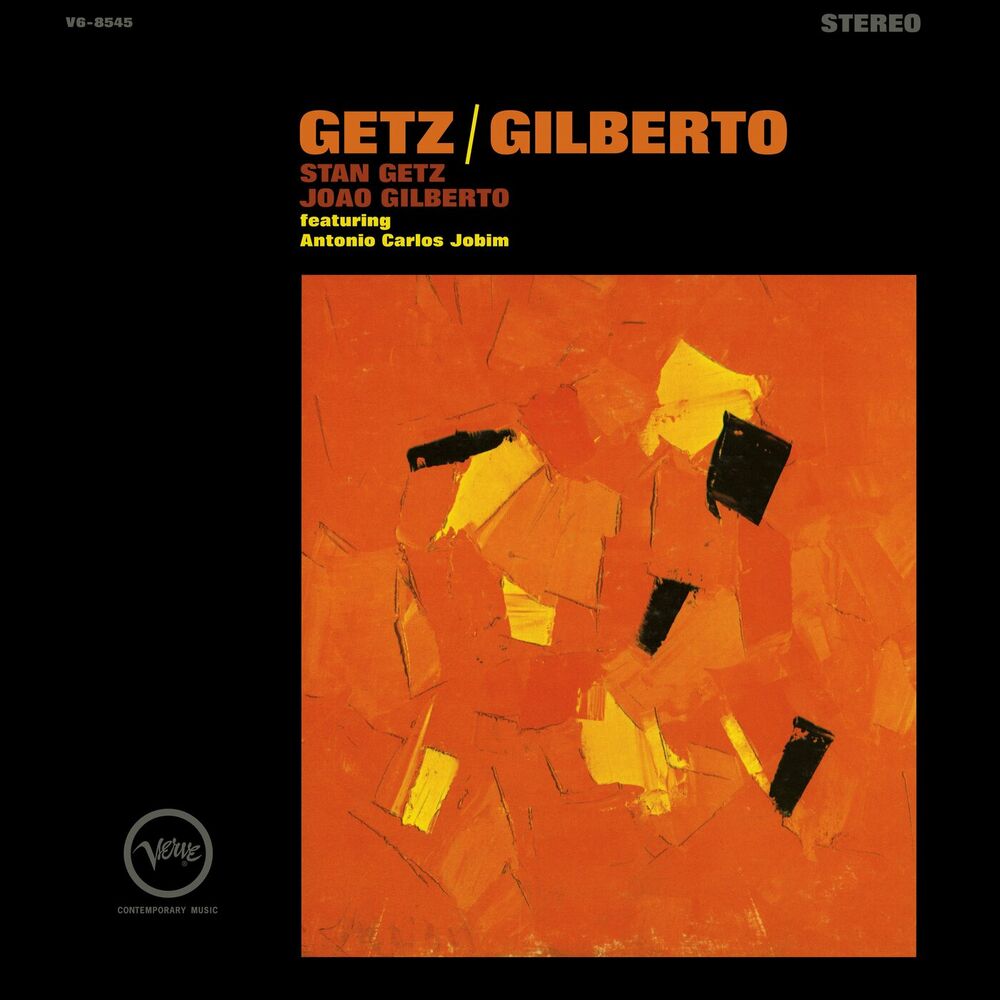
Getz/Gilberto
Stan Getz & João Gilberto
1964
Rankings
Why This Album Matters
Getz/Gilberto is an indelible landmark in world music history, representing the masterful fusion of saxophonist Stan Getz's jazz with the essence of bossa nova, personified by guitarist João Gilberto. With the exquisite contributions of Tom Jobim on piano and the astonishing voice of Astrud Gilberto, this 1964 album transcended cultural barriers and established a new standard for musical elegance. Released during a period when jazz was seeking renewal and bossa nova, effervescent in Brazil, yearned for international recognition, the album captured the sensibility of both genres. It is distinguished by the samba-like swing of bossa nova, the sophisticated minimalism of Jobim and Gilberto, Astrud Gilberto's subtle and "cool" vocals, and Getz's jazz improvisations, elements that, together, ensured a unique and timeless sound. Its ability to unite sophisticated music with massive popular appeal made it a unanimous favourite among critics and the public. The recordings, made in just two days in 1963, resulted in a repertoire that immediately became classic, with songs like "Desafinado", "Corcovado" and, in particular, "Garota de Ipanema". The combination of these artists' talents resulted in a work that not only defined bossa nova for the world but also enriched the jazz landscape with refreshing and innovative musicality.

This masterpiece of bossa nova was recorded in just two days in 1963, in New York.
Antônio do Amaral Rocha · Rolling Stone Brasil
Context
Bossa nova officially emerged in Brazil in 1958, with the song "Chega de Saudade", performed by Elizeth Cardoso, with arrangements by Tom Jobim and João Gilberto's innovative guitar playing. The genre's unprecedented rhythmic and harmonic sound generated debate, but consolidated a new aesthetic in Brazilian popular music, culminating in Gilberto's debut album, also titled Chega de Saudade, in 1959. Concurrently, jazz faced a commercial and artistic crisis in the late 50s and early 60s, desperately seeking renewal in the face of new genres such as rock 'n' roll. It was in this scenario that Stan Getz became enchanted by bossa nova after encountering Brazilian records in the United States, resulting in successful albums like Jazz Samba. The effervescence reached its peak with the Bossa Nova - New Brazilian Jazz concert at Carnegie Hall in 1962, where Brazilian innovators, including João Gilberto and Tom Jobim, introduced the genre to the North American public. This historic meeting, orchestrated by producer Creed Taylor, paved the way for the recording of Getz/Gilberto in 1963, solidifying the union of talents at a crucial moment for both musical styles.
Recording
The Getz/Gilberto recording sessions took place in New York, over two intense days, beginning on the morning of 18 March 1963 and concluding the following day. The project was meticulously produced by Creed Taylor and Getz for Verve Records. The rhythm section featured Tom Jobim on piano, Milton Banana on drums, recognised as the precursor of the bossa nova beat, and bassist Sebastião Neto, although the latter was uncredited due to contractual issues with his label. One of the most iconic moments of the recording was the participation of Astrud Gilberto, who, without prior professional experience, accepted the invitation from her then-husband, João Gilberto, to sing on "The Girl from Ipanema" and "Corcovado". Her performance, with a sober and almost whispered vocal style, free from excessive vibrato, would become the signature of female vocals in bossa nova, complementing the minimalism already present in João Gilberto's interpretation and Jobim's piano playing. Contrary to the musical harmony, the recordings were marked by creative tensions between João Gilberto and Stan Getz, who frequently disagreed on the choice of the best takes. Getz, with his more emphatic delivery, did not appeal to Gilberto's rhythmic perfectionism, as Gilberto preferred a more delicate saxophone. There was even an episode where Gilberto, frustrated and not fluent in English, asked Jobim to translate to Getz: "Tell that gringo he's an idiot", a phrase Jobim elegantly adapted to, "Stan, João is saying that his dream has always been to record with you." Despite the disagreements, the tension proved productive, and the sound engineering by Phil Ramone, the studio owner and a peacemaking figure, contributed to the final result. Producer Creed Taylor, fearful of commercial failure, shelved the album for almost a year, resulting in its release in March 1964, one year after recording.
Songs
Getz/Gilberto's repertoire is a collection of bossa nova gems, transforming all recordings into instant classics. Among them, "Desafinado", a partnership between Jobim and Newton Mendonça, and "Corcovado", composed by Jobim, stand out. The most impactful song, however, was "Garota de Ipanema", by Jobim and Vinicius de Moraes, which not only revealed Astrud Gilberto's unknown voice to the world, catapulting her to stardom, but also popularised the melody and lyrics universally. The album also reverences the roots of pre-bossa nova samba with interpretations of "Doralice", by Dorival Caymmi and Antônio Almeida, and "Para Machucar Meu Coração", by Ary Barroso. In these tracks, Gilberto bestows a polish and seriousness that elevates them to a new level of sophistication. The remaining songs are predominantly Jobim's compositions, many in partnership with Vinicius de Moraes ("Só Danço Samba", "O Grande Amor") or Newton Mendonça ("Desafinado"), and others solely by him, such as "Vivo Sonhando" and "Corcovado", which also gained an English version by Gene Lees. Astrud Gilberto's vocal approach, sober and almost whispered, became the model for female vocals in bossa nova, characterised by restraint and objectivity. It is interesting to note that, although Norman Gimbel adapted the lyrics of "Garota de Ipanema" into English, he initially questioned retaining the word "Ipanema" due to its lack of meaning for the North American public. Jobim, however, insisted on the reference to the famous Carioca beach, ensuring the authenticity and charm of the song that would become a global anthem.

Only the peculiar laws of the record market can explain the fact that this LP (recorded in New York, on 18 and 19 March 1963) was shelved for almost a year by producer Creed Taylor, precisely the album that made bossa nova a worldwide fever.
Carlos Calado · 300 Discos Importantes
Legacy
Getz/Gilberto not only became one of the best-selling jazz albums of all time, with over two million copies sold by 1964, but it was also the first to win the Grammy for Album of the Year in 1965, an unprecedented recognition for a jazz album at the time. The song "The Girl from Ipanema" was honoured with the Grammy for Record of the Year, solidifying Astrud Gilberto's status as an international star and popularising bossa nova globally. The album also held the second position on the Billboard chart for 96 weeks, rivalling the phenomenon of The Beatles. Critical reception and commercial success were unanimous, and the album continues to be acclaimed by musicians and the general public. It was included in prestigious compilations such as Rolling Stone's "500 Greatest Albums of All Time" and Vibe's "100 Indispensable Albums of the 20th Century", in addition to featuring in numerous other best album lists worldwide. JazzTimes magazine, in 1994, thirty years after its release, deemed it "essential for all serious jazz collectors", attesting to its lasting relevance. The impact of Getz/Gilberto was immense, defining Brazilian music for North American audiences and establishing Jobim and Gilberto as icons in the international market. Its success opened doors for countless jazz vocalists and instrumentalists, such as Ella Fitzgerald, Frank Sinatra, and Sarah Vaughan, to record bossa nova songs, especially "The Girl from Ipanema", which became the second most played popular song in history. Furthermore, Astrud Gilberto's interpretation with her soft and restrained voice set the standard for female vocals in bossa nova, influencing generations of singers in the genre.
Tracks
Credits
Creed Taylor
Milton Banana
João Gilberto
Olga Albizu
Antonio Carlos Jobim
Stan Getz
Val Valentin
Phil Ramone
Gene Lees, João Gilberto, Stan Getz
David Drew Zingg
Podcasts
Listen Closely with Jon & Chris · JonDB
Jon and Chris welcome Jim Moscater back to the podcast, and the three say goodbye to 2020 in style by paying homage to the Brazilian Bossa Nova craze of the 1960s, and the album that started it all. Featuring the brilliant American saxophonist, Stan Getz. and the legendary Brazilian guitarist, Joao Gilberto, the album introduced America to the beautiful and stylish songs of songwriter and pianist,
1001 Album Club · Birch
The defining bossa nova album of the 60's that sold more than 2 million copies in 1964 and has the originators of the genre.
Videos
Stan Getz & Joao Gilberto - Getz/Gilberto. Album Review en Español
Classicos en Vinilo
Getz Gilberto album a LP, SACD, HI-RES, CD Comparison Analogue Productions LP
Kenny's Audiophile Record Reviews
Getz/Gilberto REVIEW
On The Flip Side
The Story Behind Getz/Gilberto. The Best Bossa Nova Album
The Independent Darling
Getz Gilberto Album Review
HiFi Utopia
A review of Impex Records Getz Gilberto hybrid SACD..And a jazz fusion vinyl record album review
Kenny's Audiophile Record Reviews
Films


Books
Os 500 Maiores Álbuns Brasileiros de Todos os Tempos
Ricardo Alexandre · 2022
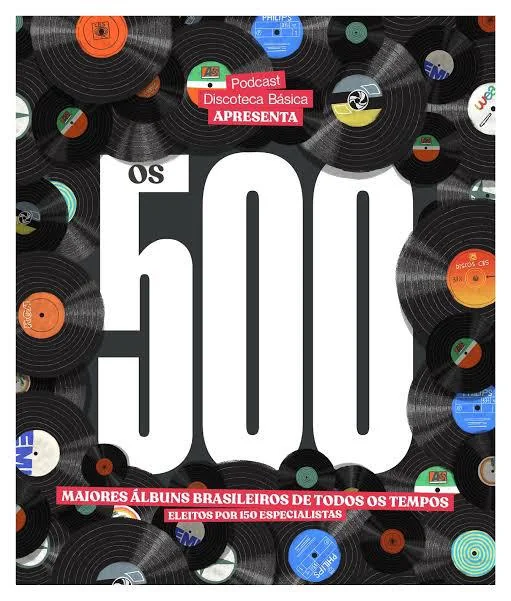
The largest Brazilian music election ever conducted: 162 specialists, spanning journalists, critics, musicians, producers and podcasters, each nominated 50 essential albums, supported by a masterlist of more than 2,000 works. Led by Ricardo Alexandre with tabulation by Sérgio Jomori, it was published in December 2022 as a 200-page hardcover book with graphic design by Fernando Pires.

Amoroso: uma biografia de João Gilberto
Zuza Homem de Mello · 2021
Considered the definitive biography of João Gilberto, this detailed work by Zuza Homem de Mello, a renowned Brazilian musicologist, delves into the life and work of the creator of bossa nova, including in-depth analyses of his most important albums, such as 'Getz/Gilberto'.
João Gilberto and Stan Getz's Getz/Gilberto
Bryan Daniel McCann · 2018
The work analyses the iconic 1964 album, 'Getz/Gilberto', which includes 'The Girl from Ipanema'. Although some Brazilian music fans might argue that it is not the best bossa nova album, the title track has become an omnipresent soundtrack in various settings, from cocktail parties to telephone hold music.

300 Discos Importantes da Música Brasileira
Charles Gavin, Tárik de Souza, Carlos Calado, Arthur Dapieve · 2008
Conceived by Titãs drummer and musical researcher Charles Gavin, the 434-page book brings together covers and reviews of albums released between 1929 and 2007. The texts were written by journalists Tárik de Souza, Arthur Dapieve and Carlos Calado.
Analyses
Getz/Gilberto – Wikipedia
Wikipedia, the free encyclopaedia
Getz/Gilberto – The 100 Greatest Albums of Brazilian Music
Antônio do Amaral Rocha · Rolling Stone Brasil
This masterpiece of bossa nova was recorded in just two days in 1963, in New York.
Getz/Gilberto - The Story of an Iconic Bossa Nova Album From 1964
jazzfuel.com
Stan Getz had already recorded several bossa nova albums with guitarist Charlie Byrd (of note: Jazz Samba and Big Band Bossa with arrangements by Gary McFarland), but no one could have predicted the impact and success of Getz/Gilberto with the tenor sax player teaming up with guitarist and vocalist João Gilberto. The Father of Bossa Nova Joao Gilberto was a pioneer of the bossa nova style ...
Getz / Gilberto Review: A Quiet Jazz Classic That Still Rewards Vinyl ...
needlevine.com
Getz / Gilberto Review: A Quiet Jazz Classic That Still Rewards Vinyl Listening Stan Getz and João Gilberto's timeless bossa nova session, best experienced the way it was meant to be heard: slowly, on vinyl. Wine Score: ★★★★☆ (4/5) Album Score: ★★★ ★½ (4.5/5) Scores reflect my personal experience — less about perfection, more about vibe.
Stan Getz / João Gilberto: Getz/Gilberto Album Review | Pitchfork
pitchfork.com
In 1964, Getz and Gilberto brought bossa nova to the American masses with their collaborative album Getz/Gilberto, and then the rest of the world, though everyone was well behind what had...