Imyra, Tayra, Ipy, Taiguara
Taiguara
1976
Rankings
Why This Album Matters
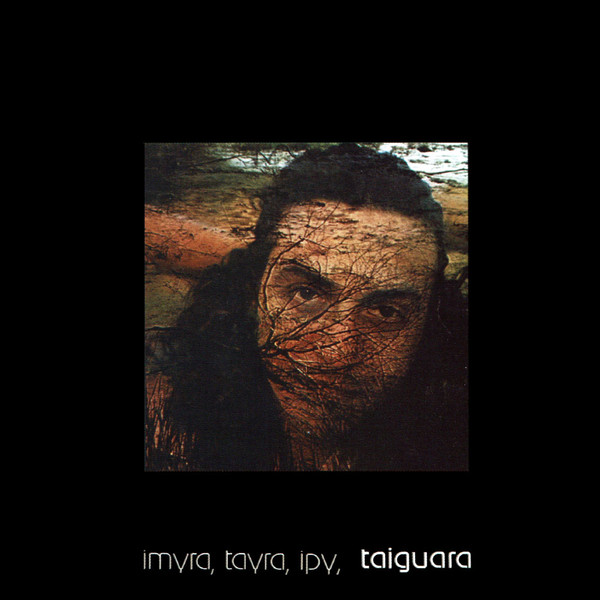
Imyra, Tayra, Ipy - Taiguara, Taiguara's eleventh studio album, is widely recognised as a fundamental landmark both in the musician's career and in the history of Brazilian music. Recorded in Brazil after a period of the artist's exile, the album encapsulates an innovative sound and profound artistic expression. Its relevance is dramatically underscored by its initial fate: in a record period of just 72 hours after its release, the album was summarily banned and withdrawn from shops by the Brazilian Military Dictatorship, with all existing copies destroyed. This act of repression not only silenced the work for decades but also catapulted the album to mythical status, making it a symbol of resistance and stifled creativity.
Context
The release of Imyra, Tayra, Ipy - Taiguara marked Taiguara's return to Brazil in 1975, following an initial period of exile abroad. During his stay in England, the artist had already attempted to record Let The Children Hear The Music, a work that, ironically, was censored even outside Brazil and never saw the light of day. With permission for a new recording by EMI-Odeon in 1975, Taiguara sought to express his views in a political landscape still under the yoke of the Military Dictatorship. However, the immediate banning of the album and the subsequent destruction of the copies forced Taiguara into a new exile, this time to England and Tanzania, preventing him from releasing new work until 1983, with Canções de Amor e Liberdade.
Recording
The recording of Imyra, Tayra, Ipy - Taiguara extended for approximately six months, a process that, according to musical director Wagner Tiso, was influenced by Taiguara's perfectionism, leading to minor creative frictions. Aware of the relentless censorship that had already vetoed his previous album and various songs, Taiguara employed poetic analogies and metaphors in the lyrics to circumvent repression and communicate his subversive ideas. To ensure the recording, the musician even used pseudonyms and the name of his wife, Gheisa Gomes Chalar da Silva, as the author of the three songs considered most provocative: "Terra das Palmeiras", "Situação", and "Público". The album's complex harmonies were conceived collectively by the talented musicians involved, who included Taiguara himself (vocals, piano, synthesiser, mellotron, arrangements and orchestrations), Hermeto Pascoal (flute, bass flute, arrangements and orchestrations), Toninho Horta (acoustic guitar), Nivaldo Ornelas (saxophone and flute), Novelli (acoustic bass), Zé Eduardo Nazário (percussion and drums), Paulo Braga (drums and percussion), Jaques Morelenbaum (cello), Ubirajara Silva (bandoneon) and Lúcia Morelenbaum (harp), under the baton of Wagner Tiso.
Songs
The songs on Imyra, Tayra, Ipy - Taiguara are a testament to Taiguara's astuteness in times of repression. The artist employed poetic analogies to disguise critical messages, addressing profound themes in lyrics that superficially appeared to be about other subjects. In "Terra das Palmeiras", for example, the verse that calls for a "muzzled beloved" and a "thrush" that no longer sings, evokes the suppression of freedom, while in "Primeira Bateria", the declaration "liberdade/quero até morrer por você" reveals an unwavering commitment. The opening vignette, "Pianice", is a symphonic piece resulting from Taiguara's studies at the Guildhall School of Music and Drama. Irony also punctuates the album, as in "Público", where the verse "eles querem lotar o Maracanã/e precisam de mim, lá vou eu" satirises the artist's phase as a "festival winner". Ary Barroso's emblematic "Aquarela do Brasil" is reinterpreted on the track "Aquarela de um país na lua". Taiguara's indigenous, African, and Hispanic ancestry is revered in compositions such as "A Volta do Pássaro Ameríndio", "Sete Cenas de Imyra", "Luanda, Violeta Africana", and "Como em Guernica", the latter performed in Spanish. The album's concept is reinforced in the original liner notes, which feature the definition of the word "Taiguara" from the Tupi-Guarani "Taygoara", meaning "unconstrained, free, master of oneself".
Legacy
Despite the ban in 1976, the impact of Imyra, Tayra, Ipy - Taiguara resonated globally. Japanese producers acquired the copyright and released the album in Japan in 1980, keeping its musical relevance alive. In Brazil, the desire to rescue the work culminated in a "Repatriation Campaign" in 2005, led by Taiguara's daughter, Imyra Chalar, which mobilised approximately 100,000 signatures. This massive mobilisation achieved its objective, and in 2013, Imyra, Tayra, Ipy - Taiguara was finally officially released across the entire national territory, with remastering and release by the Kuarup record label. To celebrate this historic moment, musicians who participated in the original 1976 recording, such as Wagner Tiso, Toninho Horta, Jaques Morelenbaum, Nivaldo Ornelas, Novelli and Zé Eduardo Nazário, performed a special concert in honour of the album's release in Brazil.
Tracks
Credits
Milton Miranda, Wagner Tiso
Wagner Tiso
Renato Corrêa
Lucinha, Malu, Marizinha, Nivaldo Ornelas, Novelli, Wagner Tiso
Taiguara
Novelli
Toninho Horta
Jorge Ferreira Da Silva
Netinho
Genaldo Medeiros
Neco
Alceu De Almeida Reis, Ana Bezerra De Mello Devos, Edmundo Oliani, Giorgio Bariola, Jaques Morelenbaum, Jorge Kundert Ranevsky, Peter Dauelsberg, Watson Clis, Zygmunt Stanislaw Kubala
Ubirajara Correia Da Silva
Paulinho Braga
Hermeto Pascoal, Mauro Senise, Raul Mascarenhas
Celso Woltzenlogel
Toninho, Zdenek Svab
Lúcia Morelenbaum
Braz Limonge Filho
Zé Eduardo Nazario
João Theodoro Meirelles, Nivaldo Ornelas
Walter Rosa, Zé Bodega
Antônio Macaxeira, Edmundo Maciel
Formiga, Heraldo, Maurilio
Arlindo Penteado, Géza Kiszely, Hindemburgo Pereira, Murilo Da Silva Loures
Adolpho Pissarenko, Alfredo Vidal, Cynira, Frantisek Bartik, Gentil Dias, GianCarlo Pareschi, Jorge Faini, José Alves Da Silva, José Dias De Lana, Marcello Pompeu Filho, Nathercia Teixeira, Octávio Miranda Ilha, Otávio Canabrava Waladares, Paschoal Perrota, Ricardo Wagner, Robert Arnaud, Salvador Piersanti, Walter Hack, Wilson Teodoro
Dacy Rodrigues, Sérgio Bittencourt, Toninho
Nivaldo Duarte
Osmar Furtado
Thomas Michael Lewinsohn
Books
Álbum 2 - 1972 a 1978
Pedro Alexandre Sanches · 2022
How to tell the story of Brazilian music? The Álbum series proposes starting from these creations that transcend time and mark the experience of different generations: the records. Beginning in 1950 and continuing to the present day, journalist and music critic Pedro Alexandre Sanches recounts this history by revisiting the trajectories of artists, genres, and movements, in dialogue with the country's political and cultural journey. This volume addresses the period from 1972 to 1978, including the most relevant albums of the era.
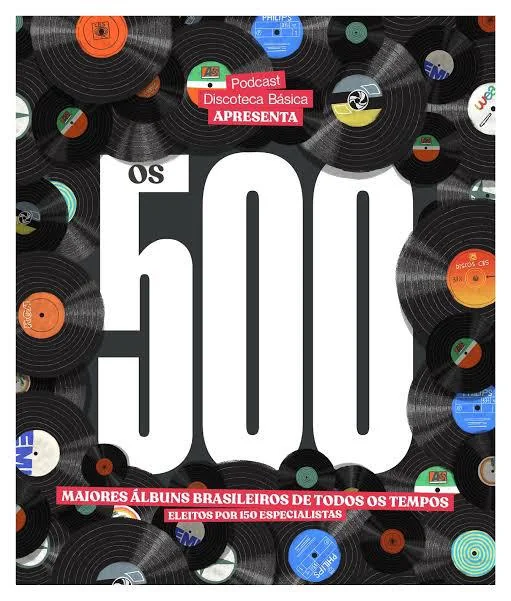
Os 500 Maiores Álbuns Brasileiros de Todos os Tempos
Ricardo Alexandre · 2022
The largest Brazilian music election ever conducted: 162 specialists, spanning journalists, critics, musicians, producers and podcasters, each nominated 50 essential albums, supported by a masterlist of more than 2,000 works. Led by Ricardo Alexandre with tabulation by Sérgio Jomori, it was published in December 2022 as a 200-page hardcover book with graphic design by Fernando Pires.
Os Outubros de Taiguara
Janes Rocha · 2017
The first book published by Kuarup, 'Os Outubros de Taiguara', written by journalist Janes Rocha, portrays the life of the singer and songwriter and highlights an extensive survey on the censorship faced by one of the artists most persecuted by the military dictatorship. The work also presents data on his career and trajectory.
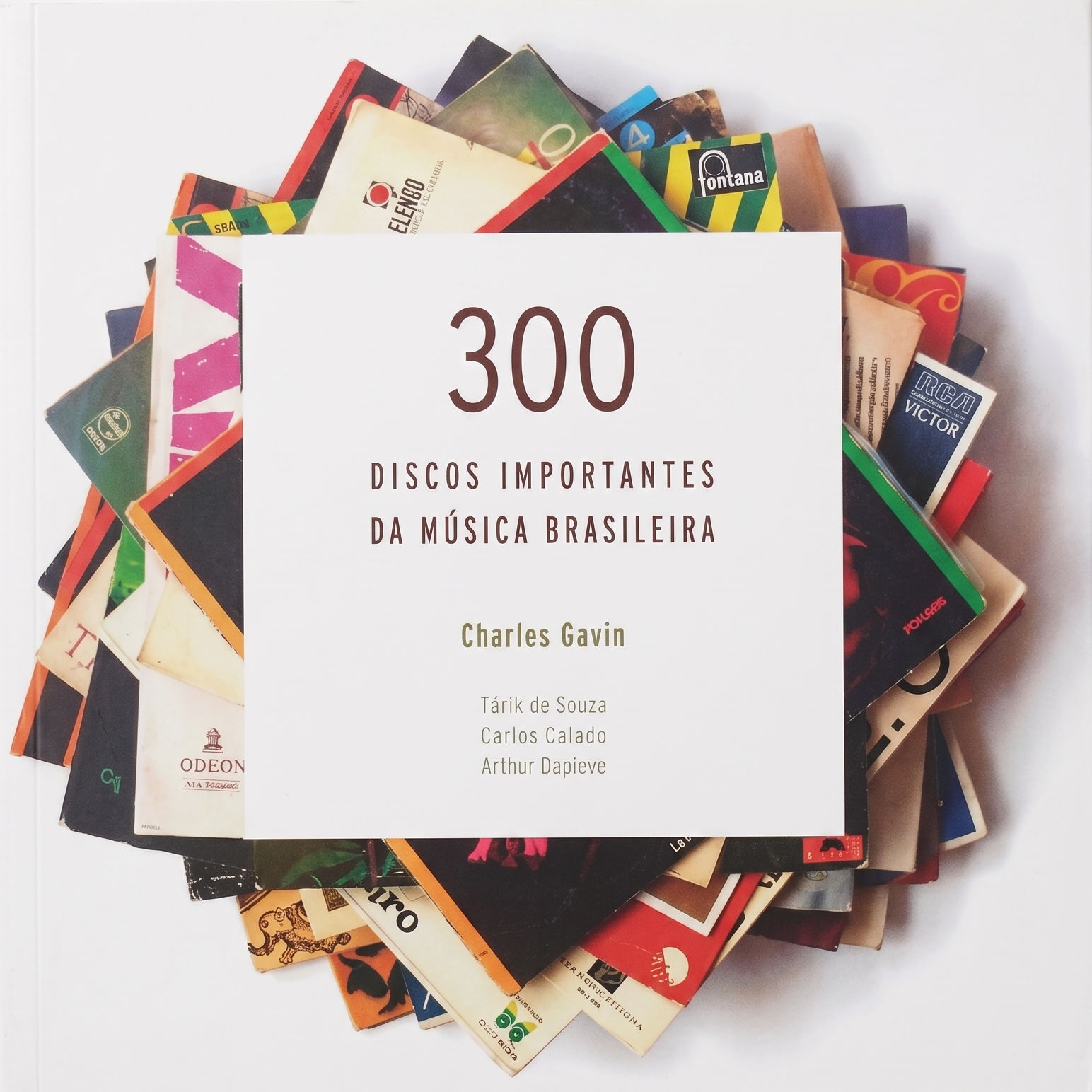
300 Discos Importantes da Música Brasileira
Charles Gavin, Tárik de Souza, Carlos Calado, Arthur Dapieve · 2008
Conceived by Titãs drummer and musical researcher Charles Gavin, the 434-page book brings together covers and reviews of albums released between 1929 and 2007. The texts were written by journalists Tárik de Souza, Arthur Dapieve and Carlos Calado.
Analyses
Imyra, Tayra, Ipy, Taiguara – Wikipedia
Wikipedia, the free encyclopaedia
Taiguara | Imyra Tayra ipy
taiguara.art.br
On the pages of this website, you will have the opportunity to discover Taiguara's entire complex journey, from creation to the cancelled launch show; and the subsequent seizure of the records, just 72 hours after their distribution.

MUSICA&SOM: Taiguara - Imyra, Tayra, Ipy - Taiguara (1976)
tabernanovostempos.blogspot.com
Taiguara's album 'Imyra, Tayra, Ipy', released in 1976, is a significant and controversial work in Brazilian music. The album, with its experimental lyrics and sound, was censored by the military dictatorship just 72 hours after its release, being removed from stores and preventing its dissemination at the time.
Taiguara - Imyra, Tayra, Ipy - Taiguara (1976)
musicasdonordeste.net
Taiguara's album 'Imyra, Tayra, Ipy', released in 1976, is a significant and controversial work in Brazilian music. The album, with its experimental lyrics and sound, was censored by the military dictatorship just 72 hours after its release, being removed from stores and preventing its dissemination at the time.