Cabeça Dinossauro
Titãs
1986
Rankings
Why This Album Matters
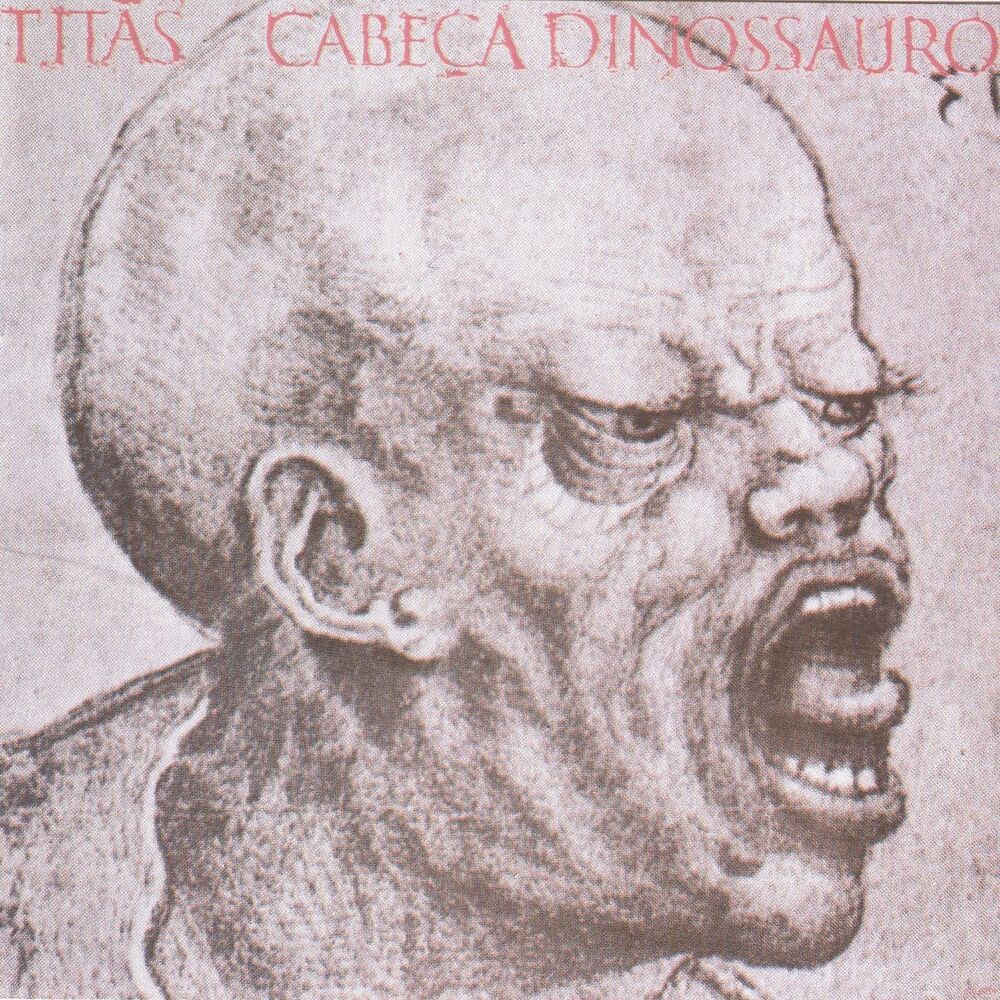
Released in 1986, Cabeça Dinossauro represents a watershed moment in Titãs' career and in the Brazilian rock landscape. This third studio album consolidated a more visceral and direct sound, resulting from a deep exploration of punk rock, post-punk, funk rock, and reggae. The debut of the partnership with producer Liminha was crucial in shaping this new musical identity. The album stands out for its raw energy and a sonic approach that shocked and intrigued contemporary critics, being described as a "shocking, punk, edgy and very curious album" and a "scream". Beyond its audacious musical proposition, the work is memorable for its iconic cover, which uses a sketch by Leonardo da Vinci, and for having launched successes that became band anthems, such as "Homem Primata", "Família", and "Bichos Escrotos".

The natural reaction to the turmoil was aggressive tracks ('Polícia', 'Igreja', and 'Bichos Escrotos', with a censored expletive), defiant ones ('Estado Violência' and 'Porrada'), and ironic ones ('Homem Primata').
Leonardo Dias Pereira · Rolling Stone Brasil
Context
The genesis of Cabeça Dinossauro was marked by a profound need for transformation in Titãs' trajectory. Factors such as the "relative failure" of the previous album, Televisão, and the arrest of Arnaldo Antunes and Tony Bellotto for heroin possession in late 1985, prompted the band to seek a heavier sound and a more defined aesthetic identity. Members, such as Sérgio Britto, already perceived that the elements for this turning point were latent within the group, with tracks like "Massacre" from the previous work already signalling a rawer and more visceral direction. There was a clear search for a "drier, rawer rock" and a "more primitive" sound, as Branco Mello anticipated. Tony Bellotto highlighted that the band found its way on this album, balancing social questioning and criticism in their lyrics with the fusion of punk, reggae, and funk. Co-producer Pena Schmidt described the period as "the moment of truth", where Titãs needed to reconcile phonographic perfection with the affirmation of rebellion, seeking a cohesive voice for their unusual formation of eight members and multiple vocalists.
Recording
The recording sessions for Cabeça Dinossauro occurred at the Nas Nuvens studio, in Rio de Janeiro, between March and April 1986. Production was handled by Liminha, who, despite having been previously criticised by the band for a "pasteurised" sound, was fundamental to the new sound. The band arrived at the studio with the musical material already defined, determined to capture the energy of their live performances. The album was recorded and mixed in just one month, an intense pace that sought to replicate the urgency of the compositions. The demo tape, incidentally, was recorded in a mere two days. Among the curiosities of the process, "AA UU", which was already performed live, was the first track to be recorded, while "O Que", the last to be finalised, and "Família" were the only ones to undergo significant arrangement changes. Notable moments include the vocal for "A Face do Destruidor", recorded "in one breath" over an instrumental backing played backwards, and Tony Bellotto's solos, where he used a large ring alternating with his pick to create a kind of percussion on the guitar.
Songs
The twelve tracks of Cabeça Dinossauro are a multifaceted portrait of Titãs' anxieties and social observations. The title track, "Cabeça Dinossauro", emerged spontaneously on a bus journey, with Paulo Miklos and Branco Mello improvising over a rhythmic inspiration, culminating in the iconic verses describing a creature with a "dinosaur head, mammoth belly, pig spirit". Liminha's innovative percussion, improvised with elements from the studio itself, added a unique layer to the song. "Polícia" and "Estado Violência" are examples of the album's critical and personal vein, with Tony Bellotto and Charles Gavin, respectively, drawing on their experiences with imprisonment to address state abuse of power and the surveillance of individuality. "Bichos Escrotos", co-written by Nando Reis, Sérgio Britto, and Arnaldo Antunes, employs the metaphor of 'marginal' animals to represent the band itself, which sought to break with stereotypes. Meanwhile, "Família", by Antunes and Bellotto, explores daily family life to a reggae rhythm, while "Homem Primata" became one of the big hits, with its striking music video illustrating human evolution and the band's urban rebellion. The closing track, "O Que", sung by Antunes, stands out for its duration and experiments with electronic music, which pointed towards the group's future musical horizons.

The early hours of 13th November 1985 marked a watershed moment in the career of Titãs. Within a short interval, guitarist Tony Bellotto and vocalist Arnaldo Antunes were arrested in São Paulo.
Arthur Dapieve · 300 Discos Importantes
Legacy
Cabeça Dinossauro is universally recognised as one of the pillars of 1980s Brazilian rock, released during a fertile period that saw the emergence of other fundamental albums. Its importance was compared by Charles Gavin to the impact of A Night at the Opera for Queen, underlining its structural relevance in Titãs' career. The album achieved notable commercial success, earning the band's first gold record in December 1986, with 100,000 copies sold, a number that climbed to 250,000 by its first anniversary and 700,000 by 2016. Critical and popular reception consolidated its historical position: it was voted the 7th best Brazilian album of all time by the public of radio Eldorado FM, the Estadão portal, and Caderno C2+Música in 2012, and ranked 19th on Rolling Stone Brasil magazine's "100 Melhores Discos da Música Brasileira" list. In 2022, specialists from the newspaper O Globo elected it one of the best Brazilian albums of the last 40 years. Its influence extended to other artists, with "Polícia" being re-recorded and played live by Sepultura and cited by Paralamas do Sucesso, "Estado Violência" by Biquíni Cavadão, and "Família" receiving a pagode version by Molejo, with the approval of Titãs. The album's 30th anniversary in 2016 was celebrated with a short story collection and a play inspired by its songs, attesting to its perennial cultural presence.
Tracks
Credits
Pena Schmidt
Vitor Farias
Liminha
Arnaldo Antunes, Branco Mello, Paulo Miklos
Paulo Miklos
Nando Reis
Reppolho
Charles Gavin
Liminha
Liminha, Marcelo Fromer, Tony Bellotto
Sérgio Britto
Liminha
José Oswaldo Martins
Leonardo Da Vinci
Sérgio Britto
Silvia Panella
Vania Toledo
Podcasts
Discoteca Básica Podcast · Parasol Storytelling
O DISCO QUE RADICALIZOU OS TITÃS E O ROCK BRASILEIRO DOS ANOS 80. Como os dilemas internos e a prisão de dois integrantes criaram o caldo para que os Titãs fizessem seu álbum mais pesado. Convidado do episódio: Canisso (Raimundos) Assinantes do CLUBE DISCOTECA BÁSICA têm acesso a conteúdo extra. Saiba como assinar e aproveitar 30 dias grátis: https://podcastdiscotecabasica.com/assine/ Seja em
Pod Discos · Jorge Andrade
No episódio 101° do Pod Discos, Jorge Andrade e Gleydson Alves comentam sobre álbum Cabeça Dinossauro dos Titãs!Cabeça Dinossauro é o terceiro álbum de estúdio da banda brasileira de rock Titãs, lançado em 25 de junho de 1986 pela gravadora WEA. O disco é marcado pela mudança de sonoridade da banda, sendo mais agressivo no som e letras contestadoras. É um dos discos que marcaram o rock brasileiro.
Antigas Novidades - podcast de heavy metal, rock progressivo, jazz, blues, MPB e rock classico · Antigas Novidades do Rock
DEU POLÊMICA no programa de hoje, mas todos somos amigos e o papo foi divertido. Cabeça Dinossauro é o maior disco dos Titãs? Bem, até hoje desperta emoções mil. Além do Aroldo Glomb temos na bancada Thiago Pacheco, do podcast Estante Secreta, o Eduardo Masses, do Conversa de Câmara e o jornalista Aldo França! _____ UMA PRODUÇÃO NA PAUTA PODCAST_____
Videos
TITÃS - CABEÇA DINOSSAURO (1986) | ALBUM REVIEW
Vinilteca
CABEÇA DINOSSAURO - TITÃS - ANÁLISE - VESTIBULAR UEL 2027
SIMBORA ESTUDAR MAIS
A GRANDE MUDANÇA NOS TITÃS! - CABEÇA DINOSSAURO
Pod Discos
Episódio 13 - 1986: “Dois”, “Selvagem?” e “Cabeça dinossauro" | BRock | Alta Fidelidade
Alta Fidelidade
Titãs - Entrevista sobre o disco "Cabeça Dinossauro", 1986
Arquivo Titãs
Cabeça Dinossauro dos Titãs: O Grito Punk que Sacudiu o Brasil em 1986 está de volta em 2026
Explora Mundo - Literatura, Artes e Cultura
Films

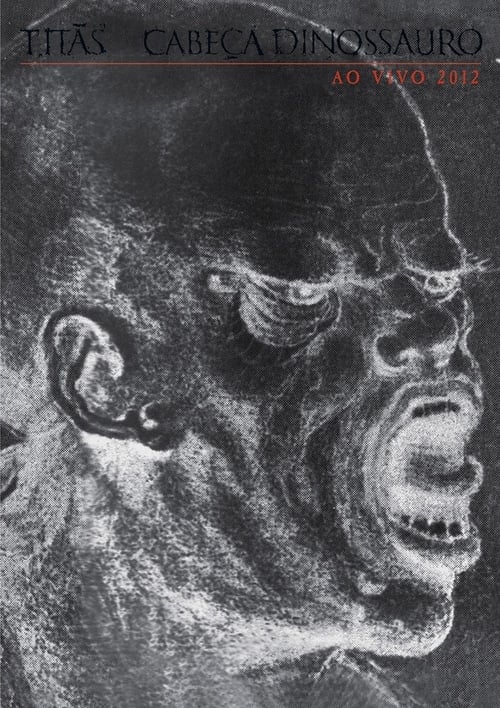
Titãs: Cabeça Dinossauro 30 Anos
2012
In 1986, with nine members, the Titãs recorded the album "Cabeça Dinossauro", one of the most important records in the history of Brazilian rock. In 2012, as a quartet (Paulo Miklos, Branco Mello, Sérgio Britto and Tony Bellotto), the band celebrates 30 years and commemorative tour in a show recorded live at the Circo Voador, Rio de Janeiro) . The DVD was directed by Oscar Rodrigues Alves, one of the directors of the Titãs' documentary "Life Like a Party". The band plays heavy, with the blow it deserves.

Titãs - A Vida Até Parece Uma Festa
2009
Brazilian documentary that tells the story of Titãs, the most famous rock band in the country. The film was directed by one of the members, Branco Mello, using images recorded from the early 80's until the present day.
Books
A vida até parece uma festa
Hérica Marmo, Luiz André Alzer · 2022
This is the complete history of the band Titãs, celebrating 40 years of one of the greatest Brazilian rock bands. As the definitive biography of the band, it will certainly address 'Cabeça Dinossauro' as one of the group's most important and influential albums in depth.
Os 500 Maiores Álbuns Brasileiros de Todos os Tempos
Ricardo Alexandre · 2022
The largest Brazilian music election ever conducted: 162 specialists, spanning journalists, critics, musicians, producers and podcasters, each nominated 50 essential albums, supported by a masterlist of more than 2,000 works. Led by Ricardo Alexandre with tabulation by Sérgio Jomori, it was published in December 2022 as a 200-page hardcover book with graphic design by Fernando Pires.

300 Discos Importantes da Música Brasileira
Charles Gavin, Tárik de Souza, Carlos Calado, Arthur Dapieve · 2008
Conceived by Titãs drummer and musical researcher Charles Gavin, the 434-page book brings together covers and reviews of albums released between 1929 and 2007. The texts were written by journalists Tárik de Souza, Arthur Dapieve and Carlos Calado.
Analyses
Cabeça Dinossauro – Wikipedia
Wikipedia, the free encyclopaedia
Cabeça Dinossauro – The 100 Greatest Albums of Brazilian Music
Leonardo Dias Pereira · Rolling Stone Brasil
The natural reaction to the turmoil was aggressive tracks ('Polícia', 'Igreja', and 'Bichos Escrotos', with a censored expletive), defiant ones ('Estado Violência' and 'Porrada'), and ironic ones ('Homem Primata').
Álbuns Históricos: Titãs - Cabeça Dinossauro (1986) - O Grito Primal ...
xrockbrasil.com.br
The result was Cabeça Dinossauro, the album that transformed the group into giants and defined the sound of an era by channelling pure rage into music. The change in tone was not just aesthetic; it was personal and political. At the end of 1985, Arnaldo Antunes and Tony Bellotto were arrested for heroin possession.
Resenha - Cabeça Dinossauro - Titãs - Whiplash.Net
whiplash.net
The album marked the peak of Titãs in the rock scene, and it can be stated with full conviction that after "Cabeça Dinossauro", Brazilian rock was never the same again.
Discos históricos: Cabeça Dinossauro, dos Titãs (1986)
fagnermorais.substack.com
'Cabeça Dinossauro' is a landmark for Titãs, as well as for Brazilian music of the 1980s. Considered one of the most important of the period, also thanks to Liminha, the album solidified the band's studio work and contributed to more robust live performances.