Jesus Não Tem Dentes no País dos Banguelas
Titãs
1987
Rankings
Why This Album Matters
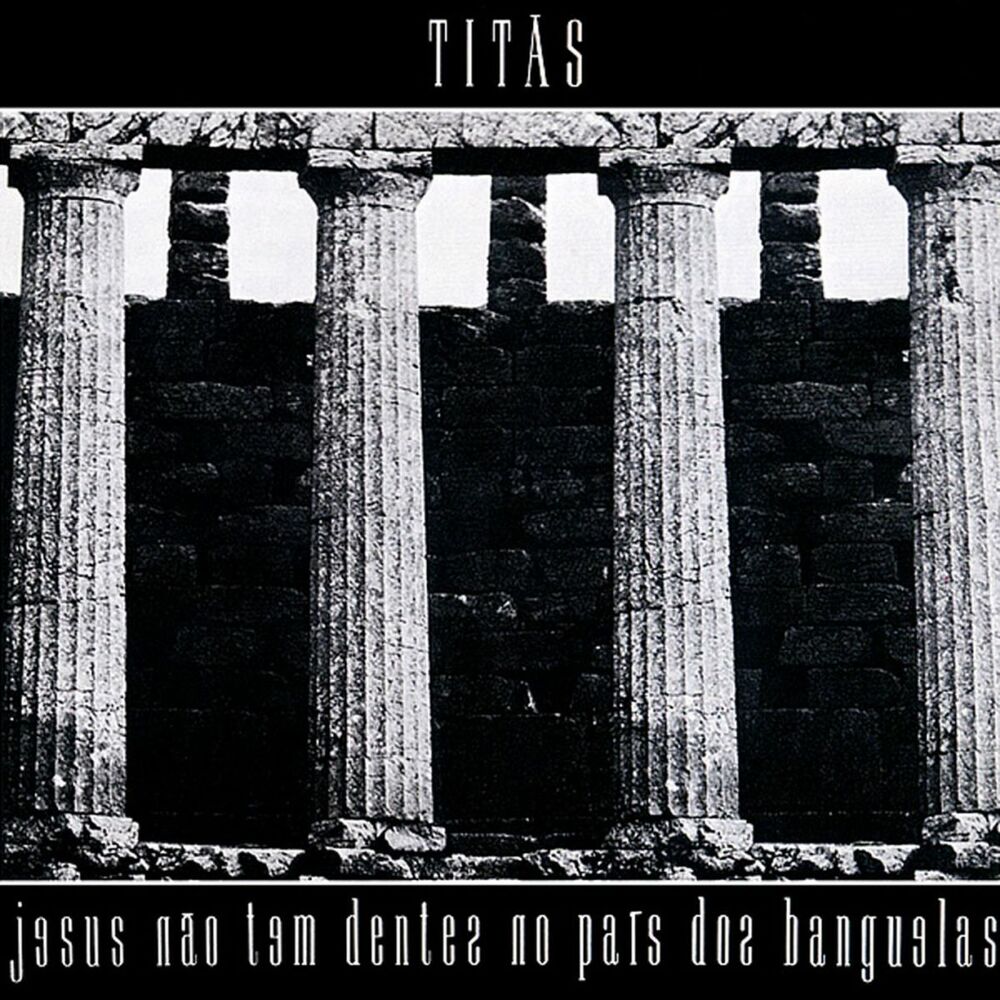
Jesus Não Tem Dentes no País dos Banguelas, released by Titãs in 1987, is a fundamental landmark in the band's discography and in the landscape of Brazilian rock. This fourth studio album, the second in a prolific sequence produced by Liminha, consolidated the band's experimental sound, which had already flirted with electronic music on the final track of its predecessor, Cabeça Dinossauro. Here, the exploration of electronic beats and synthesizers becomes a more prominent feature, without, however, abandoning the heavy vein and raw energy that define the group. The album stands out for expanding Titãs' thematic and sonic horizons. Whilst maintaining its critical edge, the lyrics turned to issues more connected to daily life, such as love, fun, disorder, and the search for basic rights, making it an accessible yet deeply reflective work. Its combination of robust instrumentation with electronic elements and the ability to transition between funk rock and pure rock, lent the album an inventiveness and complexity that distinguish it in the musical scene of the era.
Context
The release of Jesus Não Tem Dentes no País dos Banguelas occurred during a period of great effervescence for Titãs, who came from the resounding success of Cabeça Dinossauro, an album that elevated them to an unprecedented level of popularity and critical acclaim in Brazilian rock. Still reaping the rewards of their previous work, the band already showed artistic restlessness, seeking new sounds and lyrical approaches. The album's title, an expression from Nando Reis's wife that referred to poverty in Brazil, resonated with the country's social reality in the 1980s. This perception of Brazilian reality, combined with the trajectory of a group that was already asserting itself as the voice of its generation, created fertile ground for a work that, although different from its predecessor, would maintain its relevance and social impact.
Recording
The recording sessions for Jesus Não Tem Dentes no País dos Banguelas were intense and innovative, taking place at Nas Nuvens studio, in Rio de Janeiro, between August and October 1987, amidst the Cabeça Dinossauro tour. Producer Liminha, returning from London with a vast background of international musical references, exerted an even greater influence on this project, unlike the previous album, where the band had already arrived with the work almost finalised. He instigated the members to absorb new sounds and rhythms, such as Jamaican dub, Janet Jackson, and The Power Station. One of the most notable aspects of the production was the sound experimentation. Drummer Charles Gavin was encouraged to seek new possibilities for his instrument, incorporating lines inspired by rock classics. Creativity extended to percussion, with the use of non-musical objects: a baking tray that accidentally fell in the studio kitchen produced a sound that enchanted everyone and was recorded for the track "Diversão", and sounds from a cutlery drawer were used in "Infelizmente". The track "Diversão" in particular, featured so many elements that the mixing exceeded the 24 available channels in the studio, requiring the recording of multiple sounds onto a single channel, highlighting the bold and inventive nature of the production.
Songs
The album is characterised by a notable duality in its structure, with an informal division that English engineers mistook for a split album. The LP's "J" side features a predominance of funk beats, whilst the "T" side leans towards a more direct rock sound. This sonic distinction is a reflection of the band's experiments in combining electronic elements with their heavy sound. The lyrics of Jesus Não Tem Dentes no País dos Banguelas delve into everyday themes, addressing love, fun, disorder, and the search for rights, a thematic departure from its predecessor. Songs like "Lugar Nenhum" and "Nome aos Bois" quickly gained popularity, but it was "Comida" that became a true anthem, being adopted as a motto by student movements of the 1980s, due to its powerful message of demand. The composition of the tracks also revealed a refined sense of detail and references: the guitar in "Desordem", for instance, was inspired by the sound of The Cure, and the bassline in "Corações e Mentes" was meticulously constructed with a fusion of electronic and analogue sounds.
Legacy
Jesus Não Tem Dentes no País dos Banguelas was critically acclaimed upon its release, being considered one of the most inventive works of 1987. Bizz magazine voted it the best album of the year, in a tie, although there was a subsequent controversy regarding the vote. Arthur Dapieve praised the sophistication of its arrangements and lyrics without losing the band's characteristic aggression, whilst Jornal do Brasil classified it as "o melhor disco produzido no Brasil em 1987" [the best album produced in Brazil in 1987]. The album was a resounding public success, selling over 250,000 copies and achieving double platinum status by 1994. Songs like "Lugar Nenhum" and "Nome aos Bois" became hits, but the relevance of "Comida" transcended commercial success, transforming into a protest anthem for the student movement, solidifying its cultural impact. Considered part of Titãs' golden triad, alongside Cabeça Dinossauro and Õ Blésq Blom, this album is frequently cited as one of the band's creative and popularity peaks, and in 2021, Nando Reis named it his favourite Titãs album, perhaps alongside Tudo ao Mesmo Tempo Agora.
Tracks
Credits
Arnaldo Antunes, Branco Mello, Nando Reis, Paulo Miklos, Sérgio Britto
Sérgio Britto
Nando Reis
Charles Gavin
Marcelo Fromer, Tony Bellotto
Gessie
Charles Gavin
Ricardo Garcia
Liminha, Paulo Junqueiro
Paulo Junqueiro, Vitor Farias
Adriana Hudson, Eduardo Chermont
Antoine Midani, Mauro Bianchi, Sergio Chataignier
Liminha
Silvia Panella
Podcasts

Mpb Importance - O Podcast Da Mpb · Anderson Heredia
Para aproveitar a viagem do encontro dos séculos da banda, aí vai mais um episódio da história dos Titãs. Em 1987, a Warner Music lança "Jesus não tem dentes no país dos banguelas" produzido por Liminha no estúdio Nas Nuvens, no RJ.
Mpb Importance - O Podcast Da Mpb · Anderson Heredia
Nesse outro momento, tbm falo do lançamento do álbum na época e a coletiva de imprensa na primeira audição desse trabalho dos Titãs e tbm dos veículos que mais tocaram a banda, fora os singles das 4 faixas do LP q explodiram.
Titãs 40 Anos · Julio Luz Flores
Quinto episódio do podcast Titãs 40 Anos, que é uma homenagem à Melhor Banda de Todos os Tempos da Última Semana. Nesse episódio Julio Luz Flores recebe como convidado o jornalista Flávio Bandeira (que participa do podcast Crazy Metal Mind, principalmente quando o assunto é rock nacional) para analisar todas as faixas do disco Jesus Não Tem Dentes no País dos Banguelas. Quem quiser pode seguir o p
Videos
TITÃS - JESUS NÃO TEM DENTES NO PAIS DOS BANGUELAS - (REVIEW MINASROCK 1992)
MAX VIANNA
JESUS NÃO TEM DENTES NO PAÍS DOS BANGUELAS!!!!!! TITÃS!!!!
Canal Musicália
Jesus não tem dentes no país dos banguelas - Titãs | Resenha | Papo de Mattar 40
Guilherme Mattar
Nando Reis - 50 fatos sobre os Titãs (Parte II): Cabeça Dinossauro e Jesus Não Tem Dentes
Nando Reis
Algo Além Da Música - JESUS NÃO TEM DENTES NO PAÍS DOS BANGUELAS
Algo Além Da Música
Books
A vida até parece uma festa
Hérica Marmo, Luiz André Alzer · 2022
This is the complete history of the band Titãs, celebrating their 40-year career as one of the greatest exponents of Brazilian rock. The biography details the group's trajectory, its line-ups, successes, and the production of its most important albums, including 'Jesus Não Tem Dentes no País dos Banguelas', a milestone in its discography.
Os 500 Maiores Álbuns Brasileiros de Todos os Tempos
Ricardo Alexandre · 2022
The largest Brazilian music election ever conducted: 162 specialists, spanning journalists, critics, musicians, producers and podcasters, each nominated 50 essential albums, supported by a masterlist of more than 2,000 works. Led by Ricardo Alexandre with tabulation by Sérgio Jomori, it was published in December 2022 as a 200-page hardcover book with graphic design by Fernando Pires.
Analyses
Jesus Não Tem Dentes no País dos Banguelas – Wikipedia
Wikipedia, the free encyclopaedia

"Jesus Não Tem Dentes no País dos Banguelas" (Warner, 1987), Titãs
discosessenciais.blogspot.com
Amid high expectations, Titãs embraced the challenge of continuing to innovate, and the result was Jesus Não Tem Dentes no País dos Banguelas, the band's fourth studio album.
89FM - A Rádio Rock - Titãs: A História por Trás de 'Jesus Não Tem ...
radiorock.com.br
Discover the meaning behind the iconic Titãs album, 'Jesus Não Tem Dentes no País dos Banguelas', and the social and musical context that surrounded it.
Titãs: 38 anos de "Jesus Não Tem Dentes no País dos Banguelas"
confererock.com.br
38 years ago, on 23 November 1987, Titãs released 'Jesus Não Tem Dentes no País dos Banguelas', the fourth album from the rich discography of what is perhaps the most relevant of the national bands of the 1980s, and which is the subject of our chat this Sunday.
O que significa "Jesus Não Tem Dentes no País dos Banguelas", nome de ...
whiplash.net
Released in November 1987, "Jesus Não Tem Dentes no País dos Banguelas" is the successor to "Cabeça Dinossauro" (1986). The album features some Titãs hits, notably...