Õ Blésq Blom
Titãs
1989
Rankings
Why This Album Matters
Õ Blésq Blom, released in 1989, represents a milestone in the trajectory of Titãs, consolidating the band's sonic evolution within the national rock scene. The album is acclaimed for its high-quality production, described by critics as "the best-produced vinyl this country has ever seen". With a repertoire considered "correct, enjoyable to listen to and to dance to", the album features moments of "critical poetry", a characteristic that distinguishes it. Tracks such as "Miséria" were even highlighted by major MPB figures as a high point in the group's career, elevating Titãs to the "top of MPB". This work demonstrates the coherence and excellence the band sought in its ascent.

Õ Blésq Blom represented the group's creative zenith. Subsequently, members would depart and the band would lose its direction.
Alexandre Matias · Rolling Stone Brasil
Context
The conception of Õ Blésq Blom was marked by an unusual and significant encounter for Titãs. During the tour for the previous album, Go Back, the band came across Mauro and Quitéria, a couple of repentista musicians, on Boa Viagem beach in Recife. Admiring Mauro's performance, an ex-dockworker who sang in various languages without understanding them, Titãs decided to record his music right there, using Paulo Miklos's recorder. This recording would become the album's striking introduction, having already been incorporated into the band's live shows. Mauro, who went blind in 1982, was guided by his wife Quitéria in his daily performances on the beach, where he sang for alms, using an improvised caxixi. His participation on the album earned the couple a payment of NCzS 6,000, and it was the first time Mauro had heard his own voice recorded. The band even planned to invite the repentistas for the promotional tour, but production impediments did not allow it. Paulo Miklos and Marcelo Fromer, moreover, expressed a desire to produce a complete album by Mauro and Quitéria through WEA.
Recording
The album Õ Blésq Blom was recorded over three months, between July and September 1989. The track selection process was rigorous, with the final repertoire of 12 songs curated from an initial set of 30 compositions. During the recording sessions, bassist and vocalist Nando Reis faced a period of profound grief due to the loss of his mother in the very first month, finding a way to process the pain through the recording activity. Interestingly, the studio also received a distinguished visit from Tina Weymouth and Chris Frantz, bassist and drummer of the iconic band Talking Heads. The musical production featured the collaboration of Liminha, who, in addition to co-producing, contributed with arrangements, guitar, electronic drums, percussion and keyboard programming, while the recording and mixing engineering was handled by Brad Gilderman and Liminha himself.
Songs
Õ Blésq Blom features songs notable for both their origin and their impact. The track "Miséria", co-written by Arnaldo Antunes, Sérgio Britto and Paulo Miklos, had its lyrics shortened in a collaborative process and was praised by Caetano Veloso, who considered it a milestone for Titãs, elevating the group to the "top of MPB". Another highlight is "Faculdade", whose melody and concept came to Nando Reis in a dream, demonstrating the diversity of the band's sources of inspiration. The creative process for the album was prolific, generating approximately 30 compositions, of which 12 were selected for the record. Many tracks that did not make it into the final repertoire of Õ Blésq Blom were used in future band projects, such as "Nem 5 Minutos Guardados" and "A Melhor Forma", which appeared on Acústico MTV. Another six, including "Aqui É Legal" and "Saber Sangrar", had their initial versions released later on the E-Collection compilation in 2001. The song "Eu Não Sei Fazer Música", released on Tudo ao Mesmo Tempo Agora, was also conceived during this period.
Legacy
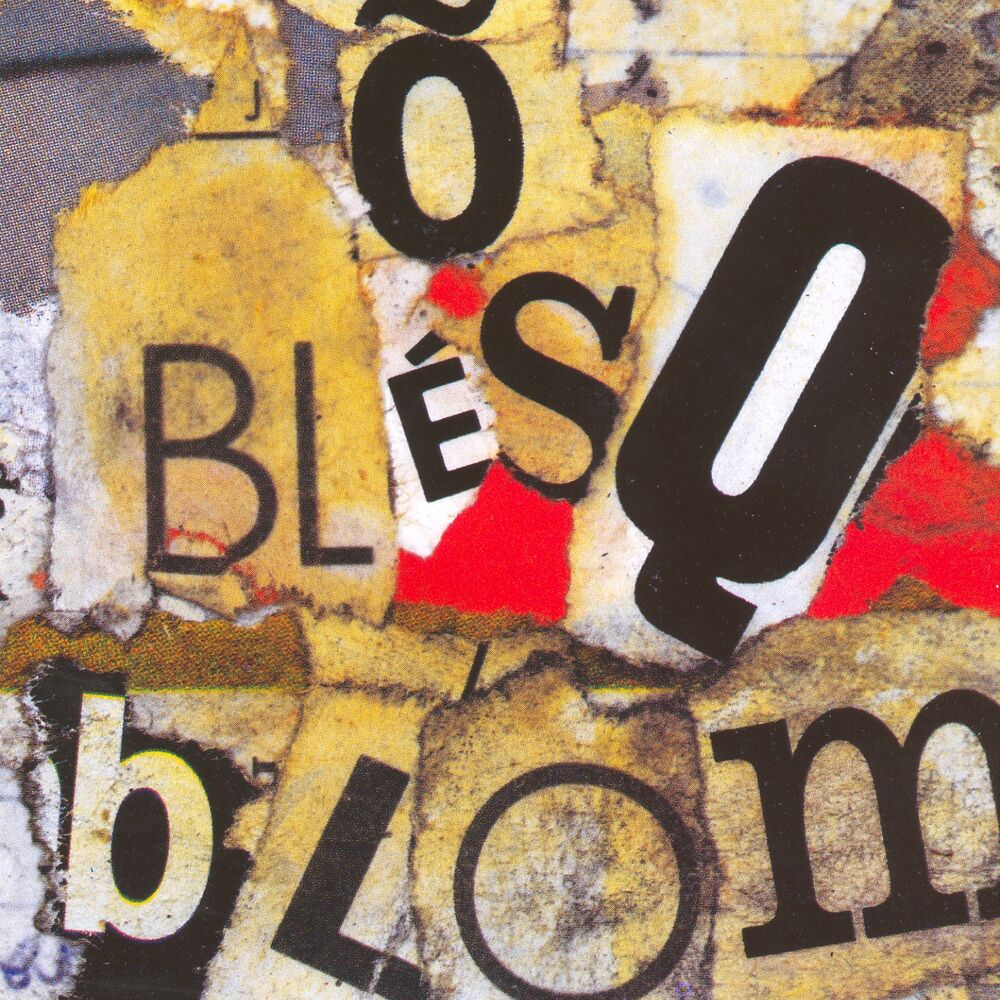
Õ Blésq Blom achieved significant commercial success, reaching the mark of 100,000 copies sold in just two weeks after its release, which earned it a Gold Record certificate. Sales continued to soar, reaching 226,000 copies by the time the next album was released, with some sources indicating a total of up to 400,000 units sold. Specialised critics received the album with great enthusiasm, with José Augusto Lemos, from Bizz magazine, going as far as to classify it as "the best-produced vinyl this country has ever seen". This same publication would award the album the Bizz Prize for best album, both in the public vote and the critics' vote. Its recognition extended over time, being elected in 2007 by Rolling Stone Brasil magazine as the 74th best album in Brazilian music. The cover, a collage by Arnaldo Antunes, was also notably recognised, featuring as the 100th most important cover in rock history by Bizz magazine. Beyond its commercial and critical success, Õ Blésq Blom is recognised for its influence and for anticipating musical trends. Vocalist and keyboardist Sérgio Britto considered it one of the band's best works, highlighting that it "if it didn't influence, at least it anticipated the entire Mangue Beat wave and the mixture of MPB and Northeastern music with rock elements and electronic programming". Paulo Miklos reinforced this perception, stating that the presence of figures such as Chico Science and Fred Zeroquatro at the debut shows in Recife demonstrates how the album, with its fusion of pop rock, Northeastern music, and a "violent dose of Brazilianness", was a "laboratory moment" that generated a significant aesthetic impact for the movement.
Tracks
Credits
Liminha
Podcasts

Titãs 40 Anos · Julio Luz Flores
Sétimo episódio do podcast Titãs 40 Anos, que é uma homenagem à Melhor Banda de Todos os Tempos da Última Semana. Nesse episódio Julio Luz Flores recebe como convidado Carlos Monteiro (que é host do podcast LaCult e participa do Crazy Metal Mind e do Rock na Mesal) para analisar todas as faixas do disco Õ Blésq Blom de 1989. Quem quiser pode seguir o perfil @podicasttitas40anos no Instagram pra
Videos
"Õ blesq blom" - Titãs | Melhores discos brasileiros dos anos 80 | Alta Fidelidade
Alta Fidelidade
Sérgio Britto: O single "Epifania" e as histórias de "Õ blésq blom" | Entrevista | Alta Fidelidade
Alta Fidelidade
Books
A vida até parece uma festa
Hérica Marmo, Luiz André Alzer · 2022
This biography, titled 'A vida até parece uma festa: a história completa dos Titãs', celebrates 40 years of one of the greatest Brazilian rock bands. Originally released to commemorate the group's 30th anniversary and updated for its 40th, it details the band's trajectory from its origins, exploring the factors that made them exponents of national rock and kept them active for four decades. As a complete work on Titãs, the album 'Õ Blésq Blom' from 1989 is certainly discussed in depth.
Os 500 Maiores Álbuns Brasileiros de Todos os Tempos
Ricardo Alexandre · 2022
The largest Brazilian music election ever conducted: 162 specialists, spanning journalists, critics, musicians, producers and podcasters, each nominated 50 essential albums, supported by a masterlist of more than 2,000 works. Led by Ricardo Alexandre with tabulation by Sérgio Jomori, it was published in December 2022 as a 200-page hardcover book with graphic design by Fernando Pires.
Analyses
Õ Blésq Blom – Wikipedia
Wikipedia, the free encyclopaedia
Õ Blésq Blom – The 100 Greatest Albums of Brazilian Music
Alexandre Matias · Rolling Stone Brasil
Õ Blésq Blom represented the group's creative zenith. Subsequently, members would depart and the band would lose its direction.
Õ Blésq Blom (1989): o delírio criativo dos Titãs que definiu uma era ...
collectorsroom.com.br
Within this chaotic atmosphere, Titãs responded with an album that sounds like a broadcast from a real, dissonant and surreal Brazil. Recorded with production by Liminha, Õ Blésq Blom pushed Titãs' inventiveness to its limit.

"Õ Blésq Blom" (Warner, 1989), Titãs
discosessenciais.blogspot.com
On Õ Blésq Blom, Titãs brought electronic experimentalism allied with pop, featuring 'varnishes' of Brazilian music, a musical configuration completely absent from their two previous albums.
Titãs - Õ Blésq Blom (1989) - musicasdonordeste.net
musicasdonordeste.net
Titãs innovated once again with the release of "Õ Blésq Blom" (1989). The album marked a change in the band's sound, being less heavy, more pop and probably Brazil's first electronic album with a lot of electronic programming and keyboards.