Orfeu da Conceição
Tom Jobim e Vinicius de Moraes
1956

Rankings
Why This Album Matters
Orfeu da Conceição is a fundamental landmark in Brazilian music, not only for being the soundtrack to one of the country's most important plays, but primarily for inaugurating the musical collaboration of two geniuses: Antônio Carlos Jobim and Vinicius de Moraes. Released in 1956, this 10-inch LP is considered the first album to feature songs by this legendary duo, paving the way for Bossa Nova and establishing a new standard of sophistication in Brazilian popular song. The work is a sublime fusion of poetry, melody, and arrangement, transposing the Greek myth of Orpheus and Eurydice to the vibrant and dramatic setting of a Rio favela. Jobim's compositions, with lyrics by Vinicius, already demonstrate the sensitivity and inventiveness that would become the duo's hallmarks, offering an early glimpse of the musical revolution they would unleash. It is a work that, even predating the Bossa Nova boom, already contains in its essence the harmonic and melodic intelligence that would define the genre, being essential for understanding the roots of one of Brazil's most influential musical movements.
Context
The 1950s in Brazil was a period of cultural effervescence and modernisation, with Rio de Janeiro at the centre of this transformation. Vinicius de Moraes, already an acclaimed poet and diplomat, sought a new way to express the Carioca soul and human drama, finding in the myth of Orpheus the perfect structure for his adaptation, which he transposed to the reality of Rio's favelas during a carnival holiday. Vinicius's encounter with the young and promising Antônio Carlos Jobim to set Orfeu da Conceição to music represented the union of two complementary artistic visions. Jobim, who would become one of the world's greatest composers, was then consolidating his musical language, and this initial collaboration would be the genesis of a prolific partnership that would define the sound of Bossa Nova and MPB in the following decades. The play, when staged by the Teatro Experimental do Negro, also fitted into a context of cultural and social relevance, giving visibility to Black artists.
Recording
The album Orfeu da Conceição was recorded and released in 1956 by the Odeon label, marking a breakthrough for the time, being produced in a high-fidelity system. Jobim not only composed the music, but also orchestrated and conducted the Grande Orquestra Odeon, composed of 35 musicians, which attests to the grandeur and sonic richness planned for the play's soundtrack. The record was originally released on a 10-inch LP, a common format at the time, with a cover that boasted a painting by Raimundo Nogueira. In addition to the orchestra, the album featured the participation of guitarist Luís Bonfá and singer Roberto Paiva, who performed several tracks such as "Um nome de mulher" and "Se todos fossem iguais a você". Vinicius de Moraes also contributes vocally, declaiming and theatricalising "Monólogo de Orfeu" with pastoral flute accompaniment, lending an authentic and dramatic character to the recording.
Songs
The seven tracks that make up the album are the musical backbone of the play, revealing Tom Jobim's mastery in melody and arrangement, and Vinicius de Moraes's poetry in the lyrics. Songs such as "Se todos fossem iguais a você" and "Lamento no morro" stand out as timeless gems, in which romantic sensibility and poetic depth intertwine with sophisticated harmonies, foreshadowing the sound that would soon be associated with Bossa Nova. The tracklist also includes "Monólogo de Orfeu", a performance by Vinicius de Moraes which, with a pastoral flute in the background, adds a layer of theatricality and emotion to the record, immersing the listener in the narrative. The songs address the central themes of the play: absolute love, obsession with death, and the intrinsic connection between music and poetry, transporting the dramatic nature of the Greek myth to the Carioca reality and making the album an immersive and profoundly Brazilian experience.
Legacy
Although the Wikipedia text focuses more on the repercussion of the play and the film, the album Orfeu da Conceição is intrinsically linked to a legacy of vast cultural importance. It not only solidified the artistic partnership between Tom Jobim and Vinicius de Moraes, but also served as an embryo for the Bossa Nova movement, influencing generations of musicians and composers. The subsequent success of the film Orfeu Negro, winner of the Palme d'Or, an Oscar, and a Golden Globe, projected the story based on the play and, by extension, Jobim and Vinicius's music to international recognition, with songs composed for the original play being an integral part of this consecration. The enduring relevance of the work is evidenced by the musical's revival in 2010 and the mention of the film Orfeu Negro in Barack Obama's autobiography, demonstrating its global impact and its ability to transcend cultural barriers. Luís Bonfá, who played guitar on the play's album, would go on to compose "Manhã de Carnaval" for Marcel Camus's film, reinforcing the work's musical connection with the international scene. Although the album itself does not have its sales figures or awards directly detailed, its importance as a precursor and as a phonographic record of the Jobim-Vinicius duo's foundation is undeniable, establishing a standard of excellence for Brazilian popular music.
Tracks
Credits
Maestro Nelsinho
Lindolfo Gaya
Milton Miranda
Z. J. Merky
Jorge Teixeira Da Rocha
Reny R. Lippi
Moacyr Rocha
Mafra
Videos
"Orfeu da Conceição": O primeiro encontro de Tom e Vinicius | Disco | Alta Fidelidade
Alta Fidelidade
Orfeu da Conceição: o Musical Brasileiro que Desafiou o Racismo
Literarizando
Books
Black Orpheus and the Globalization of Afro-Brazilian Culture
Darién J. Davis · 2025
The first historical study in English to examine the development, production, and reception of the 1958 film 'Black Orpheus' and its legacy. The book focuses on the making of the film and the trajectories of the main people involved, being essential for understanding the cultural context and impact of the album, which is the soundtrack to the play/film.
Os 500 Maiores Álbuns Brasileiros de Todos os Tempos
Ricardo Alexandre · 2022
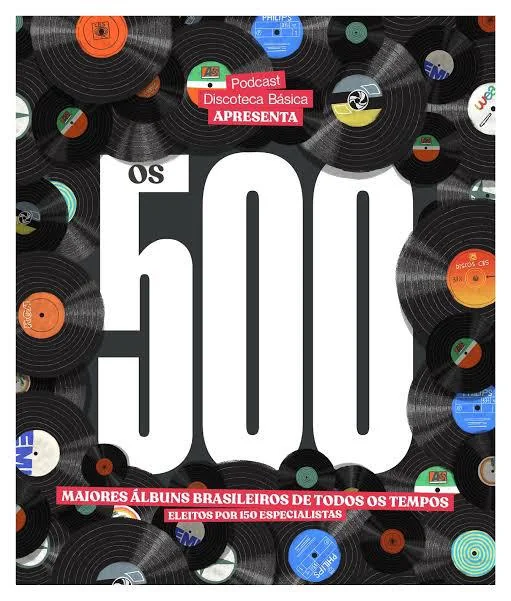
The largest Brazilian music election ever conducted: 162 specialists, spanning journalists, critics, musicians, producers and podcasters, each nominated 50 essential albums, supported by a masterlist of more than 2,000 works. Led by Ricardo Alexandre with tabulation by Sérgio Jomori, it was published in December 2022 as a 200-page hardcover book with graphic design by Fernando Pires.
Cancioneiro Vinicius de Moraes: Biografia
Sergio Augusto · 2007
Biography of the Brazilian poet, popular songwriter, playwright, and performer Vinicius de Moraes. Volume 1 includes several of his songs and collaborations with other artists, making it an important source for understanding the context of the album's creation.

Orfeu da Conceição
Vinicius de Moraes · 1967
A play written by Vinicius de Moraes, which served as the basis for the album and the film 'Black Orpheus'. It is the original work that gave rise to all the musical and dramaturgical creation of 'Orfeu da Conceição'.
Analyses
Orfeu da Conceição – Wikipedia
Wikipedia, the free encyclopaedia
Da ideia à criação de Vinicius de Moraes: uma análise da música ...
periodicos.unespar.edu.br
Few shows were as important for Brazilian culture as the play 'Orfeu da Conceição' (1956). Vinicius de Moraes' adaptation of the Greek myth to the Rio de Janeiro hills represented the first meeting of his poetry with Tom Jobim's music: the new samba, a precursor to bossa nova, and bossa nova itself. This article describes the creative process of the play and ...
Quatro sambas de Orfeus e um pouco mais | Revista do Instituto de ...
revistas.usp.br
This article consists of an analysis of some songs (by Vinicius de Moraes and Tom Jobim) from the play Orfeu da Conceição (1956), by Vinicius de Moraes, and from the film adaptation of the play, Black Orpheus (1959), by Marcel Camus (songs by Vinicius, Tom, Luiz Bonfá and Antônio Maria). Various rhythms are found (samba-canção, frevo, pontos de macumba); an unprecedented dissemination of rhythms ...
No segundo episódio da série sobre Tom Jobim, a parceria com Vinicius ...
piaui.uol.com.br
The second class in the series 'A longa arte de Antonio Carlos Jobim', which celebrates the work of one of the country's greatest artists thirty years after his death, analyses the songs from the 1956 play Orfeu da Conceição. The soundtrack inaugurated the partnership between Jobim and Vinicius de Moraes, author of the theatrical text. The material is already available on the piauí YouTube channel.
Da ideia à criação de Vinicius de Moraes: uma análise da música ...
periodicos.unespar.edu.br
Fabiana Quintana Dias1 Ney Carrasco2 Abstract: Few shows were as important for Brazilian culture as the play 'Orfeu da Conceição' (1956). Vinicius de Moraes' adaptation of the Greek myth to the Rio de Janeiro hills represented the first meeting of his poetry with Tom Jobim's music: the new samba, a precursor to bossa nova, and bossa nova itself. This present ...