Matita Perê
Tom Jobim
1973

Rankings
Why This Album Matters
Matita Perê, released by Antônio Carlos Jobim in 1973, is a singular album in his discography, marking a phase of experimentation and artistic deepening for the maestro. Far from the expectations of repeating the formula of previous bossa nova successes, Jobim presents a work of growing musical sophistication, incorporating new nuances of jazz, classical music influences and a more abstract approach. The album is frequently described as a "masterpiece", standing out in his career for being different from anything he had done before or, for many, from any other work of the era. Its sound is powerful and introspective, blending exuberant orchestral arrangements with the subtlety of Jobim's guitar and vocals, creating a sonic tapestry that resonates with the ecology and soul of Brazil. This work is notable for containing one of the most iconic and recognised songs in Brazilian music, "Águas de Março", which opens the album and sets a tone of poetry and everyday observation. Matita Perê is an album that transcends labels, being a response to those who questioned Jobim's relevance for new generations of musicians, demonstrating his ability to innovate and reinvent himself artistically.

On the tracklist, the impactful suite “Crônica da Casa Assassinada” and songs like “Ana Luiza” and “Águas de Março”, the latter in the author's first recording.
Toninho Spessoto · Rolling Stone Brasil
Context
The release of Matita Perê in 1973 occurred during a complex and challenging period for Brazil, under the aegis of the military dictatorship (1964-1985). This was the height of the so-called "Brazilian Miracle", characterised by notable economic growth, but also by intense political repression, censorship and the imposition of martial law. Artists and intellectuals frequently resorted to metaphors and indirect language in their works to circumvent censorship and express their criticisms of the regime, of which Jobim was a fervent opponent. In this scenario, Tom Jobim was already an internationally renowned figure, recognised as one of the fathers of bossa nova and celebrated for collaborations with big names such as Frank Sinatra and the global success of "Garota de Ipanema". However, Matita Perê represents a turning point in his career, a deliberate departure from the more "traditional" bossa nova sound. Jobim explored new structures, instrumentations and sonorities, which, initially, may have disappointed some Brazilian fans who expected more commercial works. The album's production itself, which began in Brazil and was finalised in New York, reflects the tensions and limitations imposed by the political situation of the era.
Recording
The recording of Matita Perê began in Brazil and was concluded in New York, in the United States, a reflection of the turbulent political period experienced in Jobim's native country in 1973. The album was recorded in December 1972. The production featured the essential collaboration of arranger and conductor Claus Ogerman, who was responsible for most of the orchestral arrangements, except on the title track "Matita Perê", which had its arrangement signed by Dori Caymmi. Ogerman is also credited as producer alongside Jobim. The album credits reveal a constellation of high-calibre musicians, including bass masters like Ron Carter and Richard Davis, and renowned percussionists such as Airto Moreira and João Palma. The audio engineering was carried out by Frank Laico. The production sought a rich and textured sound, with an emphasis on string arrangements and the fusion of jazz and classical music elements, resulting in a work of great density and beauty.
Songs
Matita Perê features a dense and innovative repertoire, standing out for "Águas de Março", one of the most celebrated and beloved songs in Brazilian music. Released as a single in 1972, prior to the album, the song uses a cascading structure of short, descriptive phrases to evoke the end of summer, the arrival of the rains and the promise of life, blending the mundane and the sublime of everyday existence. Curiously, the enigmatic nature of its lyrics was even interpreted by the censorship of the time as a "secret code". The title track, "Matita Perê", co-written with Paulo César Pinheiro, is an ambitious and abstract composition, described as "semi-symphonic" and almost ten minutes long. Jobim, aware of its complexity and length for radio, reportedly said that the music "is not for now". The title refers to Matinta Pereira, a mythical figure from Brazilian folklore. Another highlight is the suite "Crônica da Casa Assassinada", composed in partnership with Vinicius de Moraes. This multifaceted piece, which includes sections such as "Trem Para Cordisburgo" and "Chora Coração", is inspired by Lúcio Cardoso's eponymous epistolary novel from 1959, which narrates the decadence of a family in Minas Gerais. The album also includes songs such as "Ana Luiza" and "Tempo do Mar", the latter notable for its clear classical influences, reminiscent of composers like Ravel or Debussy. The work as a whole reflects Jobim's deep connection with nature and the Brazilian landscapes.
Legacy
Matita Perê has secured a prominent place in the history of Brazilian music. The album was ranked number 83 on *Rolling Stone Brasil*'s list of the 100 greatest national music albums, and appeared in 97th place in a survey of 162 music specialists conducted by the Discoteca Básica podcast. [from Wikipedia text] In particular, the song "Águas de Março" achieved extraordinary recognition, being elected in 2001 as the "best Brazilian song of all time" in a *Folha de S.Paulo* survey of 214 journalists and artists. Although upon its release the album represented an artistic shift that perhaps distanced itself from the commercial expectations of some of the bossa nova audience, Matita Perê is today widely recognised for its artistic depth and innovative character. It is considered a "hypnotising work of art" and a "true masterpiece", consolidating Tom Jobim's image as a composer who transcended genres and explored new musical paths with mastery.
Tracks
Credits
Antonio Carlos Jobim
Claus Ogerman
Richard Davis, Ron Carter
Harry Lookofsky
Airto Moreira, João Palma
Don Hammond, Jerry Dodgion, Phil Bodner, Ray Beckenstein, Romeo Penque
George Devens
Urbie Green
Frank Laico
Paulo Jobim
Podcasts
Brazuca Sounds · Leandro Vignoli
In episode #53 we celebrate the album "Matita Perê" by Tom Jobim, released in May 1973 by Philips. Considered one of the inventors of bossa-nova, Jobim had astronomical success in Brazil and abroad (especially the USA), so for this album, he decided to explore new territories. Produced and arranged by German composer Claus Ogerman, he came up with a complex mix of nature-inspired sounds, Brazilian

Convidamos o Baterista e compositor Duda Neves para falar para o Na Agulha sobre o seu disco de Cabeceira.
Videos
Matita Perê, Tom Jobim - O ARRANJO #71
Flavio Mendes
Matita Perê (1973): Tom Jobim como Compositor Total
Trespasse
Books
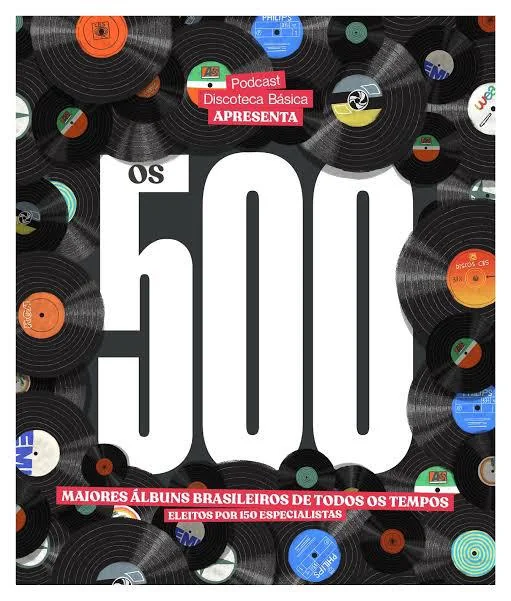
Os 500 Maiores Álbuns Brasileiros de Todos os Tempos
Ricardo Alexandre · 2022
The largest Brazilian music election ever conducted: 162 specialists, spanning journalists, critics, musicians, producers and podcasters, each nominated 50 essential albums, supported by a masterlist of more than 2,000 works. Led by Ricardo Alexandre with tabulation by Sérgio Jomori, it was published in December 2022 as a 200-page hardcover book with graphic design by Fernando Pires.
A vida de Tom Jobim
Antonio Carlos Jobim · 1982
This book, credited to Antonio Carlos Jobim himself, is a comprehensive biography that recounts the life and work of the renowned Brazilian composer up to the year of its publication (1982). As a potentially autobiographical work or one compiled directly by him, it offers a unique and highly authoritative perspective on his career, including the context and creation of the album 'Matita Perê' (1973).
Analyses
Matita Perê – Wikipedia
Wikipedia, the free encyclopaedia
Matita Perê – The 100 Greatest Albums of Brazilian Music
Toninho Spessoto · Rolling Stone Brasil
On the tracklist, the impactful suite “Crônica da Casa Assassinada” and songs like “Ana Luiza” and “Águas de Março”, the latter in the author's first recording.
Discos para descobrir em casa - 'Matita Perê', Tom Jobim, 1973
g1.globo.com
The album Matita Perê began to be recorded by Jobim in 1972 in Brazil, in his hometown of Rio de Janeiro (RJ), with arrangements by Dori and Tom, to be released by the Philips record label.
Rádio Batuta | Matita perê
radiobatuta.ims.com.br
In 1973, Tom Jobim recorded his most explicitly Brazilian album, "Matita perê". The symphonic-tinged title track was dedicated to Guimarães Rosa, Carlos Drummond de Andrade and Mário Palmério.
.:interlúdio:. Tom Jobim: Matita Perê - P.Q.P. Bach
pqpbach.ars.blog.br
For music critic Zuza Homem de Mello, "Matita Perê is an album that was gradually understood, appreciated, and above all admired. It is a milestone in Tom Jobim's career".