Stone Flower
Tom Jobim
1970
Rankings
Why This Album Matters
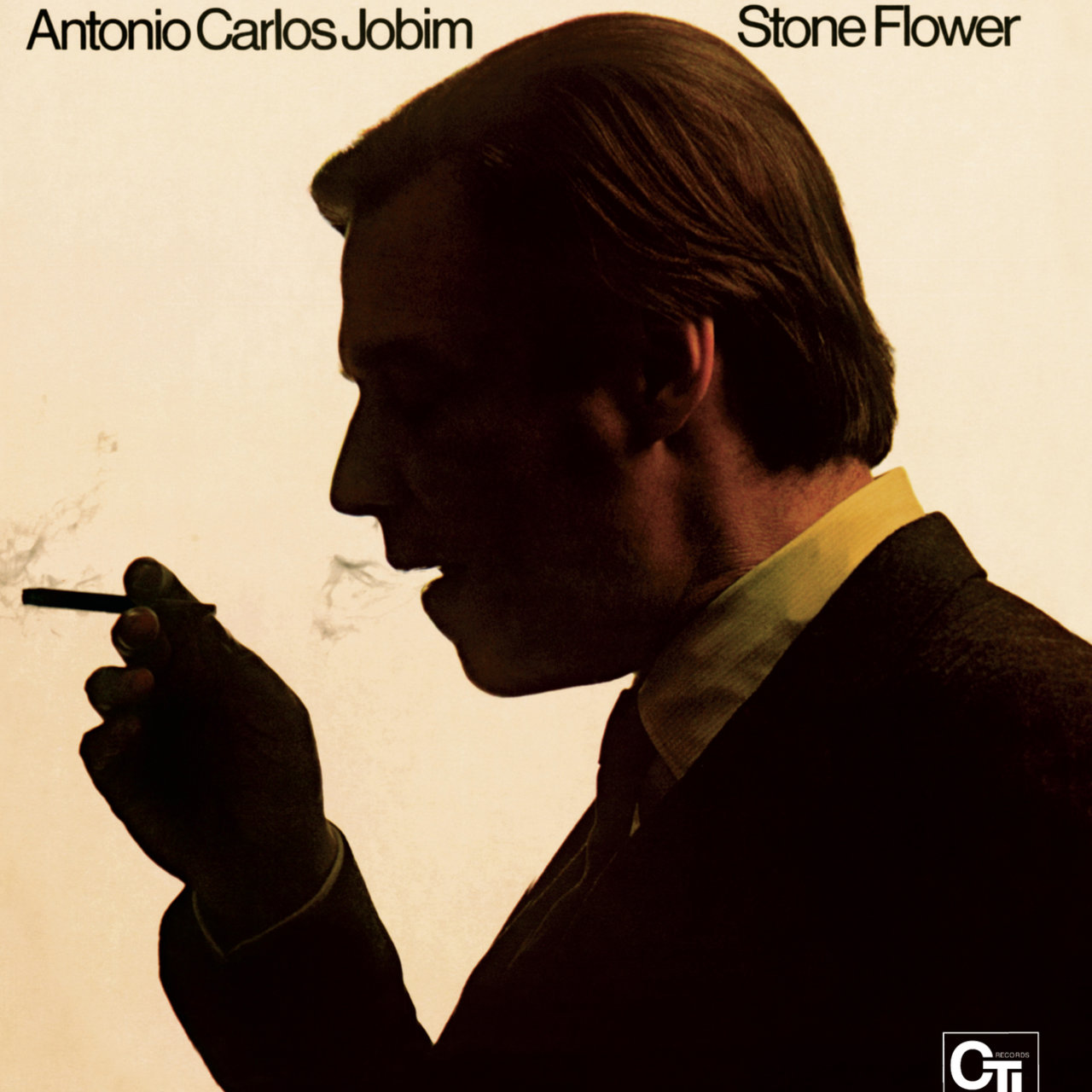
Stone Flower, released in 1970, represents a crucial moment in Antonio Carlos Jobim's discography, marking not only his return after a three-year hiatus but also a significant artistic turning point. The album is acclaimed by critics and bossa nova specialists, standing out for its introspective and timeless sound, which departs from the style that popularised him in North America. In this work, Jobim transcends the boundaries of bossa nova and samba, incorporating elements of baião, classical music, and jazz, creating a sophisticated and warm sonic tapestry. With elaborate arrangements that nonetheless value subtlety, the record reveals itself as a musical meditation, where melancholic and comforting melodies coexist, and space and softness are elements as important as the notes themselves. It is a work that, despite its elegance, remains profoundly human and resonates with a quietude that makes it almost radical in modern times.
Context
By the end of the 1960s, bossa nova, a genre of which Tom Jobim was one of the precursors and main global exponent, was already showing signs of commercial saturation. Following a series of resounding successes in the United States, including the iconic Getz/Gilberto and the acclaimed Wave, as well as historical collaborations with names such as Frank Sinatra, Jobim took a three-year hiatus from his solo career. Prior to Stone Flower, Jobim had already established his international reputation, with compositions that became standards in jazz and world popular music. However, the musical landscape was transforming, and the artist sought a new expression, distancing himself from more commercial arrangements or noisy trends. Stone Flower thus emerged as a response to this context, a dive into his roots and a more personal and experimental sound.
Recording
Stone Flower was recorded in June 1970 at the legendary Rudy Van Gelder Studio, in Englewood Cliffs, New Jersey, a location known for being the birthplace of countless high-quality jazz recordings. Production was handled by Creed Taylor, a prominent figure who had previously worked with Jobim on other projects and who was the founder of CTI Records, the label through which the album was released. Interestingly, this album and the previous one, Tide, were recorded in the same studio sessions, a strategic decision to fulfil commitments with A&M and the newly independent CTI. The recording featured Rudy Van Gelder's expertise in sound engineering and Eumir Deodato's masterful arrangements, who also contributed guitar. The backing band included renowned session musicians, such as Ron Carter on bass and João Palma on drums, as well as talents like Airto Moreira and Everaldo Ferreira on percussion, Hubert Laws on flute, Joe Farrell on saxophone, and Urbie Green on trombone, creating an organic and cohesive sound.
Songs
Composed mainly by Tom Jobim, the album features nine tracks, with the notable exception of "Brazil" (or "Aquarela do Brasil"), by Ary Barroso. The record is punctuated by four unreleased songs: "Tereza My Love", an intimate homage to Jobim's wife, which opens the album with a seductive melody and a tender trombone; "Choro", a demonstration of Jobim's piano dexterity, with his fingers flying across the keyboard; the title track "Stone Flower"; and "Andorinha", a nocturnal piece with touches of melancholy. Some of the compositions were created for the soundtrack of the film The Adventurers, such as "Children's Games", known in Brazil as "Chovendo na Roseira". This track, a tribute to Debussy, displays Jobim's inventiveness on the keyboard. Other tracks, such as "God and the Devil in the Land of the Sun", explore a more intense side closer to free jazz, with Joe Farrell on soprano saxophone, adding an edge of darkness that prevents the album from falling into the *easy listening*. The inclusion of "Brazil" as a central piece, with its infectious samba grooves and a striking vocal performance by Jobim, highlights the album's rhythmic diversity.

According to historian Sérgio Cabral, in the book Antonio Carlos Jobim – uma biografia (Lumiar, 1997), the soloist of this masterpiece went several years without seeing the colour of money generated by it. “Producer Creed Taylor didn't even honour the terrible agreement made with him”, Sérgio wrote.
Tárik de Souza · 300 Discos Importantes
Legacy
Although it reached number 18 on the Billboard Jazz Albums chart in 1971 and number 196 on the Billboard 200, Stone Flower is often considered a cult classic and one of Jobim's most underrated works, frequently overshadowed by albums such as Wave. However, specialised critics acclaim it as one of the maestro's discography highlights, praising its fresh approach and the absence of dated arrangements. The album is revered for its "silent intensity" and Jobim's ability to transcend the samba and bossa nova genres with graceful musical execution. With intelligent arrangements by Eumir Deodato, the record is seen as a "dreamy soundtrack for active meditation" and a demonstration of Jobim's versatility and artistic depth, leaving a notable mark on jazz, bossa nova, and Brazilian music.
Tracks
Credits
Eumir Deodato
Creed Taylor
Ron Carter
João Palma
Antonio Carlos Jobim, Eumir Deodato
Airto Moreira, Everaldo Ferreira
Antonio Carlos Jobim
Urbie Green
Rudy Van Gelder
Tony Lane
Pete Turner
Books
Os 500 Maiores Álbuns Brasileiros de Todos os Tempos
Ricardo Alexandre · 2022
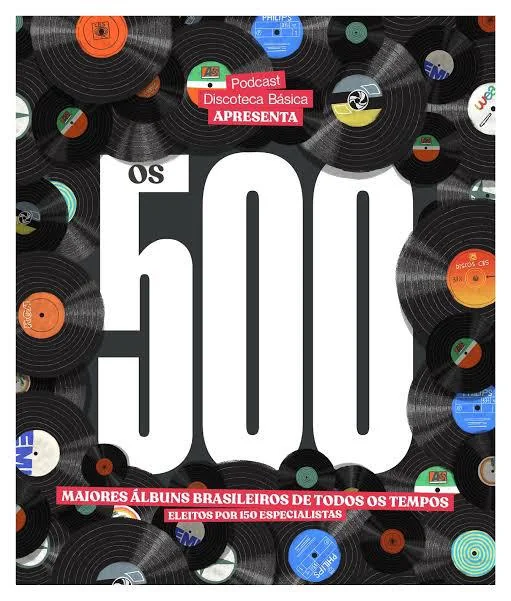
The largest Brazilian music election ever conducted: 162 specialists, spanning journalists, critics, musicians, producers and podcasters, each nominated 50 essential albums, supported by a masterlist of more than 2,000 works. Led by Ricardo Alexandre with tabulation by Sérgio Jomori, it was published in December 2022 as a 200-page hardcover book with graphic design by Fernando Pires.
Antonio Carlos Jobim
Sérgio Cabral · 2016
This is a comprehensive biography of Antonio Carlos Jobim, exploring his life, multifaceted personality, and vast body of work as a composer, musician, and orchestrator. Sérgio Cabral's work details his globally recognised career, his importance in Brazilian popular music, and the relevance of his discography, including significant albums such as 'Stone Flower'.

300 Discos Importantes da Música Brasileira
Charles Gavin, Tárik de Souza, Carlos Calado, Arthur Dapieve · 2008
Conceived by Titãs drummer and musical researcher Charles Gavin, the 434-page book brings together covers and reviews of albums released between 1929 and 2007. The texts were written by journalists Tárik de Souza, Arthur Dapieve and Carlos Calado.
Analyses
Stone Flower – Wikipedia
Wikipedia, the free encyclopaedia
Stone Flower by Tom Jobim (1970) — Review & Tracklist | ChatZona Music
chatzona.com
Listen to Stone Flower by Tom Jobim. Full track list, review, rating and music chat on ChatZona.
Disc Review | 'Stone Flower' Revisited - daniellathompson.com
daniellathompson.com
Stone Flower (1970) is one of Tom Jobim's most consistent American albums. A collaboration with arranger Eumir Deodato, it is an extension of their work on the soundtrack of The Adventurers, a film about revolutions in South America, directed by Lewis Gilbert with cinematography by Claude Renoir, and starring Charles Aznavour and Candice Bergen.
MUSiC: Stone Flower, Jobim, 1970 - Seb Palmer
sebpalmer.com
MUSiC: Stone Flower, Jobim, 1970 The sixth disc (or seventh, if you include Love Strings and Jobim) in his discography and my Tom Jobim survey, Stone Flower follows Wave and Tide , both chronologically, and in being an RVG production.

Búzios Bossa Blog: Tom Jobim - Stone Flower - 1970
buziosbossablog.blogspot.com
Such was Tom Jobim. Two years after the resounding boos for "Sabia" at Maracanãzinho, Tom returned to New York to record two major albums: "Stone Flower" and "Tide", both instrumental, with arrangements and conducting by Eumir Deodato.