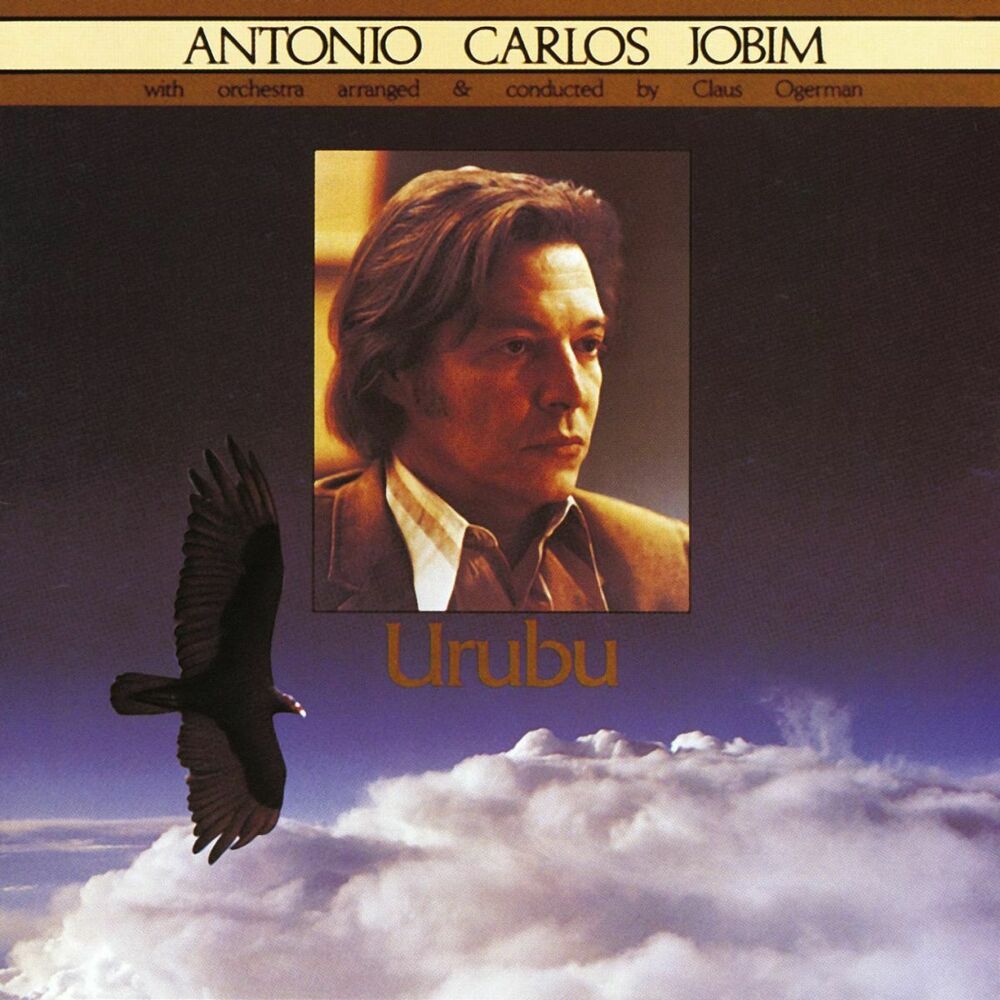
Urubu
Tom Jobim
1976
Rankings
Why This Album Matters
Urubu, released in 1976, represents a turning point in Antônio Carlos Jobim's discography, marking not only his tenth studio album, but also the inauguration of Warner Music in Brazil. Considered by many to be one of the most surprising albums of his career, it deepens the fusion between the sophistication of Brazilian popular music and classical and jazz-inspired orchestral arrangements, a defining characteristic of Jobim's collaborations with maestro Claus Ogerman. The work is distinguished by its sonic ambition and the richness of its musical palette, which transitions from accessible melody to harmonic complexity. João Bosco, one of the great names in MPB, observed that in Urubu popular music 'was already crossing the boundary into something more erudite', a testament to the profound experimentation and enriching nature of the album. Classics such as "Lígia" and "Correnteza" emerged from this work, further solidifying Jobim's compositional genius.
Context
In the 1970s, Tom Jobim was already a living legend of world music, with a career that had transcended the boundaries of bossa nova to embrace a broader, orchestral sound. Urubu emerges during a period of artistic maturity, where Jobim sought to expand his musical 'Brazilianness', incorporating new textures and structures that distanced themselves from the traditional bossa nova sound. This moment also reflects Jobim's continuous bridge with the international music scene, especially in the United States, where he found the technical resources and elite musical talents to materialise his grand visions. His growing interest in the ecology and nature of Brazil, which would become a recurring theme in his work, already manifests itself in this album, from the title to the lyrical and sonic content of some tracks.
Recording
The technical excellence of Urubu is, in large part, attributed to the long-standing partnership between Tom Jobim and German arranger, conductor and producer Claus Ogerman, whose musical direction was fundamental to the album's sonic grandeur. The recording sessions took place in New York, at the renowned Columbia Recording Studios, between 16 and 23 October 1975, ensuring high-quality production. The team of musicians assembled for the project was stellar, uniting Brazilian and American talents. Jobim took on piano, electric piano, acoustic guitar and vocals, while the rhythm section featured names such as Ron Carter on bass, João Palma on drums and Ray Armando on percussion. Miúcha's voice enriched the opening track, "Boto", and other notable instrumentalists like Harry Lookofsky (violin), Joe Farrell (soprano sax) and Hubert Laws (flute) contributed to the album's unique atmosphere, all meticulously captured by recording engineer Frank Laico.
Songs
Urubu is a work of notable diversity and lyrical and melodic depth. The album explores both Jobim's romantic and introspective side, evident in songs such as "Lígia" and "Angela", as well as his concern for Brazilian nature and culture. The opening track, "Boto (Porpoise)", a collaboration with Jararaca and featuring Miúcha on vocals, dives into a soundscape that evokes the Amazon rainforest, utilising percussion and whistles to create a unique soundscape, addressing ecological themes and referencing Brazil's rich fauna. The album is divided between songs and ambitious orchestral pieces, especially noticeable on the B-side of the original LP, which reveals itself as a true symphony. Compositions like "Saudade Do Brasil" and "Arquitetura de Morar" feature complex orchestral arrangements, with strings, winds, and an angelic choir that elevate the music to an erudite level, making the listener feel as if they are in the presence of a work by Mahler or Debussy. The inclusion of "Valse", a composition by his son Paulo Jobim, adds an even more personal and lyrical dimension to the collection.
Legacy
Since its release, Urubu has been consistently acclaimed by critics for its sophistication and musical quality, being considered an indispensable album in Tom Jobim's discography and in Brazilian music. Although it may have distanced itself from some more traditional bossa nova fans due to its more experimental and orchestral approach, the album expanded the boundaries of what Brazilian music could be, influencing generations of musicians and arrangers. The impact of Urubu reverberated internationally, with "Lígia" and "Correnteza" becoming global standards, re-recorded by a myriad of artists. The collaboration with Claus Ogerman established a standard of excellence in orchestration, solidifying Jobim's reputation as one of the greatest composers of the 20th century, whose work transcended genres and borders. The album is frequently cited in lists of best albums and holds a 4.5-star rating from All Music Guide, attesting to its lasting value.
Tracks
Credits
Radamés Gnattali
João Theodoro Meirelles
Chiquinho do Acordeon
Zé Menezes
Pedro Vidal Ramos
Luciano Perrone
Laércio De Freitas
Books

Os 500 Maiores Álbuns Brasileiros de Todos os Tempos
Ricardo Alexandre · 2022
The largest Brazilian music election ever conducted: 162 specialists, spanning journalists, critics, musicians, producers and podcasters, each nominated 50 essential albums, supported by a masterlist of more than 2,000 works. Led by Ricardo Alexandre with tabulation by Sérgio Jomori, it was published in December 2022 as a 200-page hardcover book with graphic design by Fernando Pires.
Antonio Carlos Jobim
Sérgio Cabral · 2016
Tom Jobim was more than just a name in popular music. To the globally recognised composer, musician, and orchestrator was added a personality as fascinating and multifaceted as his work. From his sharp intelligence came definitive observations about Brazil and its customs. In this biography, Sérgio Cabral offers a complete portrait of the artist.
Analyses
Urubu – Wikipedia
Wikipedia, the free encyclopaedia
Tom Jobim's Urubu: The Bossa Nova Classic You Missed
oliversoddities.com
A 1976 Warner Bros. pressing of Jobim's Urubu just landed in the shop — the bossa nova architect at his most adventurous.
Antonio Carlos Jobim - Urubu (1975)... - Hominis Canidae
hominiscanidae.org
Can you believe there wasn't a Tom Jobim album here? Well, now you have this amazing album, as our classic of the month! Urubu is Antônio Carlos Jobim's tenth studio album, released in 1976. It also marked the inauguration of the Warner Music record label in Brazil.

Tom Jobim: Álbum Urubu Completa 50 Anos
ongartebrasil.blogspot.com
Urubu is the 10th studio album by Brazilian maestro and composer Tom Jobim, originally released in 1976. The album marked the inauguration of the Warner Music record label in Brazil and consolidated the maestro's passion for nature.
Antonio Carlos Jobim - Urubu (1975) | cenaindie
cenaindie.com
Claus Ogerman's arrangements and conducting elevate the compositions to a new level, resulting in a sophisticated and moving album. Highlights include the classics 'Ângela', 'Lígia', and 'Saudades do Brasil', which demonstrate Tom Jobim's genius in blending Bossa Nova, MPB, Pop, and Samba.