Estudando o Samba
Tom Zé
1976
Rankings
Why This Album Matters
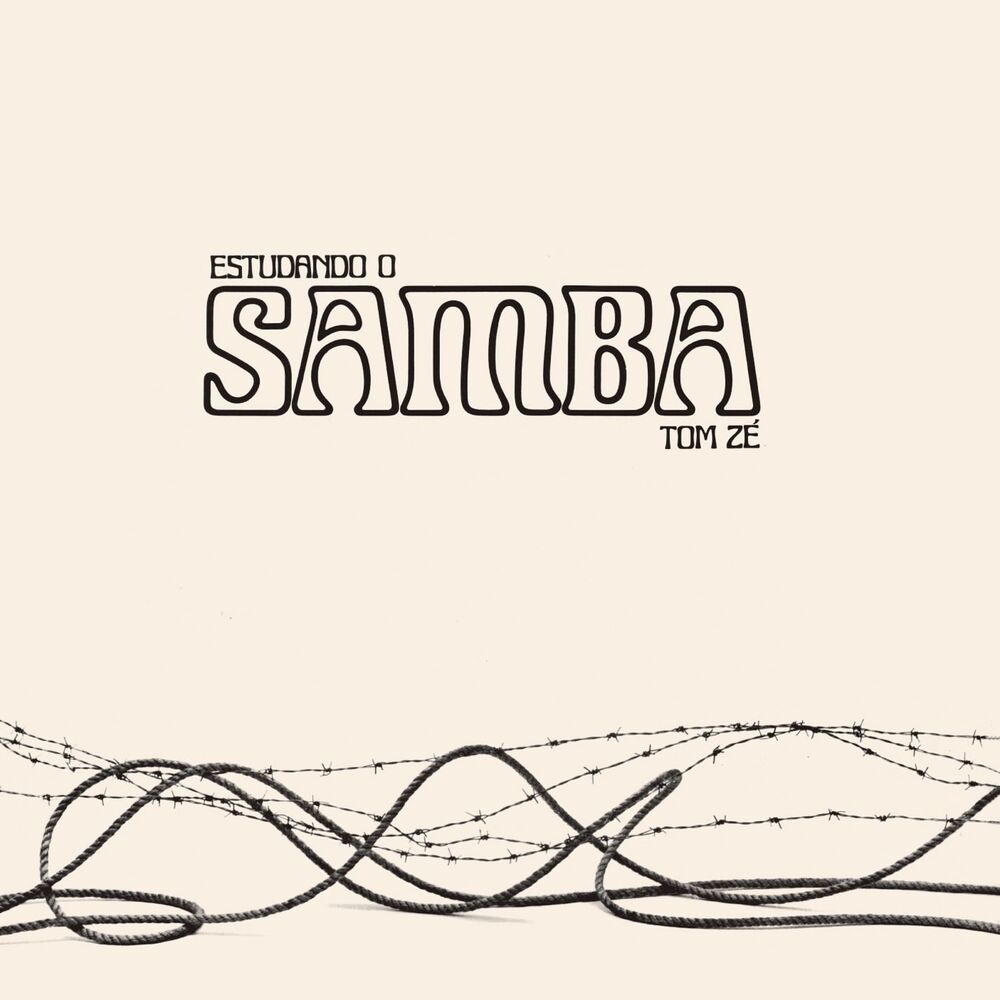
Estudando o Samba, released in 1976, is a landmark in Tom Zé's discography, standing out for its inventive and experimental approach that re-examines samba, Brazil's main musical genre. The album demonstrates the same audacious creativity present in his previous work, Todos os Olhos, consolidating the unique artistic identity of the Bahian artist. The work proposes a deep and, at times, irreverent analysis of samba, showcasing Tom Zé's ability to deconstruct and reinterpret established musical elements. Initially conceived with the title Entortando o Samba, the project reflects an artistic vision that, while honouring, also challenges the genre's conventions.

This album has it all: from the cover with images of barbed wire and ropes, to original recreations and minimalist arrangements, accompanied by noises, guttural sounds and groans.
Antônio do Amaral Rocha · Rolling Stone Brasil
Context
The album was conceived during a period of great cultural effervescence, but also of strong political repression in Brazil, under the military dictatorship. This tension is subtly reflected in the album's cover, which, with its lines of rope and barbed wire, alludes both to the prevailing regime and to the rigidity with which samba was sometimes performed and interpreted. Tom Zé's experimental work, instead of bringing him closer to the general public, initially ended up alienating him further. For the album, the singer invited sambista Elton Medeiros, establishing important partnerships that enriched the album's proposal.
Recording
The production of the album Estudando o Samba was handled by Heraldo do Monte, while the arrangements were elaborated by José Briamonte. The technical team included José Antonio, known as Zé Cafi, and Marcos Vinicios, who worked specifically on the tracks "Só" and "Mãe Solteira". Recordings took place at Sonima and Vice-Versa studios, the latter also dedicated to the songs "Só" and "Mãe Solteira". The technical sheet details the participation of several musicians, including Heraldo do Monte on acoustic guitar, Edson on acoustic guitar and viola, Dirceu Medeiros on drums, and Téo da Cuica, who brought his creativity with a water drum and other self-designed instruments to the track "A Felicidade". The cover, notable for its minimalist and symbolic design, was created by Walmir Teixeira.
Songs
The repertoire of Estudando o Samba is a celebration of samba's complexity, featuring songs authored by Tom Zé and important collaborations. Partnerships with sambista Elton Medeiros resulted in tracks such as "Tô" and "Mãe (Mãe Solteira)", which exemplify the fusion of styles present in the album. The album also includes a reinterpretation of "A Felicidade", a classic by Tom Jobim and Vinicius de Moraes, demonstrating the artist's versatility in approaching iconic compositions. Other notable tracks are "Toc", "Ui! (Você Inventa)" and "Índice", which reveal the diversity and lyrical and melodic depth of the work.

In 1976, Caetano Veloso and Gilberto Gil joined Gal Costa and Maria Bethânia for the launch shows of the group Doces Bárbaros, an indication of the former Tropicalista leaders' choice for a more comfortable path for their musical careers after the difficult years of exile in England.
Carlos Calado · 300 Discos Importantes
Legacy
Despite having gone unnoticed by national critics upon its release in 1976, Estudando o Samba gained international prominence belatedly. The album's rediscovery occurred in the late 1980s, when former Talking Head David Byrne, attracted by its unusual cover, found it in a shop in Rio de Janeiro. Rereleased on the international market in 1990 as part of a compilation, the album was acclaimed by the foreign press, receiving praise from outlets such as The New York Times, the French Le Monde, and the American specialist magazine Rolling Stone. In Brazil, recognition arrived with its election, by the Brazilian version of Rolling Stone, as the 35th best Brazilian album of all time. One of the album's songs was also included in the soundtrack of the documentary Manda Bala.
Tracks
Credits
José Briamonte, Rosario De Caria
Heraldo Do Monte
Eloá, Roberto Morais, Sidney Morais, Vera Lucia De Campos
Andrea Osório, Antonio Jose Santana Martins, Celso Fonseca, José Carlos, Luis Vagner, Puruca, Vilma Nascimento
Heraldo Do Monte, Vicente Barreto
Edson José Alves
Claudio Bertrami
Dirceu Medeiros
Natal, Osvaldinho Da Cuíca
Theo Da Cuíca
Branca Di Neve
Marcus Vinicius, Zécafi
Walmir Teixeira
Odair Corona
Elton Medeiros
Podcasts
PodCália · Gigola
No sétimo episódio do “especial anos 70” do PodCália, o ano é “1976”.O disco é: "Estudando o Samba", de Tom Zé.
Lado A “Pra todos os gostos e todos os olhos”. O primeiro maniçoba na sauna curitibana. Douglas Lopes, o Grande Boêmio. Frequentador noturno de Tom Zé. O grande desafinado, inusitado e filósofo Tom Zé. O mais ousado Tropicalista, o menos reconhecido. A polêmica em forma de baiano. O tribunal do Feicebuqui e a coca-cola. O Aikidô musical- Tom Zé, o Steven Seagal da música. A quebra do dualismo. A o
Videos
3000 Best Albums [2322] Tom Zé - Estudando o Samba (1976) Dan's Mini Album Review
Dan's Mini Album Reviews
Films

Tom Zé: Programa Ensaio
1991
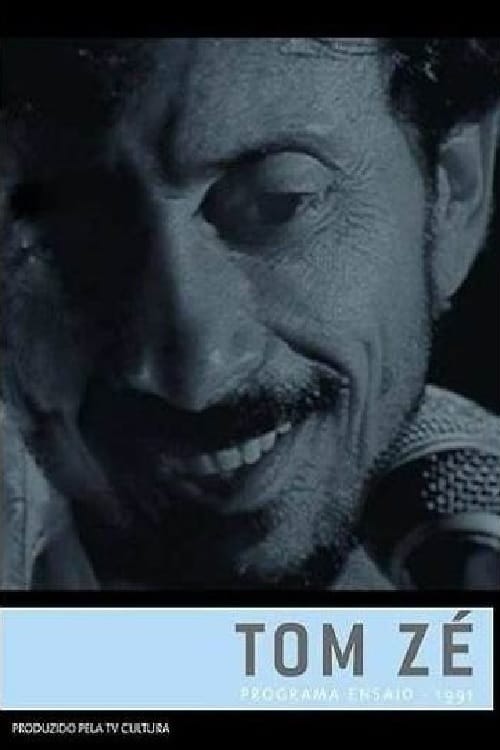
The Bahian musician talks about his childhood in Irará, about Tropicalismo, about the period he spent in ostracism in São Paulo, and his meeting with David Byrne. Accompanied by Milton Belmudes (guitar), Paulo Venegas (keyboard), Lauro Lellis (drums), Gilberto Assis (bass), Eder Sandoli (guitar / mandolin), Jarbas Mariz (cavaquinho / percussion), Tuca Fernandes (vocals), Maisa Santos (vocals) and Carmem Nakaso (vocals), Tom Zé performs songs from his repertoire such as "Parque Industrial", "Hein?", "Só (Solidão)", "Lavagem da Igreja de Irará", "São São Paulo", "Se o Caso é Chorar", among others.
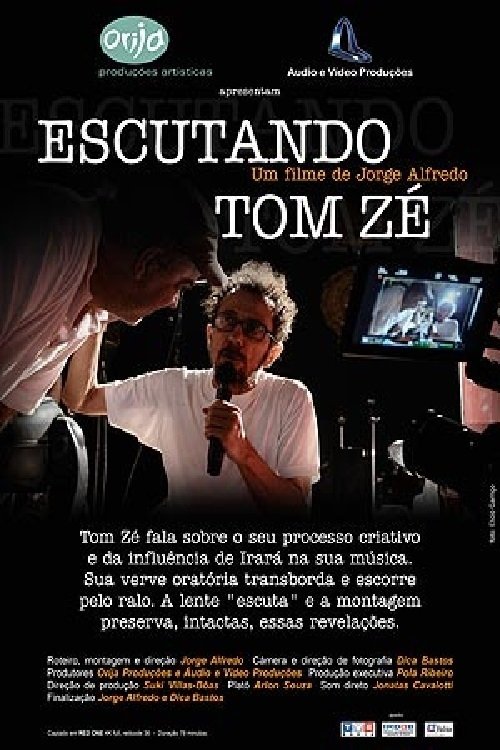
Escutando Tom Zé
2010
In Listening to Tom Zé, Jorge Alfredo shows the creative process of the Bahian artist, whom he accompanied for a long time to understand his relationship with the city of Irará, in the Bahian hinterland.
Tom Zé ou Quem Irá Colocar uma Dinamite na Cabeça do Século?
Tom Zé ou Quem Irá Colocar uma Dinamite na Cabeça do Século?
2000
This documentary offers an immersive journey into the inventiveness and musical experimentation of a complex and restless artist whose path is deeply intertwined with the Tropicália movement. A specially designed setting provides the backdrop for capturing his unique explorations—both physical and musical.

Homo Brasilis: Tom Zé, o Tropicalista Visionário
2023
Delve into the life of Antônio José Santana Martins, known as Tom Zé. Born in Bahia, this scholar of Brazilian music heads to São Paulo to propel a career filled with unusual and hilarious stories. The tropicalist artist revisits memories of his childhood in Irará, shares stories about his fellow tropicalismo movement colleagues, and reveals how his album "Estudando o Samba" won over David Byrne and launched him onto the global stage.

Fabricating Tom Zé
2006
The life and work of one of the most controversial Brazilian musicians, having as its backdrop Tom Zé's 2005 European Tour. The documentary shows a detailed vision of Tom Zé's personal musical universe, in which a guitar and a vacuum cleaner have the same melodic importance. In intimate interviews, he narrates different parts of his life and tells us about his musical debut in the early 60s, his downfall during the 70s, and his 90s comeback.
Books
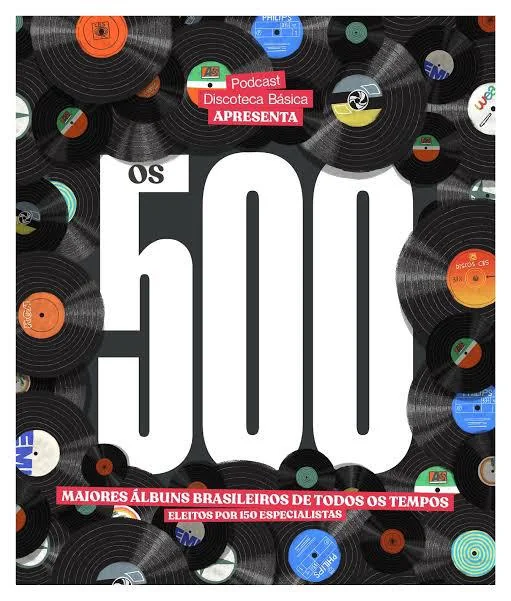
Os 500 Maiores Álbuns Brasileiros de Todos os Tempos
Ricardo Alexandre · 2022
The largest Brazilian music election ever conducted: 162 specialists, spanning journalists, critics, musicians, producers and podcasters, each nominated 50 essential albums, supported by a masterlist of more than 2,000 works. Led by Ricardo Alexandre with tabulation by Sérgio Jomori, it was published in December 2022 as a 200-page hardcover book with graphic design by Fernando Pires.
Tom Zé, Estudando o samba
Tom Zé, Charles Gavin, Elton Medeiros, Julio Medaglia · 2016
This book, featuring Tom Zé himself and figures such as Charles Gavin and Julio Medaglia, focuses on the creative effervescence of the Brazilian recording industry in the mid-1970s. The work explores the musical output that stood out beyond the hit parades, addressing the creative context and the artistic significance of the album 'Estudando o Samba'.

300 Discos Importantes da Música Brasileira
Charles Gavin, Tárik de Souza, Carlos Calado, Arthur Dapieve · 2008
Conceived by Titãs drummer and musical researcher Charles Gavin, the 434-page book brings together covers and reviews of albums released between 1929 and 2007. The texts were written by journalists Tárik de Souza, Arthur Dapieve and Carlos Calado.
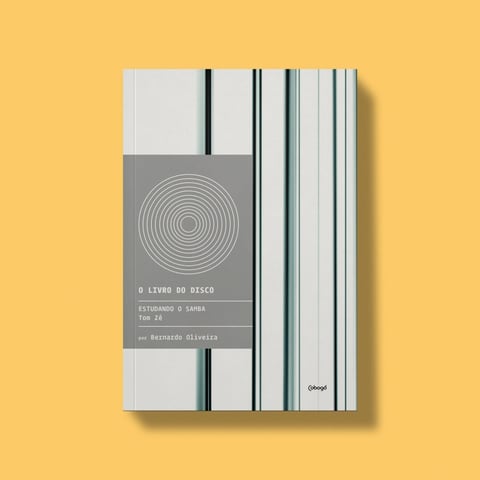
Tom Zé: Estudando o samba | Tom Zé: Estudando o samba - Editora Cobogó
In *Estudando o Samba*, Bernardo Oliveira provides a meticulous analysis of Tom Zé's album, tracing the composer's journey from the 1960s until the album's release in 1976. Exa...
Analyses
Estudando o Samba – Wikipedia
Wikipedia, the free encyclopaedia
Estudando o Samba – The 100 Greatest Albums of Brazilian Music
Antônio do Amaral Rocha · Rolling Stone Brasil
This album has it all: from the cover with images of barbed wire and ropes, to original recreations and minimalist arrangements, accompanied by noises, guttural sounds and groans.
ESTUDANDO O SAMBA: crítica musical e o estético-político no disco de Tom Zé
periodicos.pucminas.br
It is relevant to state that Estudando o Samba is a musical product recorded on Continental, one of the main record labels of the time; furthermore, Tom Zé was concerned about the album's sales, as can be seen in Elton Medeiros' testimony on the back cover of the album.
ESTUDANDO O SAMBA: crítica musical e o estético-político no disco de Tom Zé
academia.edu
It is relevant to state that Estudando o Samba is a musical product recorded on Continental, one of the main record labels of the time; furthermore, Tom Zé was concerned about the album's sales, as can be seen in Elton Medeiros' testimony on the back cover of the album.
ESTUDANDO O SAMBA Critica Musical e o Es
pt.scribd.com
Estudando o Samba with the most traditional samba clichés and patterns. The critical argument in the newspaper O Globo (1976), for example, demonstrates the discomfort and aesthetic discontent, even with the way the guitar was recorded and played on the album. What matters to know about Tom Zé is the following: his experiences were very well...