Jogos de Armar (Faça Você Mesmo)
Tom Zé
2000
Rankings
Why This Album Matters
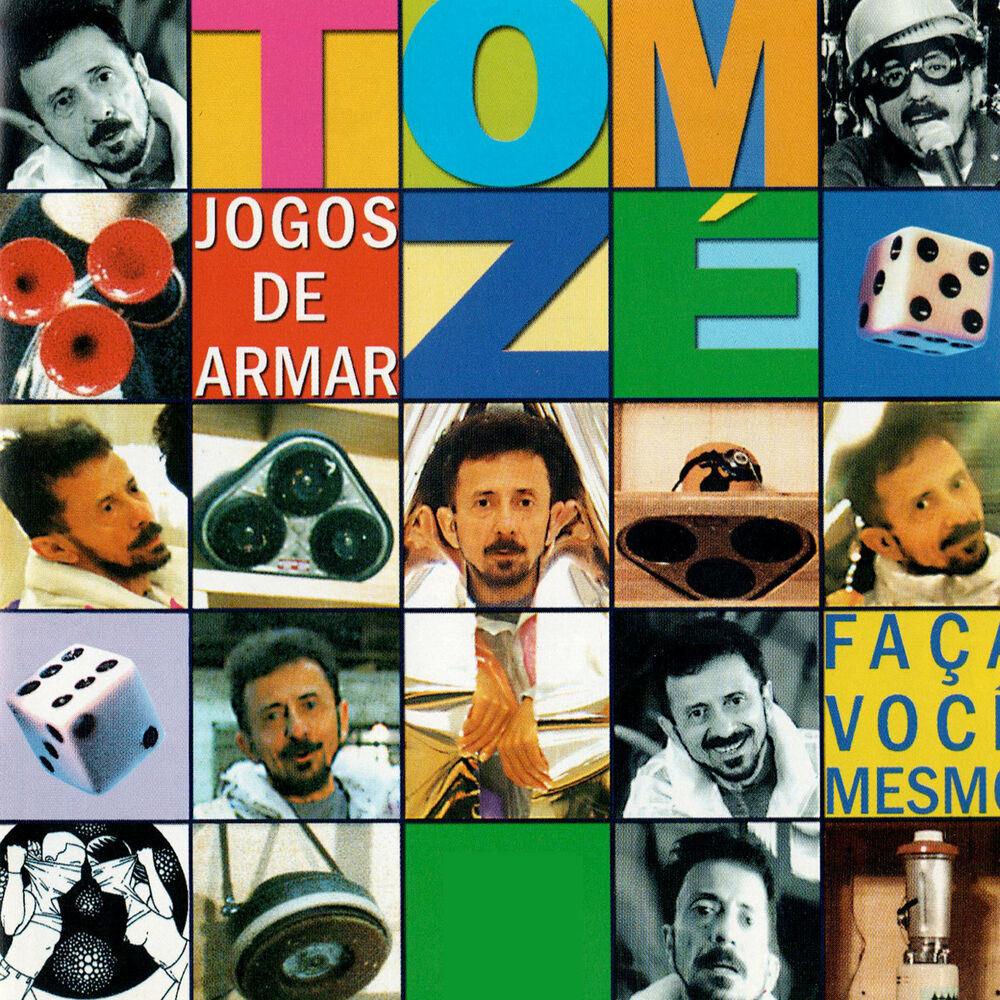
Jogos de Armar (Faça Você Mesmo), released in 2000, is a seminal work by Tom Zé that encapsulates his avant-garde and experimental approach to Brazilian music. The album stands out for its unique sound, which blends playful instrumentation with the intelligent incorporation of samples and ambitious vocal arrangements, frequently employing female choirs. Tom Zé, a master of musical adventure, creates an orchestral pop where the orchestra itself is composed of found sounds and homemade instruments, challenging the musical conventions of his era. This work represents the perfection of his 'second period' sound, a style he had been vigorously developing. The essence of the album lies in its ability to be both cerebral and captivating, with peculiar rhythms and memorable songs, demonstrating the irreverence and acidity that make him a singular artist in MPB.
Context
Tom Zé, a prominent figure of the Tropicália movement in the 60s, experienced a period of relative obscurity before a notable 'return' to the music scene in the subsequent decades. Following the success of albums like Com Defeito de Fabricação (Fabrication Defect) in 1998, which brought him back to international recognition, Jogos de Armar (Faça Você Mesmo) marked a significant moment in his career. Released in 2000 by Trama, this was Tom Zé's first studio album to be released by a Brazilian record label in over twenty years, solidifying his rediscovery and the re-evaluation of his work in his home country.
Recording
The production of Jogos de Armar (Faça Você Mesmo) is notable for its inventiveness and the exploration of unusual timbres. The album incorporates "found sounds and homemade instruments", a distinctive characteristic of Tom Zé's work. Notable examples include the use of the 'businorio' to create rhythmic horn sounds on the track "Jimi Renda-se/Moeda Falsa" and the 'hertZé', a sampler that manipulated the sound of children's laughter on "O PIB da PIB (Prostituir)". Under the production of Alê Siqueira, the record features a more elaborate studio production, with fewer layers and textural details, which contributes to a more "direct and high-contrast" sound. The album's original release was accompanied by a second CD, which contained "bits and pieces of individual songs", encouraging listeners to "construct their own songs". Although the practical utility of the second disc for the public is debatable, the idea of offering raw materials for creation is a perfect example of Tom Zé's experimental spirit.
Songs
The songs on Jogos de Armar (Faça Você Mesmo) are a microcosm of Tom Zé's inventiveness. They exhibit "herky-jerk" rhythms, "sudden stops and starts" and "jingle-jungle" melodies, driven by a singular energy. The vocal arrangements are often peculiar and interesting, with the prominent use of predominantly female choirs in humorous timbres and combinations. Among the standout tracks, "Passagem de Som" incorporates chants, while "Cafuas, Guetos e Santuários" is notable for being an a cappella piece of just 46 seconds. The album also revisits classics of the Northeastern songbook, such as "Pisa Na Fulô" and "Asa Branca", alongside original compositions like "Medo de Mulher". The lyrics address "more issues than most pop artists", utilising "caustic humour" to convey "intelligent political criticism".
Legacy
Jogos de Armar (Faça Você Mesmo) solidified Tom Zé's position as a musical innovator, earning critical acclaim. The album is considered "one of the best albums from the years following his comeback" and ranks "among the top 11% of all albums" on BestEverAlbums.com, placed 381st in the year 2000. Although the version released by Luaka Bop in the United States did not include lyric translations, a French version from BMG offered this facility. The inclusion of a second CD with sound elements for listeners to create their own music, despite its questionable practical value for the general public, reinforces the experimental and interactive nature of the work, influencing the perception of Tom Zé as an artist who constantly challenges the boundaries of musical form.
Tracks
Credits
Kid Vinil
Gilberto Assis, Tom Zé
André Szajman, Cláudio Szajman, João Marcello Bôscoli
Gilberto Assis
Carol Escorel, Erik Balestrini, Pat Prudente
Alê Siqueira
Gilberto Assis, Jarbas Mariz, Naoko Akamine
Toninho Ferragutti
Gilberto Assis
Guilehrme Kastrup, Lauro Lellis
Carlos Malta
Cristina Carneiro
Marcos Suzano
Carlos Malta
Carlos Malta
Bocato
Gilberto Assis, Renato Anesi, Tom Zé
Tom Zé
Films

Tom Zé: Programa Ensaio
1991
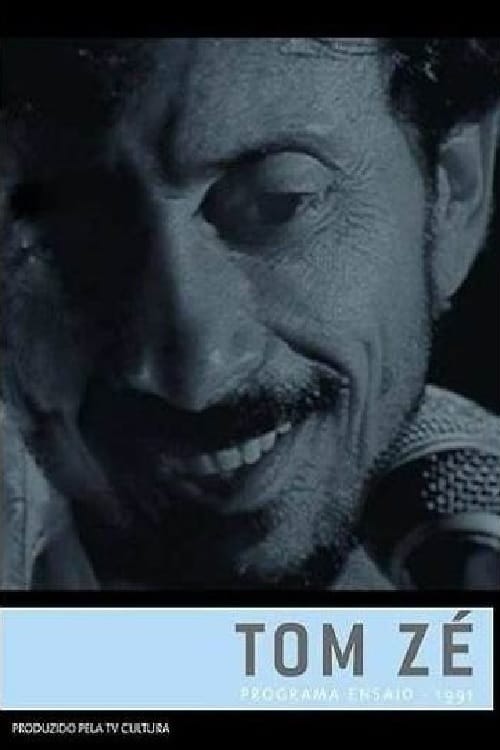
O músico baiano fala sobre sua infância em Irará, sobre o tropicalismo, sobre o período que ficou no ostracismo, em São Paulo, e seu encontro com David Byrne. Acompanhado por Milton Belmudes (guitarra), Paulo Venegas (teclado), Lauro Lellis (bateria), Gilberto Assis (baixo), Eder Sandoli (guitarra / bandolim), Jarbas Mariz (cavaquinho / percussão), Tuca Fernandes (vocal), Maisa Santos (vocal) e Carmem Nakaso (Vocal), Tom Zé interpreta músicas de seu repertório como "Parque Industrial", "Hein?", "Só (Solidão)", "Lavagem da Igreja de Irará", "São São Paulo", "Se o Caso é Chorar", entre outras.
Escutando Tom Zé
2010
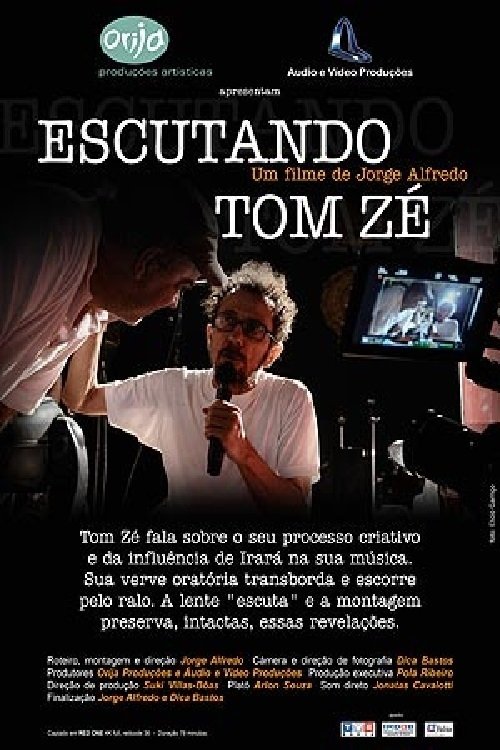
Em Escutando Tom Zé, Jorge Alfredo mostra o processo criativo do artista baiano, a quem acompanhou, durante muito tempo, para entender, também, a sua relação com a cidade de Irará, no interior baiano.
Tom Zé ou Quem Irá Colocar uma Dinamite na Cabeça do Século?
Tom Zé ou Quem Irá Colocar uma Dinamite na Cabeça do Século?
2000
This documentary offers an immersive journey into the inventiveness and musical experimentation of a complex and restless artist whose path is deeply intertwined with the Tropicália movement. A specially designed setting provides the backdrop for capturing his unique explorations—both physical and musical.

Homo Brasilis: Tom Zé, o Tropicalista Visionário
2023
Delve into the life of Antônio José Santana Martins, known as Tom Zé. Born in Bahia, this scholar of Brazilian music heads to São Paulo to propel a career filled with unusual and hilarious stories. The tropicalist artist revisits memories of his childhood in Irará, shares stories about his fellow tropicalismo movement colleagues, and reveals how his album "Estudando o Samba" won over David Byrne and launched him onto the global stage.

Fabricating Tom Zé
2006
The life and work of one of the most controversial Brazilian musicians, having as its backdrop Tom Zé's 2005 European Tour. The documentary shows a detailed vision of Tom Zé's personal musical universe, in which a guitar and a vacuum cleaner have the same melodic importance. In intimate interviews, he narrates different parts of his life and tells us about his musical debut in the early 60s, his downfall during the 70s, and his 90s comeback.
Books
Tropicalista Lenta Luta
Tropicalista Lenta Luta
Tom Zé · 2003
This book is a collection of articles, interviews, and various texts by Tom Zé himself, where he shares his reflections on Brazilian music, the Tropicalista movement, and his own artistic journey. It offers a direct and in-depth view of his creative process and the ideas that permeate his work, making it an essential source for understanding the concepts behind albums such as "Jogos de Armar (Faça Você Mesmo)".
Tom Zé, o Último Tropicalista
Tom Zé, o Último Tropicalista
Pietro Scaramuzzo
A critical biography and in-depth analysis of the life and work of Tom Zé, one of the most innovative and provocative artists in Brazilian popular music. The book explores his musical evolution, his relationship with Tropicalismo and the impact of his sonic experiments throughout his discography, including albums released in the early 2000s, such as "Jogos de Armar (Faça Você Mesmo)".
Analyses
Discos para história: Jogos de Armar - Faça Você Mesmo, de Tom Zé (2000)
musicontherun.net
Review of "Jogos de Armar - Faça Você Mesmo". Tom Zé's musical inventions span from the first to the very last minute of the album, transforming "Jogos de Armar - Faça Você Mesmo" into a veritable Tom Zé thoroughbred.
Tom Zé - Jogos de Armar: Faça Você Mesmo - Album of The Year
albumoftheyear.org
The artist I listened to a lot this summer was Tom Zé, and my favourite Tom Zé is from the 2000s. This album was released in 2000, so he was 64 years old at the time.
ark111's Review of 'Jogos de Armar: Faça Você Mesmo' by Tom Zé
albumoftheyear.org
This Jogos De Armar is the first or second best Tom Zé CD that I own. Tropicalia Monster Tom Zé is running wild in this album. Combining his beautiful voice, homemade instruments, women's voice, overdubbing, and field recordings, he will lead us to a tropical paradise.