Todos os Olhos
Tom Zé
1973
Rankings
Why This Album Matters
Released in 1973, Todos os Olhos is a landmark in Tom Zé's discography and in Brazilian music, standing out for its radical experimentalism and its self-critical stance towards MPB itself. Considered 'too experimental' for its time, the album distanced itself from conventions, presenting a complex and innovative sound that would be rediscovered decades later. Its musical approach, with electric guitars, unique lyricism, and eccentricities, consolidated Tom Zé's 'paulista' identity, despite his Bahian origin, by imbuing his urban poetry with the uncomfortable sounds of the great metropolis.
Context
The album was released in 1973, at the height of the 'lead years' of the Brazilian military dictatorship, a period of intense repression and censorship. In this scenario, artists and public figures were constantly observed and pressured to assume roles of leadership or heroism, as reflected in the social and political criticism of the title track. Tom Zé, although associated with Tropicalismo since the mid-1960s, remained faithful to his experimental streak even when other Tropicalistas, such as Caetano Veloso and Gilberto Gil, had already taken different musical paths. His audacity on Todos os Olhos led to a kind of 'excommunication' from MPB and even mainstream Tropicalismo, demonstrating an 'unusual way of combating the military dictatorship'.
Recording
Todos os Olhos was recorded in 1973 and released by Continental record label, under the production of Milton José. The recording engineering work was carried out by Zé (José Cordeiro) and Luiz Botelho. The album's technical sheet lists Heraldo do Monte as arranger and Grupo Capote responsible for the backing band and instrumentation, with Rogério Duprat contributing on the cavaquinho. Although the specific studio is not detailed, the album's 'paulista' sound suggests that production took place in the capital of São Paulo, reflecting the city's energy and urban sounds in Tom Zé's work.
Songs
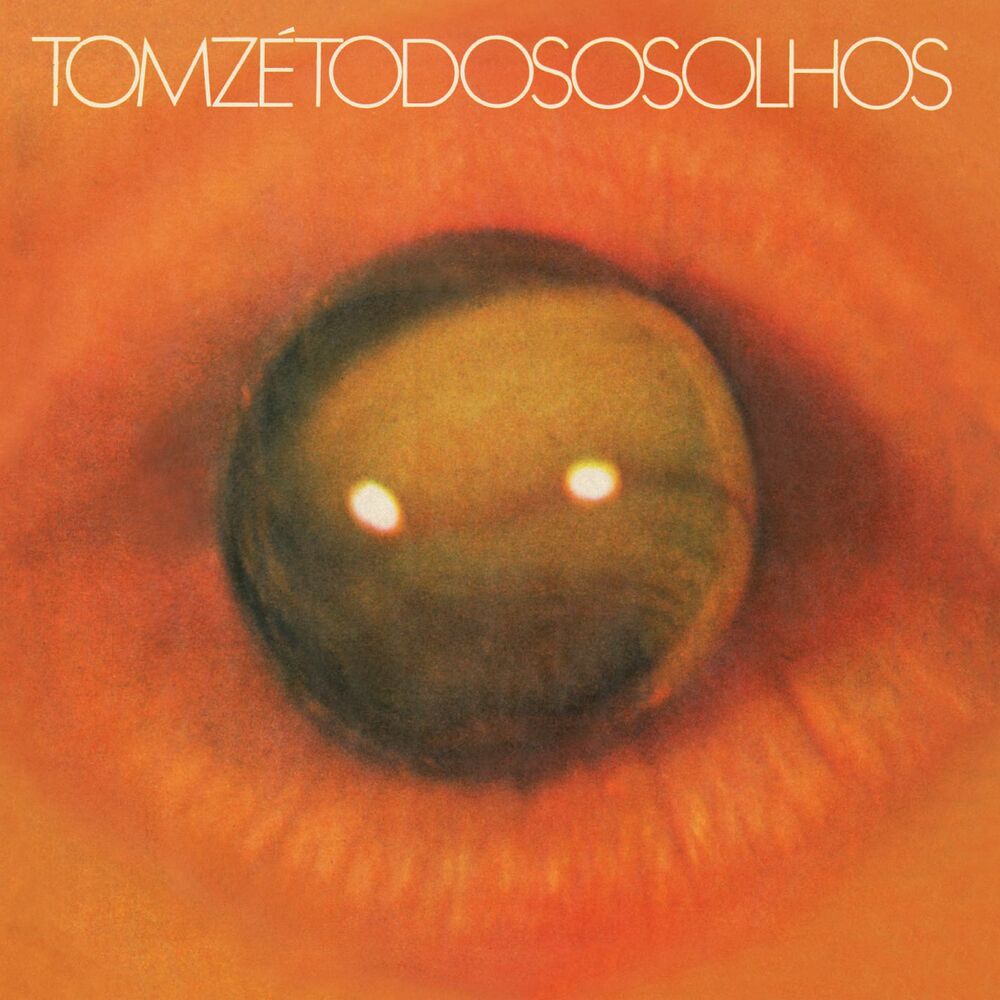
The musical structure of Todos os Olhos is notably marked by its opening and closing with the track "Complexo de Épico", a direct provocation to Caetano Veloso's song "Épico", highlighting Tom Zé's search for a particular language. The album also features "Cademar", a collaboration with concrete poet Augusto de Campos, which stands out for its non-discursive and non-linear syntax, in line with the lyrical experimentalism. The album's only re-recording, "A Noite do Meu Bem" by Dolores Duran, is revisited with rhythmic innovations that transform it. The title track, "Todos os Olhos", is a powerful manifesto that addresses the pressure on artists during the dictatorship, with Tom Zé declaring himself 'inocent' and 'weak' in the face of expectations of heroism. Other songs such as "Augusta, Angélica e Consolação" are considered by Tom Zé himself to contain some of his most beautiful verses. The album cover, conceived by poet Décio Pignatari, is one of the most iconic and controversial in Brazilian music. The image, which many interpreted as an anus with a marble, was actually a marble positioned in a model's mouth, created to ambiguously and irreverently challenge military censorship.
Legacy
Following its release, Todos os Olhos was initially met with indifference and even rejection, being considered 'too experimental' and leading Tom Zé to 'oblivion by the media and public' of the time. Its audacity excommunicated him from more traditional MPB circuits. However, the album experienced a notable rediscovery from the late 2000s onwards, largely driven by the attention of David Byrne, from the band Talking Heads, who, in 1989, discovered Tom Zé's work and signed him to his Luaka Bop label, introducing him to an international audience. The posthumous recognition resulted in significant reissues, including its CD release in 2000, in the 'Dois Momentos' series, alongside the album Se o Caso é Chorar, and in 2017, as part of the box set Tom Zé – Anos 70. The album was also reissued for the first time outside Brazil. Its importance was finally recognised in a poll by the Discoteca Básica podcast, where it was ranked as the 84th best Brazilian album by 162 music specialists.
Tracks
Credits
Heraldo Do Monte
Milton José
Grupo Capote
Rogério Duprat
Cleon, Dualib
José Cordeiro, Luiz Augusto Botelho
Décio Pignatari
Marcos Pedro Ferreira
Francisco Eduardo de Andrade, Reinaldo de Moraes
Augusto De Campos
Films

Tom Zé: Programa Ensaio
1991
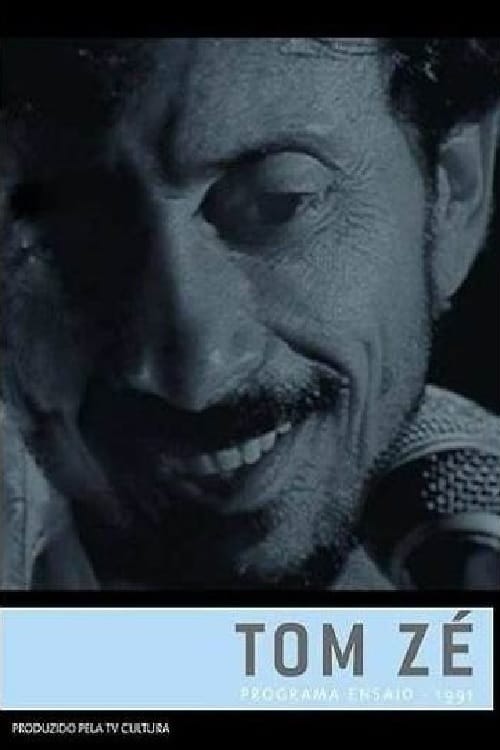
The Bahian musician talks about his childhood in Irará, about Tropicalism, about the period he spent in obscurity in São Paulo, and his meeting with David Byrne. Accompanied by Milton Belmudes (guitar), Paulo Venegas (keyboard), Lauro Lellis (drums), Gilberto Assis (bass), Eder Sandoli (guitar / mandolin), Jarbas Mariz (cavaquinho / percussion), Tuca Fernandes (vocals), Maisa Santos (vocals) and Carmem Nakaso (vocals), Tom Zé performs songs from his repertoire such as 'Parque Industrial', 'Hein?', 'Só (Solidão)', 'Lavagem da Igreja de Irará', 'São São Paulo', 'Se o Caso é Chorar', among others.

Escutando Tom Zé
2010
In 'Escutando Tom Zé' (Listening to Tom Zé), Jorge Alfredo showcases the creative process of the Bahian artist, whom he accompanied for a long time to also understand his relationship with the city of Irará, in the Bahian interior.
Tom Zé ou Quem Irá Colocar uma Dinamite na Cabeça do Século?
Tom Zé ou Quem Irá Colocar uma Dinamite na Cabeça do Século?
2000
This documentary offers an immersive journey into the inventiveness and musical experimentation of a complex and restless artist whose path is deeply intertwined with the Tropicália movement. A specially designed setting provides the backdrop for capturing his unique explorations—both physical and musical.

Homo Brasilis: Tom Zé, o Tropicalista Visionário
2023
Delve into the life of Antônio José Santana Martins, known as Tom Zé. Born in Bahia, this scholar of Brazilian music heads to São Paulo to propel a career filled with unusual and hilarious stories. The tropicalist artist revisits memories of his childhood in Irará, shares stories about his fellow tropicalismo movement colleagues, and reveals how his album "Estudando o Samba" won over David Byrne and launched him onto the global stage.

Fabricating Tom Zé
2006
The life and work of one of the most controversial Brazilian musicians, having as its backdrop Tom Zé's 2005 European Tour. The documentary shows a detailed vision of Tom Zé's personal musical universe, in which a guitar and a vacuum cleaner have the same melodic importance. In intimate interviews, he narrates different parts of his life and tells us about his musical debut in the early 60s, his downfall during the 70s, and his 90s comeback.
Books
Os 500 Maiores Álbuns Brasileiros de Todos os Tempos
Ricardo Alexandre · 2022
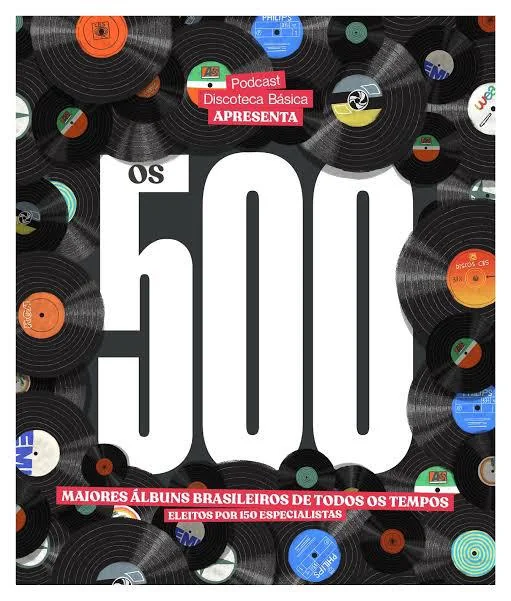
The largest Brazilian music election ever conducted: 162 specialists, spanning journalists, critics, musicians, producers and podcasters, each nominated 50 essential albums, supported by a masterlist of more than 2,000 works. Led by Ricardo Alexandre with tabulation by Sérgio Jomori, it was published in December 2022 as a 200-page hardcover book with graphic design by Fernando Pires.
Tom Zé, o último tropicalista
Pietro Scaramuzzo · 2020
Considered Tom Zé's first official biography, this work by Pietro Scaramuzzo explores the artist's life and career in depth, from his origins to his most recent works. It is an essential source for understanding the context and creation of his albums, including 'Todos os Olhos'.
Tom Zé, Estudando o samba
Tom Zé, Charles Gavin, Elton Medeiros, Julio Medaglia · 2016
Written by Tom Zé in collaboration with important figures in Brazilian music, this book delves deeper into the artist's relationship with samba and his working methodology, especially in the 1970s. It is an essential work for understanding the creative process behind albums like 'Todos os Olhos'.
Tropicalista Lenta Luta
Tropicalista Lenta Luta
Tom Zé · 2003
This book, written by Tom Zé himself, offers insights into his artistic journey, the Tropicalismo movement, and his musical philosophy. It is a primary source for understanding the context and creation of his albums, including 'Todos os Olhos', released during a key period of his career.
Analyses
Todos os Olhos – Wikipedia
Wikipedia, the free encyclopaedia

MUSICA&SOM: Todos os olhos - 1973 - Tom Zé
tabernanovostempos.blogspot.com
The fourth LP in the extensive career of master Tom Zé, it maintains his characteristic style with provocative, humorous, experimental tracks that are heavily rooted in popular traditions.
MUSICA&SOM: Artista: Tom Zé; Álbum: Todos Os Olhos
tabernanovostempos.blogspot.com
Todos Os Olhos is a fantastic album. It features some of his best songs (in the opinion of the author, of course) and a huge variety of experiences far ahead of its time.
Tom Zé: Todos os olhos de uma vanguarda singular
revistaseda.org
This essay aims to think about the relationships between popular music and avant-garde, based on Tom Zé's LP Todos os olhos. Released by the Continental record label in 1973, Todos os olhos is a critique of the MPB institution.
Datas Especiais: 50 Anos de Todos os Olhos - Consultoria do Rock
consultoriadorock.com
The way he laments what would be a separation from his wives, Augusta and Angélica, and the vocalisations providing the necessary dramatic flair for Tom Zé's laments, will certainly provide plenty of laughs with its sensational lyrics.