Tom Zé
Tom Zé
1972
Rankings
Why This Album Matters
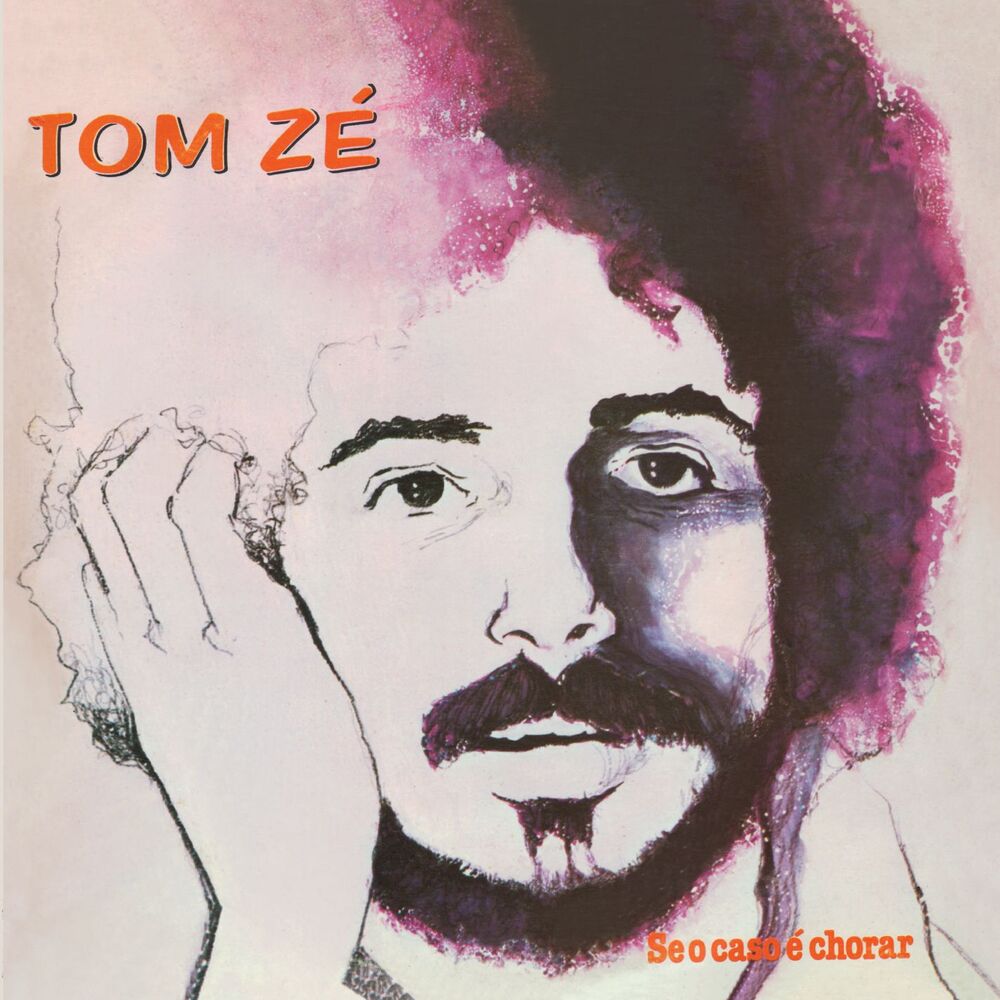
The album Tom Zé, released in 1972, is a seminal and disruptive work in Brazilian popular music, consolidating Tom Zé's unique artistic persona. Far from any stylistic conformism, the record is an audacious declaration of musical independence, fusing regional elements from Brazil's Northeast with radical sonic experimentation, anticipating trends and deconstructing traditional song forms. It presents itself as a manifesto against sameness, exploring sonority as raw material for innovation, through arrangements that incorporate noises, unconventional instruments, and intricate rhythmic structures. This work represents a deep dive into the expressive possibilities of MPB, moving away from post-Tropicalismo conventions to create a universe of its own. Tom Zé challenges the listener with an almost Dadaist approach, where melody, harmony, and lyrics serve a greater purpose of invention and critical reflection, packaged in a sonority that borders on strangeness and genius. It is a rich and multifaceted sonic experience that demands attention and rewards with new discoveries upon each listen, establishing Tom Zé as a visionary in the Brazilian musical landscape.
Context
Released at the height of the Brazilian military dictatorship, the album Tom Zé reflects a period of intense political repression and censorship, which forced many artists to seek more veiled or abstract forms of expression. After the peak of Tropicalismo, of which Tom Zé was one of the most radical members, and with the exile of figures such as Caetano Veloso and Gilberto Gil, the Bahian artist remained in Brazil, deepening his experimental vein and distancing himself from the more pop structures that marked the beginning of the movement. The work emerges from a moment of introspection and a search for an authentic artistic language amidst isolation and adversity. Tom Zé, who had already demonstrated his nonconformity in his first albums, finds in this work a way to channel anguish and effervescent creativity, transforming restrictions into stimuli for innovation, consolidating a musical aesthetic that is both local and universal.
Songs
The songs on the album Tom Zé are a labyrinth of inventiveness and provocation. Tracks like "Se o Caso É Chorar" and "Augusta, Angélica e Consolação" are examples of the artist's ability to subvert melody in favour of a sonic narrative, employing abrupt pauses, unexpected rhythmic shifts, and instrumentation that defies categorisation. The lyrics, in turn, are a spectacle in themselves: poetic, often hermetic, laden with metaphors and veiled social criticisms, they address everyday themes with a keen and at times ironic gaze. "Dor e Dor" and "O Aniversário da Cidade" demonstrate Tom Zé's genius in transforming mundane elements into poetry and music, using the repetition of phrases and sounds in an almost hypnotic way. The composition is marked by the deconstruction of traditional song form, where the voice is treated as an instrument and the arrangements are true sound collages that incorporate the percussion of objects and raw sonority, creating a unique universe that is both challenging and captivating.
Legacy
Initially, Tom Zé (1972) was an album that generated more perplexity than commercial success, being received with a certain strangeness by much of the critics and public of the time, who did not know how to classify its radical sound. Its avant-garde nature and experimentation placed it on the margins of the mainstream, making it a "misunderstood classic" for many years. However, in subsequent decades, the album gained cult status and was progressively recognised as a masterpiece of Brazilian music, being re-evaluated for its audacity and originality. The rediscovery of Tom Zé in the late 1980s and early 1990s, driven by figures such as David Byrne (Talking Heads), who publicly praised it and released it internationally via his Luaka Bop label, brought this album to a level of global recognition. Today, Tom Zé is frequently cited in lists of the best Brazilian and world albums, and its influence can be perceived in various generations of artists who seek experimentation and rupture, solidifying its place as a landmark in the history of MPB and experimental music.
Tracks
Credits
Sidney Morais
Osny José
Grupo Capote
Gabriel Bahlis
Mario Casali
Oswaldo Cuscus
José Cordeiro, Luiz Augusto Botelho
Grew
Podcasts
Brazuca Sounds · Leandro Vignoli
In episode #31 we continue our series celebrating albums released 50 years ago. Tom Zé's third self-titled album came out in May 1972, and although it is not his most famous album, it really opened the door to his more experimental endeavors later on in his career. This album confirmed that Tom Zé was probably the most irreverent and creative artist in Tropicalia and beyond, however in 1972 his co
Brazuca Sounds on Patreon · Leandro Vignoli
In episode #31 we discussed Tom Zé's third self-titled album that came out in May 1972. Although it is not his most famous album, it really opened the door to his more experimental endeavors on "Todos os Olhos" and "Estudando o Samba". This album confirmed Tom Zé as probably the most irreverent and creative artist in Tropicalia and beyond, however in 1972 his connection with the movement has been
Films

Tom Zé: Programa Ensaio
1991
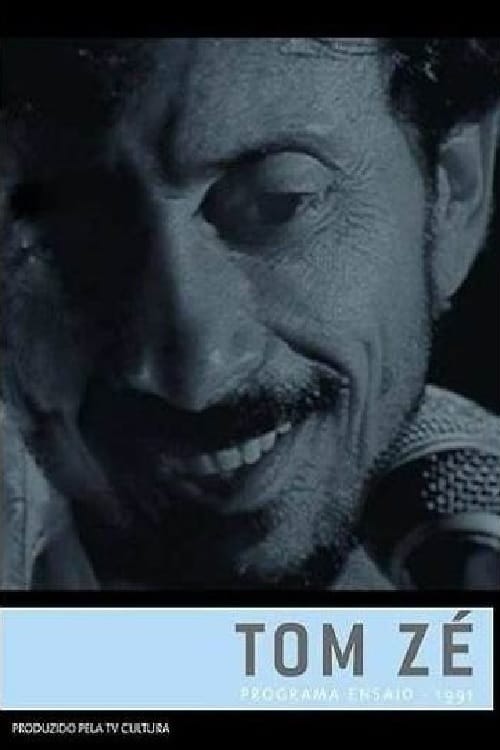
The Bahian musician talks about his childhood in Irará, about tropicalismo, about the period he spent in obscurity in São Paulo, and his meeting with David Byrne. Accompanied by Milton Belmudes (guitar), Paulo Venegas (keyboard), Lauro Lellis (drums), Gilberto Assis (bass), Eder Sandoli (guitar / mandolin), Jarbas Mariz (cavaquinho / percussion), Tuca Fernandes (vocals), Maisa Santos (vocals) and Carmem Nakaso (vocals), Tom Zé performs songs from his repertoire such as "Parque Industrial", "Hein?", "Só (Solidão)", "Lavagem da Igreja de Irará", "São São Paulo", "Se o Caso é Chorar", among others.
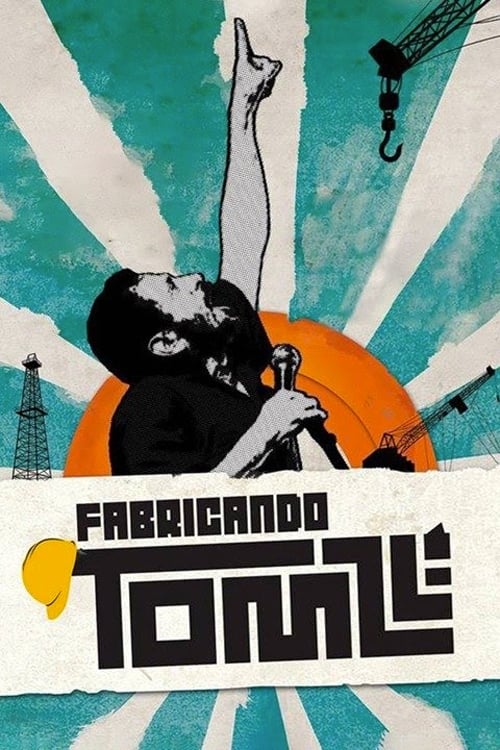
Fabricating Tom Zé
2006
The life and work of one of the most controversial Brazilian musicians, having as its backdrop Tom Zé's 2005 European Tour. The documentary shows a detailed vision of Tom Zé's personal musical universe, in which a guitar and a vacuum cleaner have the same melodic importance. In intimate interviews, he narrates different parts of his life and tells us about his musical debut in the early 60s, his downfall during the 70s, and his 90s comeback.
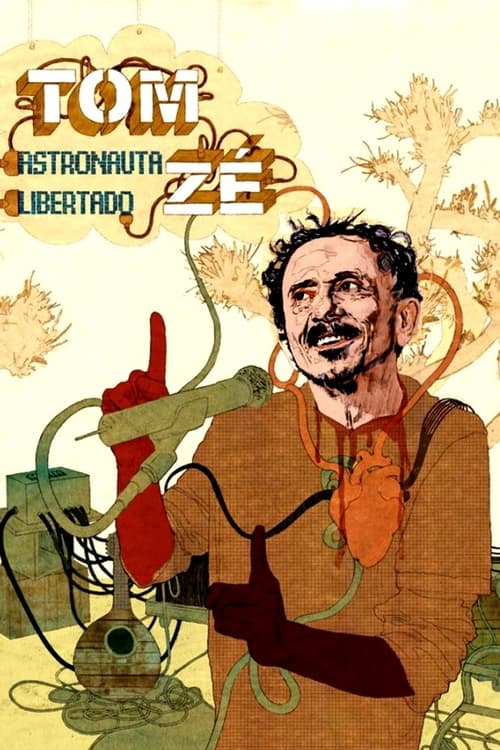
Tom Zé: Liberated Astronaut
2009
The enlightened and extra-terrestrial Brazilian genius-multi-instrumentalist flies to Asturias in 2008 to give a music workshop. His journey takes us on another: that of his career, the ostracism with which he would be punished, his perpetual crusade for the materialization of “the idea”, his unique inspiration and incredible sense of humour. All emitted through his words and those of the people that surround him. An authentic pioneer, a free and cosmic spirit.

Escutando Tom Zé
2010
In "Escutando Tom Zé" (Listening to Tom Zé), Jorge Alfredo showcases the creative process of the Bahian artist, whom he accompanied for a long time to understand his relationship with the city of Irará, in the Bahian interior.
Tom Zé ou Quem Irá Colocar uma Dinamite na Cabeça do Século?
Tom Zé ou Quem Irá Colocar uma Dinamite na Cabeça do Século?
2000
This documentary offers an immersive journey into the inventiveness and musical experimentation of a complex and restless artist whose path is deeply intertwined with the Tropicália movement. A specially designed setting provides the backdrop for capturing his unique explorations—both physical and musical.
Books
Tom Zé - Trajetória Musical
Tom Zé, Sergio Cohn · 2024
Co-authored by Tom Zé and Sergio Cohn, this book explores the artist's musical trajectory and his unique perspective on the Tropicalist movement. It addresses Tom Zé's formal fidelity to Tropicalismo and his particular interpretation of that period, being essential for understanding the artistic development that led to the 1972 album and his position as 'the last tropicalist'.
Os 500 Maiores Álbuns Brasileiros de Todos os Tempos
Ricardo Alexandre · 2022
The largest Brazilian music election ever conducted: 162 specialists, spanning journalists, critics, musicians, producers and podcasters, each nominated 50 essential albums, supported by a masterlist of more than 2,000 works. Led by Ricardo Alexandre with tabulation by Sérgio Jomori, it was published in December 2022 as a 200-page hardcover book with graphic design by Fernando Pires.
Tom Zé, o último tropicalista
Pietro Scaramuzzo · 2020
This is the first official biography of Tom Zé, written by the Italian journalist and researcher Pietro Scaramuzzo. The book traces the complete trajectory of the musician, from his birth in Irará in 1936, covering his seminal work and his role in Tropicalismo, which makes it fundamental for understanding the context and creation of the eponymous 1972 album.
Tom Zé, Estudando o samba
Tom Zé, Charles Gavin, Elton Medeiros, Julio Medaglia · 2016
This book delves into Tom Zé's creative period in the mid-1970s, with contributions from Charles Gavin, Elton Medeiros, and Julio Medaglia. It explores the artist's 'creative life' beyond the mainstream and his experimental approach, being highly relevant for contextualising the innovation and rupture present in the 1972 album.
Analyses
1 Álbum 100 Palavras #114: Tom Zé - Tom Zé (1972)
radiolisipo.com
The album "Tom Zé" (1972), also known as Se o Caso é Chorar, is one of the most inventive works by the Bahian composer. Released after his involvement in the Tropicalist movement, the record reveals his critical and experimental stance within MPB.

Tarati Taraguá: Preciosidades em Vinil - Tom Zé (1972)
taratitaragua.blogspot.com
For new fans of Tom Zé, more accustomed to his more experimental and research-oriented work, it's good to listen to his earlier works, such as this album. It's always worthwhile.