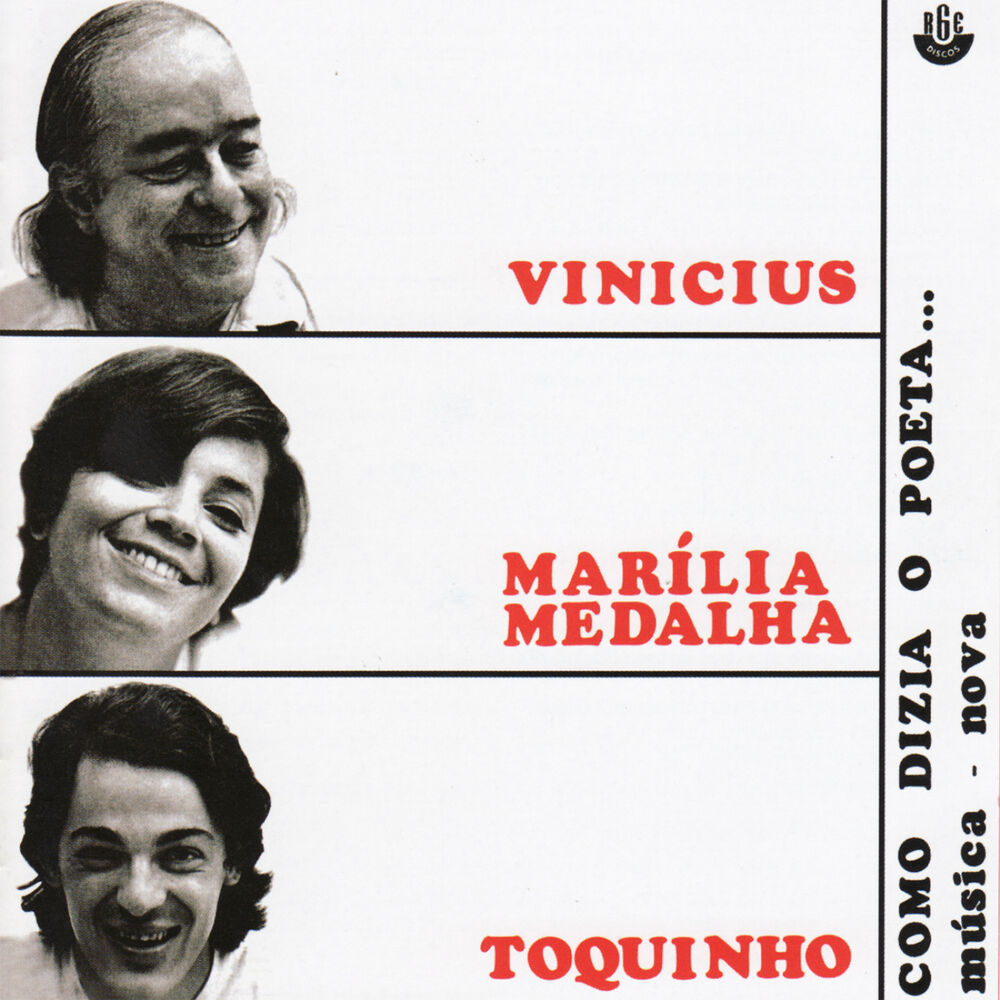
Como Dizia o Poeta...
Vinicius de Moraes, Marília Medalha & Toquinho
1971
Rankings
Why This Album Matters
Como Dizia o Poeta..., released in 1971, is an emblematic album that solidified the musical partnership between the poet Vinicius de Moraes, the guitarist and singer Toquinho, and the expressive voice of Marília Medalha. The work is a prime example of Música Popular Brasileira (MPB), with strong roots in Bossa Nova and samba, characterised by poetic elegance and melodic sophistication. This album represents the essence of a musical style that united literary poetry with the harmonic and rhythmic richness of Brazilian music. An album that invites reflection on life, love, and human experiences, with a lyrical depth that became a trademark of Vinicius de Moraes. Its comforting sound, driven by Toquinho's guitar and the unique vocal interpretations, makes this work a fundamental piece for understanding the aesthetic of MPB in the early 70s.
Context
The album emerged during a period of cultural effervescence and, at the same time, intense political repression in Brazil, under the military dictatorship that lasted from 1964 to 1985. In this context, MPB often served as a vehicle to express discontent and resistance, frequently using metaphors and double meanings to circumvent government censorship that closely monitored artistic productions. Vinicius de Moraes was already an established 'Poetinha' (little poet), with a vast career as a diplomat, poet, playwright, and lyricist, and memorable partnerships with names such as Tom Jobim and Baden Powell. Toquinho, a talented guitarist and composer, had already been developing a fruitful collaboration with Vinicius, which would become one of the most iconic in Brazilian music. Marília Medalha, in turn, brought her distinctive interpretation to enrich the vocal texture of the trio in this project.
Recording
The production of the album Como Dizia o Poeta... was led by Toquinho. Recordings took place at Estúdios Reunidos and featured sound engineering by Milton Rodrigues. The arrangements were by José Briamonte and Lagna Fietta, contributing to the album's characteristic sound. The recording process sought an atmosphere of simplicity and clarity, elements that are reflected in the intimacy of the tracks and the way the compositions are presented.
Songs
The twelve tracks on Como Dizia o Poeta... are a celebration of life and feelings. The title track, "Como Dizia o Poeta", is a profound reflection on the importance of living intensely, loving, crying, and suffering, arguing that surrendering to emotions is what truly gives meaning to existence. The lyrics highlight that "a vida só se dá pra quem se deu" (life is only given to those who give themselves), criticising disbelief and the fear of taking risks in love. Other gems on the album include "Tarde em Itapoan", an iconic partnership between Vinicius and Toquinho, which evokes the beauty and nostalgia of Bahia, and "Mais Um Adeus", which addresses the pain of separation. The compositions explore themes such as 'saudade' (longing), hope, and the celebration of Brazilian culture, permeated by Vinicius's lyricism, Toquinho's melody, and the complementary voices of the three artists.
Tracks
Credits
Héctor Lagna Fietta, José Briamonte
Toquinho
Books
Álbum 1 - 1950 a 1972
Pedro Alexandre Sanches · 2021
This is the first volume of a series that retells the history of Brazilian music through its most significant albums, covering the period from 1950 to 1972. Written by journalist and music critic Pedro Alexandre Sanches, the book offers an in-depth analysis of records and artists from that era, being highly relevant for the study of 'Como Dizia o Poeta...', released in 1971 and directly situated within this period.
Cancioneiro Vinicius de Moraes: Obras selecionadas
Sergio Augusto · 2007
A comprehensive biography of the poet, popular songwriter, playwright, and performer Vinicius de Moraes. This volume of 'Selected Works' addresses his vast production, including many of his songs and important collaborations with other artists (such as Toquinho and Marília Medalha on the album in question), being essential for understanding the context, trajectory, and creation of works like 'Como Dizia o Poeta...'.
Analyses

Vinicius De Moraes, Marilia Medalha, Toquinho - Como Dizia o Poeta 1971
madshoesmusicology.blogspot.com
Vinicius De Moraes, Marilia Medalha, Toquinho - Como Dizia o Poeta 1971 Vinícius de Moraes was a fundamental figure in Brazilian music. As a poet, he wrote lyrics for a great number of songs that became all-time bossa nova and samba classics. As a composer, he wrote some good music, and as an interpreter, he left several important albums.

Loronix: Vinicius, Marilia Medalha e Toquinho - Como Dizia o Poeta ...
loronix.blogspot.com
This is Vinicius, Marilia Medalha e Toquinho - Como Dizia o Poeta... Musica Nova (1971), for RGE. It seems to be impossible for Vinicius de Moraes and Toquinho to make a regular album, perhaps even if they want to make it. They also have a special talent to bring Brazilian Divas for collaborations and make them shine, delivering their best.
Vinícius de Moraes, Marilia Medalha e Toquinho - Como Dizia o Poeta ...
musicasdonordeste.net
"A Tonga da Mironga do Kabuletê", "Valsa para o Ausente" and "Como Dizia o Poeta" are some examples of the marvellous songs on this CD, which features three great stars of Brazilian music: Vinicius, Marília Medalha and Toquinho.

Vinicius de Moraes - Discografia: Como dizia o poeta... - 1971
discografiaviniciusdemoraes.blogspot.com
The association of the very Rio-born Vinicius de Moraes with São Paulo-native Antonio Pecci Filho, or Toquinho, a former student of guitarist Paulinho Nogueira who debuted in local bossa nova shows alongside his friend Chico Buarque, was the most documented on records.
Vinicius de Moraes | Como dizia o poeta
viniciusdemoraes.com.br
TRACKS Tarde em Itapuã Como dizia o poeta Tomara Valsa para o ausente Samba de Gesse A tonga da mironga do kabuletê A bênção, Bahia Mais um adeus A vez do dombe O grande apelo Samba da rosa Melancia e coco verde