Revolver
Walter Franco
1975
Rankings
Why This Album Matters
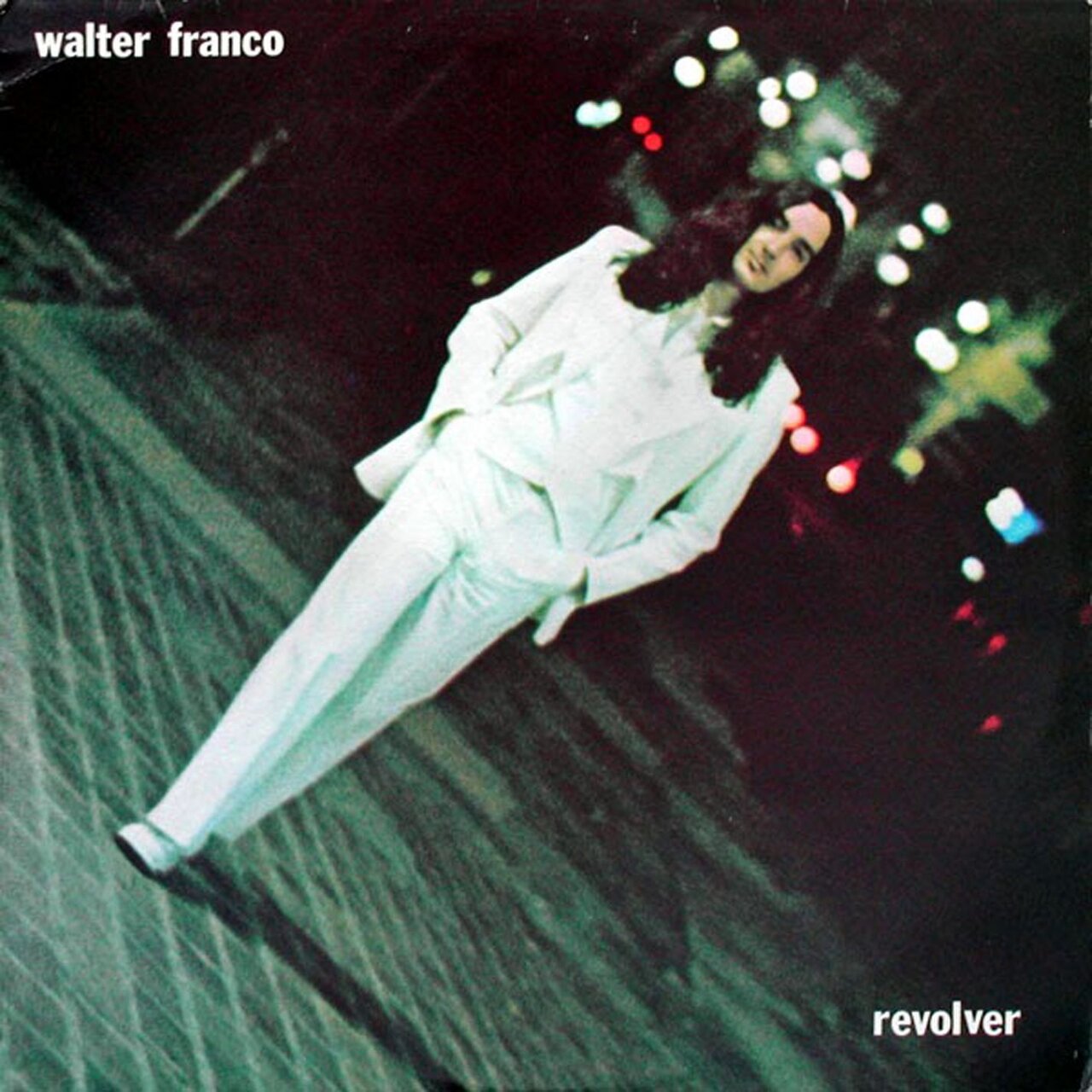
Released in 1975, Revolver is Walter Franco's second album and stands as an unmissable landmark in Brazilian discography, recognised as one of the most significant works of his career. Distancing itself from the conventions of the era, the album presents a daring fusion of rock, psychedelic elements, progressive touches, and even Indian music influences, resulting in a sound that defies simple categorisations. This work is the very materialisation of Walter Franco's 'concrete rock', an approach that intertwines musical experimentation with concrete poetry, of which the artist was a notable exponent. Its innovative character and avant-garde sound placed it ahead of its time, solidifying Franco's reputation as one of MPB's most intriguing and fearless artists. The title 'Revolver' in itself already hints at the album's proposal: to turn over, to stir, and to explore the depths of human experience, as well as being a subtle homage to The Beatles' classic album.

It is also one of those unique moments in Brazil, when the intellectualism of the lyrics stands shoulder to shoulder with the vigorous instrumentation of a rock band.
Alexandre Matias · Rolling Stone Brasil
Context
Before Revolver, Walter Franco had already cultivated an image as an audacious and challenging artist. His participation in popular music festivals, especially the 1972 Festival Internacional da Canção with the song "Cabeça", caused bewilderment and was marked by boos from the audience, though praised by critics for its experimentalism. His first album, Ou Não (1973), with arrangements by Rogério Duprat, deepened this avant-garde streak, consolidating the perception of Franco as one of MPB's 'accursed artists', a label that defined brilliant artists who were often misunderstood by the general public. In a Brazil immersed in military dictatorship and censorship, Walter Franco's independent stance, which never aligned with specific artistic movements, allowed him to create a singular body of work. Revolver emerges from this cultural and personal melting pot, with Walter Franco exploring a dense poetic language, known as concrete 'post-lyricism', which sought new meanings in word and sound, in contrast to the more palatable music of the time.
Recording
Revolver was released by the Continental label and was produced by Walter Franco himself, in partnership with Carlos Alberto Sion, which granted him complete creative autonomy over the work. One of the most notable aspects of the recording was the innovative use of studio effects, executed by Pena Schmidt, who applied techniques such as inverted playbacks, frequency saturation, and pre-mixing, contributing to the album's unique sonic atmosphere. The album's technical sheet reveals a team of talented musicians who were able to translate Franco's vision. Rodolpho Grani Jr. not only served as musical director and arranger, but also contributed electric basses, guitars, acoustic guitar, and keyboards. Emílio Carrera excelled on keyboards, while Diógenes Burani Digrado Filho and Dudu Portes handled drums and percussion, enriching the rhythmic texture. The participation of Luiz Paulo on synthesisers and tuners also underlines the album's experimental and electrified nature.
Songs
The album Revolver comprises 14 tracks, mostly exclusively written by Walter Franco, with exceptions for "Bumbo do Mundo", co-written with Chico Bezerra, and "Cena Maravilhosa", with Cid Franco. The lyrics are a trademark, influenced by concretism and Eastern philosophy, utilising mantric forms, wordplay, and layers of meaning that invite reflection. Tracks such as "Feito Gente", which opens the album, immediately impress with a powerful vocal performance and a rhythmic, measured section. "Eternamente" is an example of a sonic haiku, where Walter Franco plays with the sound and multiple meanings of words: "Eternamente / É ter na mente / Éter na mente / Eterna mente". "Mamãe D'Água" employs a cumulative structure, progressively building meaning, while "Toque Frágil" showcases chaotic vocals and a dense arrangement, with synthesisers and guitars. "Nothing", the only English-language song, reflects on existential apathy with instrumentation that blends rock, pop, and baião. Finally, the brief "Pirâmides" is a constructivist and sensorial piece, which combines almost bossa nova harmonies with an ethereal and reverberant vocal treatment, encapsulating the experimental spirit of the record.
Legacy
Revolver is widely recognised as a watershed moment in Brazilian music, and its relevance was sealed by its inclusion in Rolling Stone Brasil's prestigious list of the "100 Maiores Discos da Música Brasileira". Although initially met with bewilderment and little acceptance, due to its innovative nature, the album gradually gained the recognition it deserved, being considered a work ahead of its time. The 'concrete rock' and audacious experimentalism of Revolver established new paradigms for Brazilian song, influencing the music scene even before movements like the Vanguarda Paulista. A notable fact of its international recognition is the mention that John Lennon reportedly appreciated the album, even having the Brazilian's LP on his desk, as shown in a photograph from the era. Revolver not only injected a dose of rock into Walter Franco's artistic language, but also paved the way for future experimentation in MPB, becoming a cult album and a testament to the genius of an artist who always challenged the boundaries of form.
Tracks
Credits
Diogenes Burani Filho
Rodolpho Grani Júnior
Walter Franco
Carlos Alberto Sion
Rodolpho Grani Júnior
Pena Schmidt
Walter Franco
Diogenes Burani Filho, Dudu Portes, Emílio Carrera, Luiz Simas, Rodolpho Grani Júnior
Emílio Carrera
Emílio Carrera, Rodolpho Grani Júnior, Walter Franco
Rodolpho Grani Júnior
Odair Corona
Rodolpho Grani Júnior
Diogenes Burani Filho, Dudu Portes
Diogenes Burani Filho, Dudu Portes
Dudu Portes, Tony Osanah
Rodolpho Grani Júnior
Rodolpho Grani Júnior
Emílio Carrera, Rodolpho Grani Júnior
Diogenes Burani Filho, Dudu Portes
Emílio Carrera, Rodolpho Grani Júnior
Pena Schmidt
Rodolpho Grani Júnior
Luiz Simas
Diogenes Burani Filho, Flavio Augusto Barreira, Luiz Antonio Carlos Baptista
Walter Franco
Flavio Augusto Barreira, Jose Luiz Costa, Luiz Antonio Carlos Baptista
Oscar Paolillo
Paula Yne Tanaka
Beth Carvalho, Chico Bezerra, Cicero Franco, Eliana, Mario Luiz Thompson, Paula Yne Tanaka
Mario Luiz Thompson
Podcasts
Sons e Histórias · Daniel Queiroz
Revolver segundo disco do cantor e compositor Walter Franco é comentado, disco lançado em 1975.
Videos
Ep. 74 – Walter Franco e a ousadia poética de Revolver
Sons e Histórias
Books
Analyses
Revolver – Wikipedia
Wikipedia, the free encyclopaedia
Revolver – The 100 Greatest Albums of Brazilian Music
Alexandre Matias · Rolling Stone Brasil
It is also one of those unique moments in Brazil, when the intellectualism of the lyrics stands shoulder to shoulder with the vigorous instrumentation of a rock band.
Walter Franco - Revolver | In Sheeps Clothing
insheepsclothinghifi.com
Brazilian songwriter Walter Franco moves away from his early freak folk to present a more psychedelic and rock-oriented MPB album. On Revolver, Franco explores a sort of avant-garde Sgt. Pepper type art rock sound with heavily processed guitars, synths, and eastern instruments mixed with his own "concrete poetry," which is characterized by minimal text where the sound of the words take ...
Walter Franco - Revolver (1975) - A História do Disco
ahistoriadodisco.com.br
It's well worth noting the sound quality of this album, with a drum kit well in the background (you'll notice it better if you listen with headphones) that harks back to The Beatles' recordings. A piano is constantly active throughout the album, bringing a distinctive personality to the record.

Um disco indispensável: Revolver - Walter Franco (Continental, 1975)
cardapiosonoro.blogspot.com
He was always an anomaly among MPB artists; despite his work having a cult status, he managed to bring some of his very concrete and natural poetry to his first album, titled Ou Não, released in 1973 by Continental Records. This album introduced themes that would forever define his work in the history of MPB, and became immortalised by its cover featuring a white background with a fly – nothing could be more 'heady' than such a record.