A Peleja do Diabo com o Dono do Céu
Zé Ramalho
1979

Rankings
Why This Album Matters
Released in 1979, A Peleja do Diabo com o Dono do Céu is Zé Ramalho's second solo album and an essential landmark in his discography, consolidating the mystical and Northeastern sound that would consecrate him as one of MPB's great names. The album deepens the artist's poetic and rebellious verve, bringing a Manichaean vision of life, where the clash between good and evil, between the divine and the profane, manifests in multiple layers, whether in social criticism or existential reflections. This unique work stands out for its unmistakable fusion of elements from progressive rock, folk, blues, and the rich musical tradition of the Brazilian Northeast, such as forró and frevo. Zé Ramalho constructs a soundscape that traverses between the archaic and the modern, with dense and evocative lyrics inspired by cordel literature and the oral tradition of travelling singers, creating a lyrical universe that is both particular and universal.
Context
A Peleja do Diabo com o Dono do Céu arrives a year after Zé Ramalho's successful self-titled debut album (1978), which had already introduced the public to hits such as "Avôhai" and "Chão de Giz". During that period, Brazil was experiencing the effervescence of political opening post-military dictatorship, a fertile ground for the emergence of voices that, like Zé Ramalho's, blended social protest with rich Brazilian popular culture and international influences. The Paraíban artist already carried a trajectory that included participation in the band The Gentlemen and the recording of the cult psychedelic album Paêbirú, with Lula Côrtes, in 1975. Upon arriving in Rio de Janeiro, Zé Ramalho established himself as a highly talented composer, and A Peleja do Diabo com o Dono do Céu represented the solidification of his artistic identity, reaffirming his ability to create works that were, at once, deeply rooted in his Northeastern origins and avant-garde in their conception.
Recording
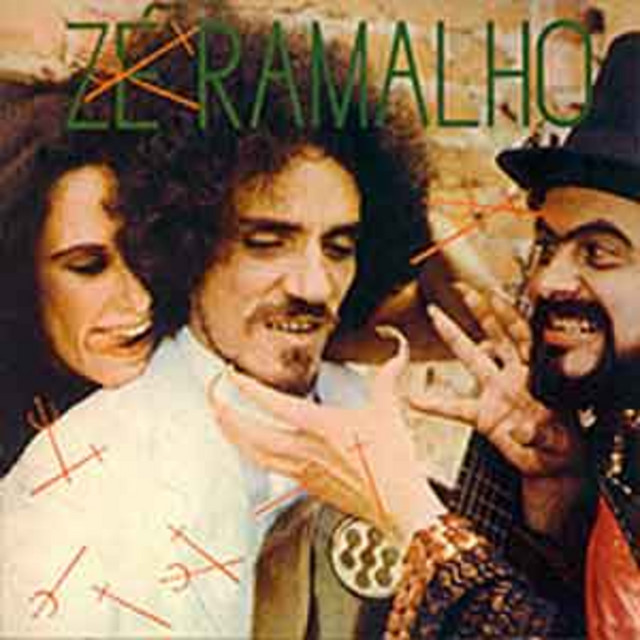
The album was recorded in June 1979 at CBS Studios, Rio de Janeiro, and released in September of the same year. Production was overseen by Carlos Alberto Sion, who had previously worked on the artist's debut album, with Zé Ramalho also acting as studio and musical director, in collaboration with Paulo Machado. The album's visual concept, conceived by Zé Ramalho himself, is a chapter apart. The iconic cover, directed by filmmaker Ivan Cardoso, features the singer wielding a guitar, portraying the "owner of Heaven", while being spied upon by actress Xuxa Lopes, in a vampiric role, and threatened by the legendary filmmaker Zé do Caixão (José Mojica Marins). The photograph was taken in an abandoned mansion in Santa Teresa, Rio de Janeiro, and the liner notes also feature the participation of figures such as Hélio Oiticica and Satã (Zé do Caixão's bodyguard), as well as illustrations by Seth and symbols by Raul Córdula, evidencing a bold aesthetic aligned with the counterculture of the time.
Songs
The album's tracks offer a deep dive into Zé Ramalho's universe, replete with lyricism and social criticism. "Falas do Povo" is a direct example, with its social criticisms and the participation of Jorge Mautner on violin, being dedicated to Geraldo Vandré, one of the singer's notable influences. Meanwhile, "Beira-Mar" inaugurates a trilogy of songs based on a cordel pamphlet titled "Apocalypse", written by Zé in 1977, demonstrating the intertextuality and depth of his work that would extend to future albums. The instrumental track "Agônico" is a tour de force by Zé Ramalho himself, who performs all instruments, from vihuelas and bass to percussion and piano, creating a sound that, according to him, connects Brazilian Northeast music to Moorish heritage. "Frevo Mulher", initially composed for the repertoire of his then-wife, Amelinha, who even performs a duet with him on "Pelo Vinho e Pelo Pão", became one of the great classics of his career. Another prominent song is "Admirável Gado Novo", one of the album's most iconic tracks, which, with its socio-political content and references to Aldous Huxley and George Orwell, transformed into a popular anthem, despite being released during the Military Dictatorship.

Within the Northeastern movement of the 1970s, José Ramalho Neto, the Paraíba native from Brejo da Cruz, better known as Zé Ramalho, born in 1949, was responsible for reconfiguring for the syntax of post-Tropicalist guitars, the cordel literature and the versified singing of the sertão bards.
Tárik de Souza · 300 Discos Importantes
Legacy
A Peleja do Diabo com o Dono do Céu was an immediate success, earning Zé Ramalho his first gold record certification, a significant achievement for the period. The album not only consolidated the artist's career after the success of his debut work, but also etched his name as one of the most important composers and performers of Brazilian music. Songs such as "Admirável Gado Novo" and "Frevo Mulher" transcended the album, becoming timeless MPB classics, re-recorded by various artists and present in the popular imagination. The work is frequently cited as one of the fundamental albums of Brazilian music, standing out for the originality of its theme and the richness of its musical fusion, which influenced generations of artists and remains relevant for understanding Brazilian culture and society.
Tracks
Credits
Zé Ramalho
Carlos Alberto Sion, Paulo Machado, Zé Ramalho
Lígia Itiberê, Marcelo Falcão
Carlos Alberto Sion
Carlos Alberto Sion, Zé Ramalho
Zé Ramalho
Paulo Machado
Seth
Gilson De Freitas
Gilberto Marquez
Eugênio Carvalho, Manoel Magalhães
Jorge Emilio Isaac
Zé Ramalho
Pedro Osmar
Helio Oiticica, Mônica Schmidt, Satã, Xuxa Lopes, Zé Do Caixão
Luciano Figueiredo, Oscar Ramos
Carlos Alberto Sion
Ivan Cardoso
Raul Cordula
Hildebrando Gomes
Podcasts
Sons e Histórias · Daniel Queiroz
Neste episódio de Sons & Histórias, mergulhamos em uma das obras mais potentes e simbólicas da música brasileira: "A Peleja do Diabo com o Dono do Céu", segundo álbum do mestre Zé Ramalho, lançado em 1979. Com sua poesia mística, nordestinidade nítida e sonoridade psicodélica regional, Zé Ramalho apresenta um embate entre o sagrado e o profano, entre as lendas do sertão e os dilemas comuns do home
Videos
Zé Ramalho - A Peleja Do Diabo Contra O Dono Do Céu - Parte 1 | O Som do Vinil
Canal Brasil
Books

Os 500 Maiores Álbuns Brasileiros de Todos os Tempos
Ricardo Alexandre · 2022
The largest Brazilian music election ever conducted: 162 specialists, spanning journalists, critics, musicians, producers and podcasters, each nominated 50 essential albums, supported by a masterlist of more than 2,000 works. Led by Ricardo Alexandre with tabulation by Sérgio Jomori, it was published in December 2022 as a 200-page hardcover book with graphic design by Fernando Pires.
Zé Ramalho, A peleja do diabo com o dono do céu
Zé Ramalho, Charles Gavin · 2016
This book is a transcription of an interview from the first season of the 'O Som do Vinil' programme with Zé Ramalho and Charles Gavin, focusing on his discography. The description details the analysis from the psychedelic 'Paêbirú' to the recording sessions of the classic 'A Peleja do Diabo com o Dono do Céu', making it highly relevant for this specific album.

300 Discos Importantes da Música Brasileira
Charles Gavin, Tárik de Souza, Carlos Calado, Arthur Dapieve · 2008
Conceived by Titãs drummer and musical researcher Charles Gavin, the 434-page book brings together covers and reviews of albums released between 1929 and 2007. The texts were written by journalists Tárik de Souza, Arthur Dapieve and Carlos Calado.
Analyses
A Peleja do Diabo com o Dono do Céu – Wikipedia
Wikipedia, the free encyclopaedia
Zé Ramalho - A peleja do diabo com o dono do céu (1979)
musicasdonordeste.net
Extremely well produced (once again, Carlos Alberto Sion was responsible), the album earned Zé Ramalho his first gold record. At that time, the Paraiban was already composing songs for the albums of colleagues like Elba Ramalho, Fagner and Geraldo Azevedo.
40 anos de A Peleja do Diabo com o Dono do Céu
kurumata.com.br
A Peleja do Diabo com o Dono do Céu (Version with Bonus Tracks) Preview And Zé Ramalho Save on Spotify
Discos Fundamentais: Zé Ramalho - A Peleja do Diabo com o Dono do Céu ...
collectorsroom.com.br
At that time, the Paraiban was already composing songs for the albums of colleagues like Elba Ramalho, Fagner and Geraldo Azevedo. The opening of A Peleja do Diabo com o Dono do Céu, exactly with its title track, already summarised the work's proposal well.
A Peleja Do Diabo Com O Dono do Céu
claudiocorrea83.wixsite.com
The album cover shows Zé Ramalho wielding a guitar and playing the "owner of Heaven", while a vampiric woman (Xuxa Lopes) stalks him and his rival José Mojica Marins threatens him. The photograph was taken in an abandoned mansion in Santa Teresa, Rio de Janeiro, and was directed by Ivan Cardoso.