A Terceira Lâmina
Zé Ramalho
1981

Rankings
Why This Album Matters
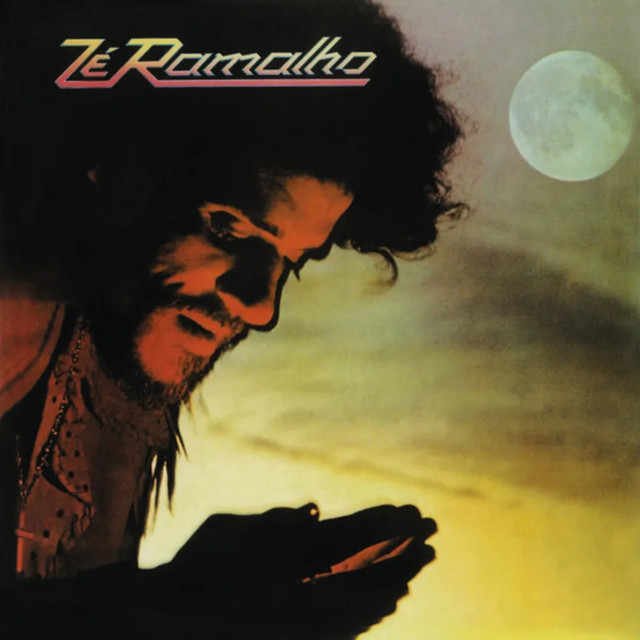
Released in 1981, A Terceira Lâmina is the third solo album by singer-songwriter Zé Ramalho, consolidating his position as one of the most singular artists in Brazilian Popular Music. The record is an extension of Ramalho's artistic identity, skilfully fusing the rich influences of Northeastern music, such as repente and literatura de cordel, with the energy and depth of psychedelic and progressive rock, elements that had already propelled him to national recognition in previous years. This work not only expanded his popularity but also deepened his authorial mark, characterised by a lyrical universe full of mystical signs and a prophetic tone. With A Terceira Lâmina, Zé Ramalho offers a true feast of his enigmatic and visceral poetic style. The album stands out for its ability to transport the listener to a scenario that blends the real and the apocalyptic, social criticism and introspection. It is an album that, like its predecessors, defies easy classifications, maintaining the authenticity of an artist who, influenced from Jovem Guarda and international rock to the cantadores of the sertão, knew how to forge an an unmistakable style in the Brazilian musical landscape.
Context
The release of A Terceira Lâmina in 1981 occurred during a period of effervescence and significant transformations in Brazil. The country was experiencing the exhaustion of the military regime, which had extended since 1964, and was beginning to breathe new freedom of expression, which translated into a rich cultural diversity in popular music. However, the scenario was also one of economic crisis and inflation, which intensified a feeling of uncertainty and, for many, an urgency for change. In this context, Zé Ramalho was already a name of prestige and recognition in the Brazilian music scene. His two previous albums, released in 1978 and 1979, had already achieved major successes such as "Avôhai" and "Admirável Gado Novo", consolidating his unique Northeastern folk-rock sound. A Terceira Lâmina, therefore, did not arrive as a debut, but as the continuation of an already mature and engaged artistic proposition, at a time when MPB was diversifying and seeking a more visionary and critical field.
Recording
A Terceira Lâmina was recorded between 1980 and January 1981, with Estúdios Som Livre and Estúdios Sigla as the main locations. The album's production was handled by Zé Ramalho himself in collaboration with Mauro Motta, a partnership that ensured the sonic cohesion and artistic vision of the project. The cast of musicians who participated in the recordings was fundamental to the album's instrumental richness. In addition to Zé Ramalho's vocals and acoustic guitar, and his viola on the track "Violar", the record featured vocal participation from Maria Lúcia Godoy on "Canção Agalopada" and Elba Ramalho on "Cavalos do Cão". José Severo da Silva, Severo do Acordeom, added Northeastern authenticity with his accordion on "Um Pequeno Xote". The string section, conducted by maestro Miguel Cidras, brought arranging nuances to the title track. Additional credits reveal the contribution of Geraldo Azevedo on Ovation guitar, Chico Julien and Novelli on bass, Rui Motta on drums, Waldemar Falcão on flute, and Carlinhos Ogan and Ubiratan Silva on percussion, with mixing handled by Andy Mills and Don Lewis.
Songs
The album A Terceira Lâmina features an entirely original repertoire, with Zé Ramalho signing all compositions and delving into themes ranging from the mystical to the social, from the personal to the universal. The opening track, "Canção Agalopada", is a notable example, constructed from a poem by Zé himself, extracted from his 1977 book *Apocalipse*. This song incorporates the poetic forms of *martelo agalopado* and *galope à beira-mar*, and features the lyrical participation of soprano Maria Lúcia Godoy, immediately establishing an apocalyptic and grandiose atmosphere. The title track, "A Terceira Lâmina", is one of the most emblematic on the record and, according to the artist himself, refers to the "third child, the third offspring, my third phase, and the vision of the Third World War". The lyrics are dense with metaphors, addressing a collective and silent suffering, a "new phase of affliction" that manifests "peacefully" through hunger, lack of basic sanitation, and education, differing from direct repression, but equally corrosive. Other prominent songs include "Filhos de Ícaro", which, despite maintaining the prophetic tone, surprises with a samba arrangement, and "Um Pequeno Xote", which benefits from the authentic touch of Severo do Acordeom's accordion. The album also revives "Galope Rasante", a previous success sung by Amelinha, and closes with the frevo "Dia dos Adultos", demonstrating the rhythmic and thematic diversity that permeates the work.
Legacy
A Terceira Lâmina was an important milestone in Zé Ramalho's career, contributing significantly to the increase in his popularity and consolidating his unique sound within the MPB scene. Although in a 2020 analysis Mauro Ferreira, a critic for G1, deemed the album "incisive" but compared it unfavourably to Zé Ramalho's two previous works, its cultural relevance has endured. The record not only stood out on Brazilian radio stations but also maintained its presence in playlists and continues to be played, demonstrating the timelessness of its message and arrangements. For admirers of Zé Ramalho's "apocalyptic/mythological approach", A Terceira Lâmina is considered an excellent album. It reinforced the artist's position as a critical and visionary voice in Brazilian music, especially during a period of political and social transition in Brazil. Although 1980s MPB is sometimes underestimated in critical lists, Zé Ramalho stands as one of the artists who consolidated their position and left a lasting legacy in that decade, with A Terceira Lâmina being a testament to his ability to combine poetic depth with musical originality.
Tracks
Credits
Luiz Fernando Borges
Mauro Motta, Zé Ramalho
Zé Ramalho
Zé Ramalho
Geraldo Azevedo
Chico Julien, Novelli
Alceu De Almeida Reis, Jorge Kundert Ranevsky
Rui Motta
Waldemar Falcão
Carlinhos Ogan, Ubiratan
Fernando Moura
Arlindo Penteado, Frederick Stephany, Hindemburgo Pereira, Nelson De Macedo
Aizik Geller, Carlos Eduardo Hack, Francisco Perrota, GianCarlo Pareschi, Jorge Faini, José Alves, João Daltro, Walter Hack
Andy Mills, Don Lewis
Don Lewis
Carlos Enrique M. de Lacerda
Frederico Mendes, Zé Ramalho
Frederico Mendes
Podcasts
Sons e Histórias · Daniel Queiroz
Neste episódio do Sons & Histórias, celebramos o 80º programa mergulhando no universo denso, poético e místico de A Terceira Lâmina, o quarto álbum de estúdio do genial Zé Ramalho, lançado em 1981.Uma obra que mistura psicodelia nordestina, crítica social e profecia poética, reunindo faixas como “Canção Agalopada”, “Kryptônia”, “Um Pequeno Xote” e a enigmática faixa-título, onde o cantor projeta v
Videos
Robertinho de Recife e Metalmania - A TERCEIRA LÂMINA
World Music - BR
Ep. 80 – Zé Ramalho, misticismo e revolução em “A Terceira Lâmina” (1981) c/ Suzi Mariana
Sons e Histórias
Books
Analyses
A Terceira Lâmina – Wikipedia
Wikipedia, the free encyclopaedia
A Terceira Lâmina é o terceiro álbum do cantor brasileiro Zé Ramalho, lançado em 1981, e que contribuiu para o aumento da popularidade do músico. Como seus dois antecessores, o disco segue misturando influências nordestinas e do rock. A faixa de abertura, "Canção Agalopada", tem a participação da soprano Maria Lúcia Godoy e foi feita com base em um poema de Zé escrito para seu livro de 1977, Apocalipse, e que utiliza as formas martelo agalopado e galope à beira-mar. Deste mesmo livro, saiu a let
Discos para descobrir em casa - 'A terceira lâmina', Zé Ramalho, 1981
g1.globo.com
In 1981, when releasing his third solo album, A Terceira Lâmina, with an entirely self-penned repertoire, Zé Ramalho once again served the banquet of mystical signs that already characterised his...

Minha Coletânea : Zé Ramalho - 1981 A Terceira Lâmina
minha-coletanea.blogspot.com
In 1981, he released A Terceira Lâmina, considered his third sonic and poetic phase. Produced by Zé and Mauro Motta, the album featured an apocalyptic sound, with lyrical forays and metaphors that broadened his artistic reach and popularity.

Por Trás Da Vitrola: Zé Ramalho - Terceira Lâmina [1981]
portrasdavitrola.blogspot.com
Zé Ramalho's third album. It opens with the beautiful "Canção Agalopada", a song full of biblical references and mysterious imagery. Noteworthy is the participation of operatic singer Maria Lúcia Godoy. Another major highlight is the title track, "A Terceira Lâmina", which combines a prophetic tone with social commentary.
Zé Ramalho - Terceira Lâmina (1981) - musicasdonordeste.net
musicasdonordeste.net
Zé Ramalho's third album. It opens with the beautiful "Canção Agalopada", a song full of biblical references and mysterious imagery. A highlight is the contribution of operatic singer Maria Lúcia Godoy. Another major highlight is the title track, "A Terceira Lâmina", which combines a prophetic tone with social critique.