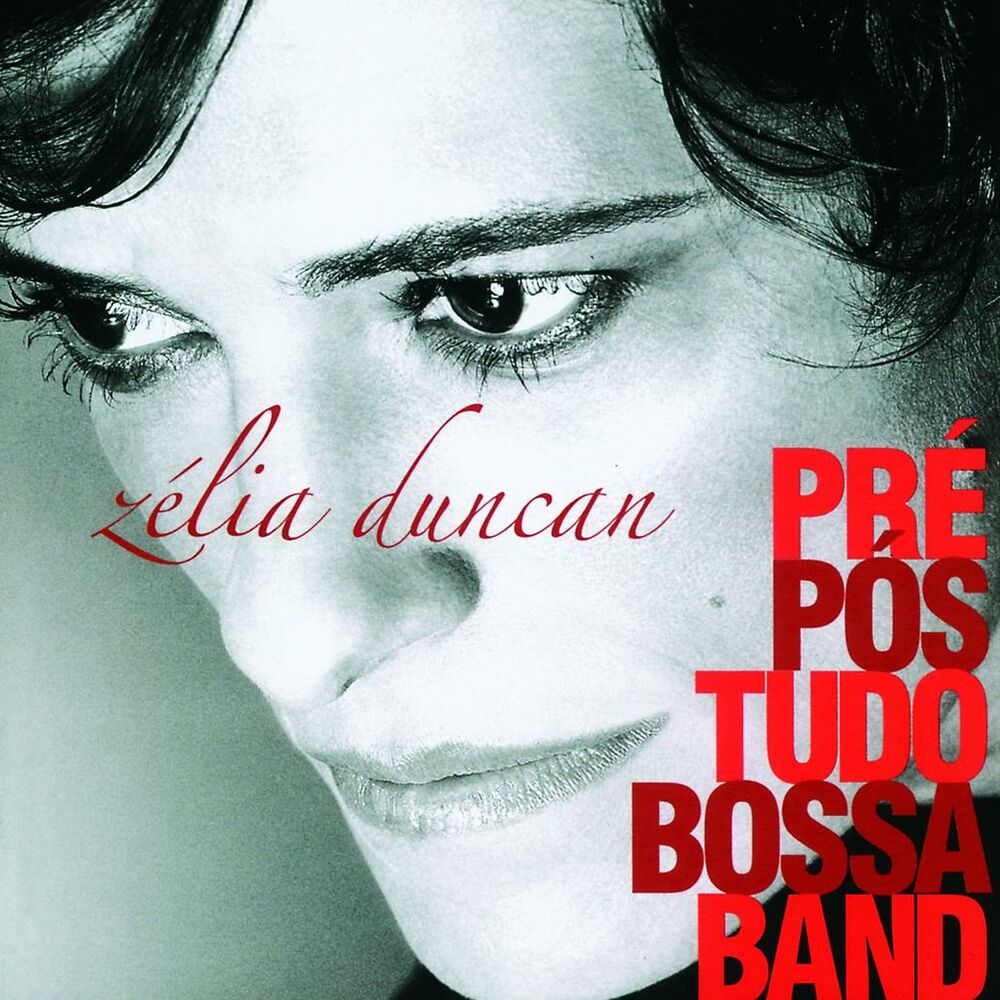
Pré-Pós-Tudo-Bossa-Band
Zélia Duncan
2005
Rankings
Why This Album Matters
Pré-Pós-Tudo-Bossa-Band, released in 2005, represents a landmark in Zélia Duncan's career, solidifying her position as one of MPB's most courageous and experimental artists. The album defies easy categorisation, navigating various soundscapes and confronting fleeting trends, as ironised in the title track. With her powerful voice and distinctiveness as a lyricist, Zélia expands on the diversity of previous works, delivering a repertoire that, at first glance, might appear scattered, but reveals itself to be cohesive through her artistic daring. The work demonstrates the maturity of an artist with 15 years of recording career, capable of exploring different styles with skill and personality. Eclecticism and heterogeneity are striking characteristics, reflecting both her individuality and the partnerships and identity of the songs. Far from centring solely on personal and romantic matters, the album's lyrics open up to a wider range of themes, lending a remarkable lyrical depth.
Context
By 2005, Zélia Duncan had already consolidated a significant career, marked by albums such as Sortimento (2001) and Eu Me Transformo Em Outras (2004). Her trajectory included participation in important projects and a constant search for musical experimentation, which elevated her to an artistic level where she could traverse various idioms. The singer's connection with Itamar Assumpção's world, for example, was long-standing, with Zélia even aspiring, at the beginning of her career, to be one of the Orquídeas who accompanied the São Paulo musician, which would culminate in a profound tribute on this album.
Recording
Pré-Pós-Tudo-Bossa-Band was a Universal Music production, with artistic direction by Max Pierre and artistic management by Daniel Silveira. The album featured co-production by Christian Oyens, Beto Villares, and Bia Paes Leme, who divided responsibilities for different track blocks. Tracks 1 to 7 were produced by Christian Oyens and recorded at Toca do Bandido studio, in Rio de Janeiro, in March 2005, by Álvaro Alencar. Tracks 8, 9, and 10 were produced by Bia Paes Leme and recorded at AR studio, also in Rio de Janeiro, in April 2005, by Fábio Henriques. Tracks 11, 12, 13, 14, 15, and 16 were produced by Beto Villares and recorded at Estúdios Mega, in São Paulo, from 7 to 16 March 2005, with recording engineering by LC Varella. The album's overall mixing was carried out at Toca do Bandido, in April 2005, by Álvaro Alencar, and mastering at Classic Master, by Carlos Freitas.
Songs
With 16 tracks and over 55 minutes in duration, the album is a mosaic of collaborations and compositions that demonstrate Zélia Duncan's versatility. The title track, a partnership with Lenine, opens the record, ironising contemporary trends with its lyrics "Todo mundo quer ser bacana / Álbuns, fotos, dicas pro fim de semana". One of the repertoire's highlights is the tribute to Itamar Assumpção, who passed away in 2003, with the inclusion of four of his songs: two unreleased tracks, "Vi, Não Vivi" (with music by Christiaan Oyens) and "Tudo ou Nada" (with lyrics by Alice Ruiz), and two re-recordings of masterpieces, "Milágrimas" (also with lyrics by Alice Ruiz) and "Dor Elegante" (based on a poem by Paulo Leminski). Other notable partnerships include "Carne e Osso" with Paulinho Moska, "Benditas" with Mart'nália, "Braços Cruzados" with Pedro Luís, "Eu Não Sou Eu" with Lucina, and "Quiser Eu" with Lulu Santos. The lyrics, in general, demonstrate a broader thematic scope, moving away from purely personal and romantic matters.
Legacy
Pré-Pós-Tudo-Bossa-Band was met with critical and public acclaim, solidifying Zélia Duncan's reputation as an avant-garde and daring artist. The album's tour, which extended until 2008, traversed Brazil and also visited Portugal, achieving great public and critical success. The work is cited as one that explores the eclecticism and heterogeneity of the artist, both in her personality and in her style, partnerships, and the identity of her songs. The album reaffirmed Zélia's artistic courage, her powerful voice, and her distinctive mark as a lyricist.
Tracks
Credits
Max Pierre
Bia Paes Leme
Paulo Lepetit
Beto Villares
Fábio Luna
Celso Fonseca, Webster Santos
Christiaan Oyens
Anelis Assumpção
Jorge Helder, Zeca Assumpção
Edson Guidetti
Leo Gandelman
Ezio Filho, Marcelo Mariano, Matias Corrêa, Serginho Carvalho
André Rodrigues
Rodrigo Maranhão
João Cortez, Pupillo, Serginho Machado
Fabrício Mattos, Lucas Martins, Walter Villaça
Cristina Braga
Rui Alvim
Humberto Barros
Rick Ferreira
Cristóvão Bastos
Marcelo Bernardes
Nicolas Krassik
Podcasts

Acorde - Música e Psicanálise · Rafael Garbuio e Ricardo Pezati
Trigésimo primeiro episódio do podcast Acorde - Música e Psicanalise. Apresentamos a obra Eu não sou eu, de autoria de Zélia Duncan e Lucina, lançada em 2005 no álbum PRÉ-PÓS-TUDO-BOSSA-BAND.Para esta conversa vamos receber nossa convidada Thais Mariana que é : Membro do EPW - espaço potencial Winnicott, do Instituto Sedes Sapientiae pesquisadora do Lipsic/USP - Laboratório Interinstituci