Zimbo Trio
Zimbo Trio
1964

Rankings
Why This Album Matters
Zimbo Trio's self-titled debut album, released in 1964, is a cornerstone of Brazilian instrumental music, marking the arrival of one of the country's most influential trios. On it, Amilton Godoy on piano, Luís Chaves on bass, and Rubinho Barsotti on drums demonstrate an innovative and sophisticated fusion of jazz, classical music, and genuinely Brazilian rhythms, such as bossa nova and samba. With intelligent arrangements and impeccable technical execution, the record establishes the group's sonic signature, characterised by the energy and individual virtuosity of its members, resulting in a vibrant and distinctive sound. This work represents Zimbo Trio's ability to reinterpret the Brazilian popular songbook with a complex and engaging instrumental approach. Far from being merely an accompaniment, the trio's music on this album positions itself as a protagonist, exploring the harmonic and rhythmic nuances of each composition and solidifying its identity within the instrumental MPB scene.
Context
Zimbo Trio was formed in March 1964, in São Paulo, by Amilton Godoy, Luís Chaves, and Rubens Barsotti. The group made its first performance at the Boate Oásis, accompanying singer Norma Benguell. At the time, Brazil was experiencing the peak of bossa nova and a vibrant musical scene that sought the fusion of Brazilian tradition with jazz influences, especially in instrumental trios. The release of this album occurred during a period of intense creativity in Brazilian music, with various artists and groups seeking new forms of instrumental expression. Zimbo Trio, with its newly consolidated line-up, would quickly stand out in this musical landscape.
Songs
The repertoire of the album Zimbo Trio presents a balanced combination of original compositions and reinterpretations of Brazilian music classics. Among the tracks, the original “Zimbo Samba” stands out, already signalling the trio's modernist and challenging approach to samba, along with interpretations of new Brazilian standards of the era. Songs such as “Garota de Ipanema” and “Inútil Paisagem” (both by Antônio Carlos Jobim), “Berimbau” and “Consolação” (by Baden Powell and Vinicius de Moraes), demonstrate the trio's ability to infuse new life into already consecrated works, through arrangements that maximise the interaction and energy of the musicians. Pianist Amilton Godoy and drummer Rubinho Barsotti exhibit a powerful execution on their instruments, while bassist and arranger Luís Chaves structures the pieces to enhance the group's dynamism.
Legacy
Following the release of its first LP in 1964, Zimbo Trio quickly gained recognition, being awarded the Pinheiro de Ouro for Best Instrumental Group at the I Festival do Paraná da MPB. Its notoriety grew to the point where, by 1965, they became the resident band for the iconic television programme “O Fino da Bossa”, on TV Record, accompanying Elis Regina and Jair Rodrigues. The album marked the beginning of a prolific career that would yield Zimbo Trio over 40 albums and international recognition, consolidating it as a reference group in Brazilian instrumental music and influencing generations of musicians through its ability to blend technical sophistication with the rhythmic richness of Brazil.
Tracks
Credits
Sabatell
Luiz Chaves
Rubens Barsotti
Amilton Godoy
Cosentini
José Pinto
Fausto Canova
Podcasts
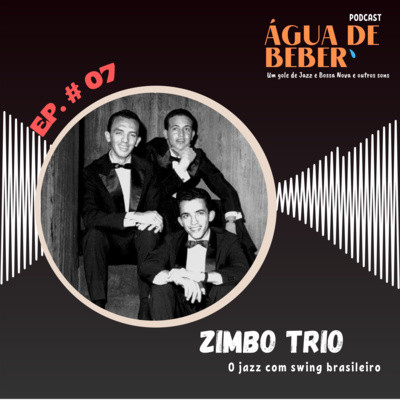
ÁGUA DE BEBER - Um gole de Jazz, Bossa Nova e outros sons · Ben-Hur Rava
Nos anos de 1960 existiam vários trios com a formação piano-baixo-bateria. O Zimbo Trio foi o primeiro a fazer somente música instrumental. Uma clara influência do jazz norte-americano. Mas o trio brasileiro passou a fazer “um som pra frente”, passando a ser considerado modelo de como tocar e fazer música instrumental brasileira com esta formação, influenciando instrumentistas e grupos musicais de
Analyses
Discografia Básica: Zimbo Trio, "Zimbo Trio" (1964). - Bossa Jazz ...
bossajazzbrasil.com
The first performance as Zimbo Trio was at Boate Oásis, on 17 March 1964, accompanying the singer Norma Bengell. The show was produced by Aloysio de Oliveira.

Zimbo Trio - Tropicalismo Selvagem
tropicalismoselvagem.wordpress.com
The impact a trio can make is exemplified by Zimbo Trio on this album. Unsurprisingly, we can categorise the ensemble within a samba-jazz genre that became a benchmark for an entire generation of musicians.
ZIMBO TRIO 1964 2013 | Digital Jazz
retro.digitaljazz.com.br
Upon listening to the album, which features 10 tracks, 6 of which are original compositions, I was reminded of some intimate "piano solo" recordings, like those by legendary pianists George Shearing, Tommy Flanagan, Dave Brubeck, Dave Mckenna, among others.

Blog da Música Brasileira: 1964 - Zimbo Trio
blogdamusicabrasileira.blogspot.com
This Wednesday, on the Blog, I'm bringing you an album by a trio I consider simply brilliant, not just for the songs across their more than 50 albums recorded over 45 years of their career, but also for the musical quality and the individual talent this trio has to offer.
Discos Escondidos #004: Zimbo Trio - Zimbo Trio - Jardim Eletrico
ojardimeletrico.com
Featuring jazzy versions of some Brazilian music classics, among other compositions, the Zimbo Trio is one of the most virtuosic ensembles to have ever graced MPB.